Last updated on August 3rd, 2026 at 09:13 am
The Rishikesh to Chopta distance is approximately 160-165 km. Travel time is 6 to 8 hours by road. The best way to reach Chopta is by taking a UTC or GMOU bus from Rishikesh ISBT to Ukhimath, then a shared taxi to Chopta. There is no direct bus.
The rishikesh to chopta distance covers some of the most scenic mountain roads in Uttarakhand. The route passes through Devprayag, Srinagar, and Rudraprayag before climbing into the higher hills toward Ukhimath and Chopta.
Chopta sits at around 2,680 meters above sea level. It is the base camp for Tungnath, the highest Shiva temple in the world, and Chandrashila peak. That is the main reason travelers make this journey.
The road is mostly smooth till Rudraprayag, thanks to the all-weather Char Dham road project. After that, it gets narrower and slower through the mountains.
This guide covers everything you need to know before making this trip:
- Exact distance and travel time
- Bus and taxi options with timings
- Road conditions by season
- Best places to stay near Chopta
Whether you are a first-time visitor or planning a return trip, this guide gives you only the facts you need.
The Exact Route Map and Distance Breakdown
The standard road route from Rishikesh to Chopta follows NH-7 through the Garhwal Himalayas. You pass through four major towns before reaching Chopta.
Route: Rishikesh → Devprayag → Srinagar → Rudraprayag → Ukhimath → Chopta
Distance and Time Between Each Stop
| Segment | Approx Distance | Approx Drive Time |
| Rishikesh to Devprayag | 70 km | 1.5 to 2 hours |
| Devprayag to Srinagar (Garhwal) | 35 km | 45 to 60 minutes |
| Srinagar to Rudraprayag | 30 km | 45 minutes |
| Rudraprayag to Ukhimath | 50 km | 1.5 to 2 hours |
| Ukhimath to Chopta | 13 km | 30 to 45 minutes |
| Total | ~160-165 km | 6 to 8 hours |
What You Will See Along the Way
Devprayag is where the Alaknanda and Bhagirathi rivers meet to form the Ganga. It is one of the Panch Prayag confluences and worth a short stop.
Srinagar (Garhwal) is the largest town on this route. This is a good place to fuel up, eat a proper meal, or withdraw cash.
Rudraprayag is where the Mandakini and Alaknanda rivers meet. After Rudraprayag, the road turns toward Agastmuni and then Ukhimath.
Ukhimath is the last major settlement before Chopta. Many travelers stay here in winter when Chopta roads get blocked by snow.
The stretch from Ukhimath to Chopta is a narrow, winding mountain road. Drive slowly and allow extra time if it has rained recently.
How to Reach Chopta from Rishikesh by Bus (The Reality)
There is no direct bus from Rishikesh to Chopta. Anyone telling you otherwise is wrong. You need to break this journey into two parts.
Step 1: Rishikesh ISBT to Ukhimath (or Rudraprayag)
Board your bus from Rishikesh ISBT (Yatra Bus Stand). This is the main departure point for all hill route buses in Rishikesh.
- Bus operators: UTC (Uttarakhand Transport Corporation) and GMOU (Garhwal Mandal Owners Union)
- Best departure window: 4:00 AM to 8:00 AM (early morning buses are less crowded and reach before dark)
- Preferred destination: Ask for a bus going to Ukhimath directly. If not available, board a bus to Rudraprayag or Guptkashi and change from there.
- Approximate ticket price: Rs. 400 to Rs. 600 per person
- Travel time: 5 to 6 hours depending on road and season
Buses fill up fast during peak season (April-June and September-November). Reach the bus stand at least 30 minutes early.
Step 2: Ukhimath to Chopta by Shared Taxi
Once you reach Ukhimath, shared taxis are available toward Chopta.
- Distance: Around 13 km
- Approximate fare: Rs. 100 to Rs. 200 per person in a shared taxi
- Travel time: 30 to 45 minutes
- Availability: Shared taxis are easier to find in the morning. After 2:00 PM, options get limited.
If shared taxis are not available, a private cab from Ukhimath to Chopta will cost around Rs. 600 to Rs. 800.
Quick Tips for Bus Travel
- Carry cash. There are no ATMs after Ukhimath.
- Keep a light bag on the bus. Luggage space is limited.
- Confirm with the driver that the bus goes via Ukhimath and not just Rudraprayag.
Not Sure Where To Go!
Let our Random Country Generator help you discover your next perfect destination.
Use Our Free ToolTraveling by Private Taxi or Self-Drive
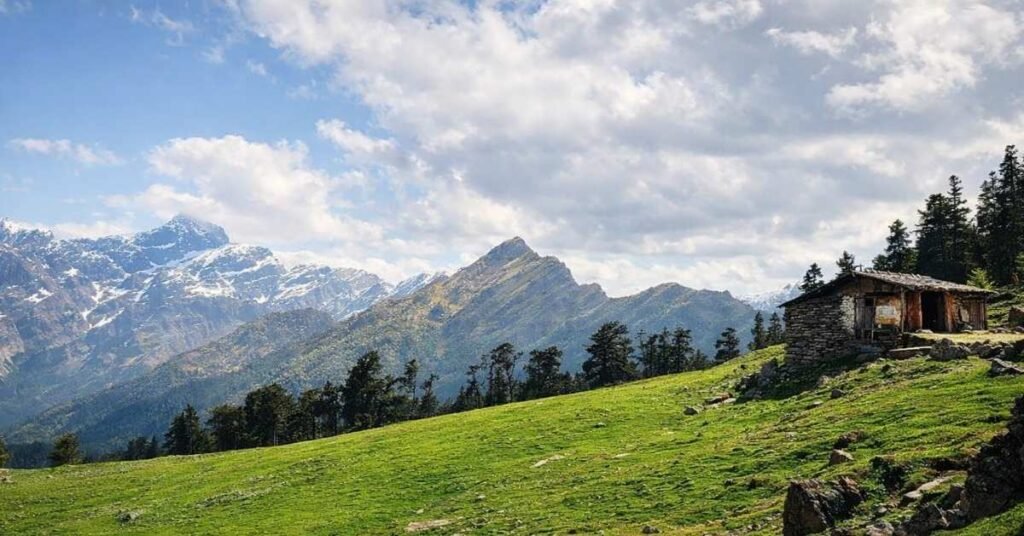
If buses are not your preference, private taxi and self-drive are both solid options on this route. Each has its own set of things to keep in mind.
Hiring a Private Taxi
A private cab from Rishikesh to Chopta gives you flexibility on timing and stops. You can book through local taxi operators in Rishikesh or via apps like Outstation on Ola and IndiaCab.
- Estimated fare: Rs. 5,000 to Rs. 7,000 depending on vehicle type (Hatchback vs. SUV)
- Recommended vehicle: Book an SUV or 4×4 if traveling in winter or monsoon. Small hatchbacks struggle on the Ukhimath to Chopta stretch.
- Travel time: 6 to 7 hours with short breaks
- Best practice: Confirm the fare and route clearly before booking. Some drivers avoid the Ukhimath road and may suggest alternatives.
Self-Drive Tips
Driving yourself from Rishikesh to Chopta is very doable if you are comfortable on mountain roads.
- Rishikesh to Rudraprayag: NH-7 is a well-maintained all-weather road built under the Char Dham project. Driving is smooth and straightforward.
- Rudraprayag to Ukhimath: The road becomes narrower and more winding. Drive carefully and use your horn on blind curves.
- Ukhimath to Chopta: This is a single-lane mountain road. Go slow, especially after rain.
- Fuel up: Fill your tank in Rudraprayag or Ukhimath. There are no petrol pumps after that.
- Night driving: Avoid it completely. Roads after Rudraprayag have no streetlights and sharp curves throughout.
Start early from Rishikesh. Aim to cross Rudraprayag before 2:00 PM.
Road Conditions and Best Time to Travel
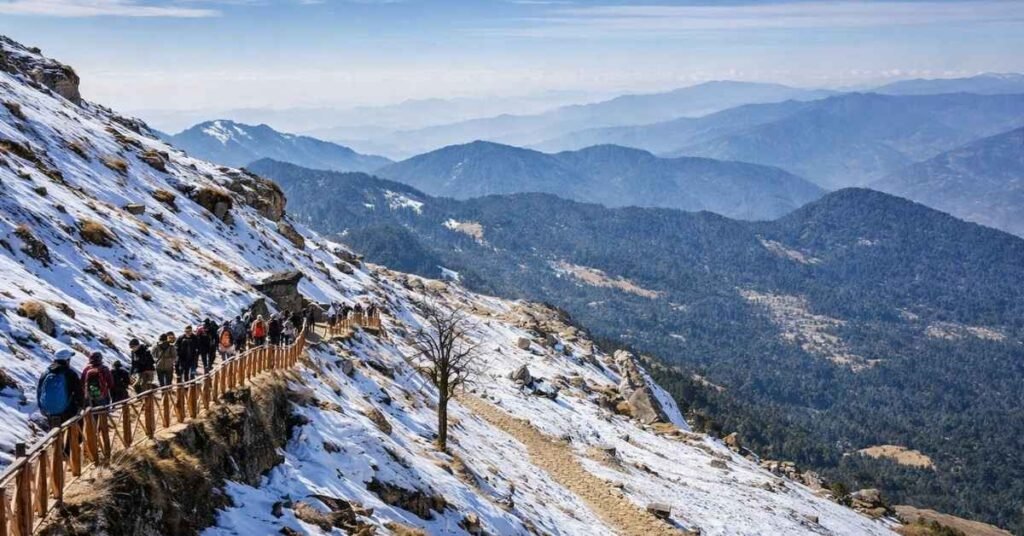
Road conditions on this route change dramatically with the season. Knowing what to expect can save you a lot of trouble.
Season-by-Season Breakdown
Summer (March to June)
- Best time to drive this route
- Roads are clear and mostly dry
- Tungnath temple is open during this period
- Expect heavy tourist traffic on weekends in May and June
Monsoon (July to August)
- This is the most risky season for this drive
- The stretch between Srinagar and Rudraprayag is prone to landslides
- Road blockages can last several hours or even a full day
- Check the latest road status on the Uttarakhand disaster management portal before leaving
- Avoid traveling at night or during heavy rainfall
Autumn (September to November)
- Second best window to travel
- Roads are clear after monsoon, weather is pleasant
- Tungnath temple closes around November for winter
Winter (December to February)
- The road from Ukhimath to Chopta often gets blocked by heavy snow
- In some years, snow starts blocking roads several kilometers before Chopta
- A 4×4 vehicle is strongly recommended
- Snow chains may be required closer to Chopta
- Always check local conditions before departure, roads can close without notice
The safest and most comfortable time to make this drive is between April and June or September and October.
The Ultimate Reason to Visit: Tungnath & Chandrashila Treks
The 165-km drive only makes complete sense once you understand what is waiting for you at the other end. Chopta is the base for two of the most rewarding treks in the Garhwal Himalayas, one leading to an ancient temple, the other to a summit with some of the most expansive mountain views in India.
Tungnath Temple Trek
What it is: At 3,680 metres above sea level, Tungnath is the highest Shiva temple in the world, not just in India. That fact alone draws thousands of trekkers every season.
- Distance: 3.5 km one-way from Chopta
- Altitude: 3,680 metres
- Difficulty: Moderate
- Time Required: 2 to 3 hours one-way
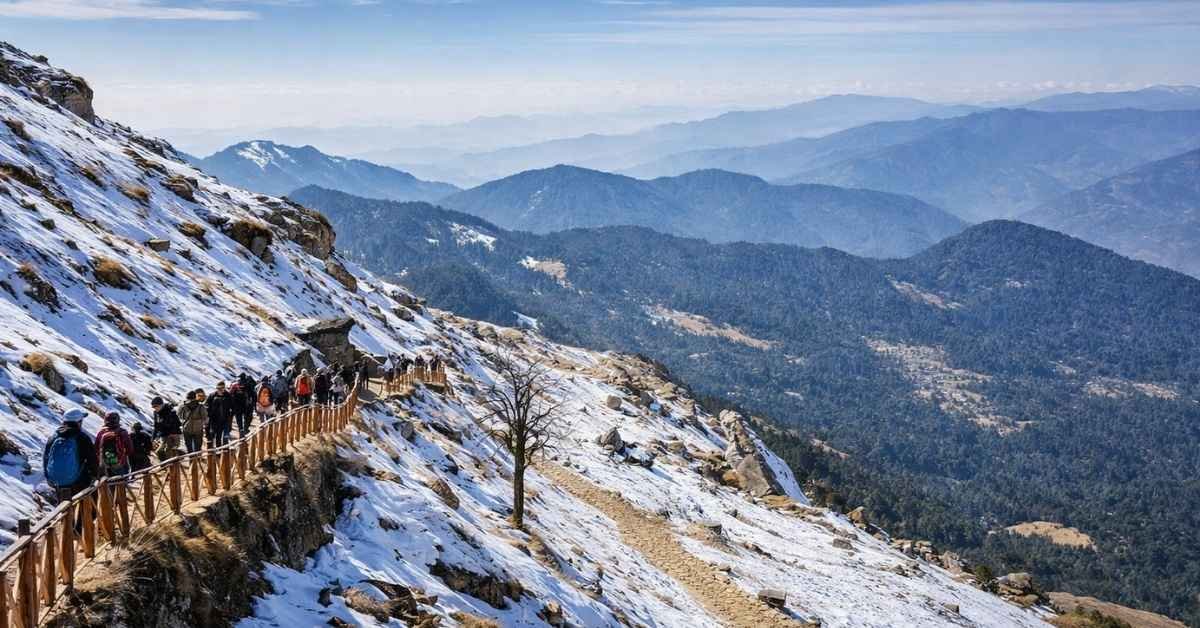
The trail climbs through dense rhododendron forests and opens up gradually as you gain altitude. The temple itself is ancient, compact, and completely unpretentious for a site of such religious and geographical significance.
Chandrashila Summit Trek
What it is: Chandrashila is the logical continuation from Tungnath. Push 1.5 km further uphill from the temple and you reach a summit that delivers 360-degree views of peaks including Nanda Devi, Trishul, Kedarnath, and Bandarpunch. On a clear morning, the panorama is genuinely overwhelming.
- Distance: 1.5 km further from Tungnath (approximately 5 km total from Chopta)
- Altitude: Approximately 4,000 metres
- Difficulty: Moderate to Challenging (steep, rocky final section)
- Time Required: 1 to 1.5 hours from Tungnath
Most trekkers combine both in a single day, starting early from Chopta to reach Chandrashila summit by sunrise or shortly after. That is the move that earns the best light and the clearest sky.
My First Bike Ride to Chopta
Back in 2021, four of us decided that the most sensible way to mark the end of our college semester was a bike ride to Chopta. We were, by most reasonable definitions, completely unprepared.
We left Roorkee at 4:00 AM, piled into a shared cab to Rishikesh, picked up rented Royal Enfields by 9 AM, did a collective five-second check of the bikes (tyres: look fine, brakes: seem okay, mirrors: present), and rode off feeling like we had figured out life.
The stretch to Devprayag was easy enough. We pulled over at the Sangam point, where the ice-blue Bhagirathi crashes into the murkier Alaknanda below, and the Ganga is officially born. We stood there for twenty minutes taking the same photograph from slightly different angles, convinced each one was better than the last. It was not. But the confluence itself genuinely earns a stop.
Then came Srinagar.
The road between Devprayag and Srinagar is a long sequence of sharp bends that fold back on themselves with almost no warning. One of our bikes caught a patch of loose gravel mid-turn and went down. The rider walked away with a torn pair of jeans and a bruised ego, which in hindsight is a remarkably good result. The bike, however, had a bent leg stand that made it refuse to park on anything less than perfectly flat ground.
We found a mechanic in Srinagar who assessed the situation, picked up what appeared to be a medieval iron rod, and forcefully hammered the stand off in three aggressive strikes. He then turned around, completely unbothered, and asked for payment with the confidence of someone who had just performed a complex surgical procedure. We paid him. We were not in a position to negotiate.
What that day taught me, and what I want you to take from it:
- The Srinagar stretch demands genuine respect. Those bends are blind, the surface is inconsistent, and the drop on one side is not forgiving. Keep your speed in check at every single corner.
- Before you ride out of Rishikesh on a rented bike, do not do the five-second check we did. Check the tyres, the brake pressure, the mirrors, the stand, and the headlight, especially if you plan to reach Chopta after dark.
- Pack a basic toolkit or at minimum know where the closest mechanic is on your route. Between Ukhimath and Chopta, the answer to that question is: there is no mechanic. Plan accordingly.
We made it to Chopta that evening, sore, slightly shaken, and completely glad we had gone. That part has not changed in the years since.
Where to Stay: Ukhimath vs. Chopta
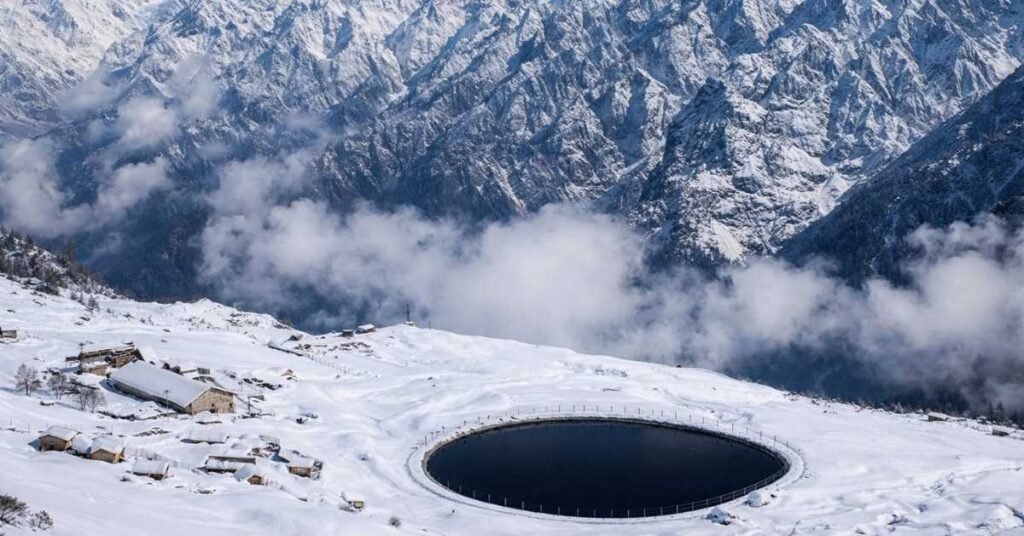
Choosing where to stay depends on your comfort level and budget. Both options have their own advantages.
Staying in Ukhimath (The Smarter Choice for Most Travelers)
Many experienced trekkers prefer to stay in Ukhimath instead of Chopta. Here is why:
- Better mobile network coverage
- More reliable electricity
- Cheaper accommodation options
- Easier access to hot food and medical help
- Only 13 km from Chopta, reachable in 30 to 45 minutes
The plan most trekkers follow is simple. Stay the night in Ukhimath, wake up early, and drive or take a shared taxi to Chopta by 6:00 AM to start the Tungnath trek fresh.
GMVN Ukhimath Tourist Rest House is the most reliable stay in Ukhimath. It is a government-run property with clean rooms and basic amenities. You can book official GMVN guest houses directly on their website to avoid last-minute hassle.
Staying in Chopta (For the Full Mountain Experience)
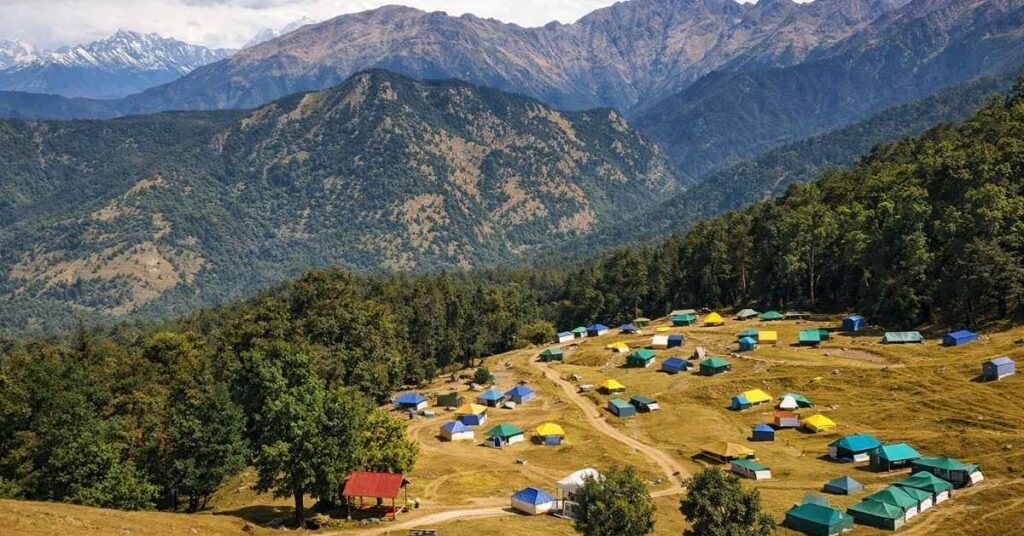
If you want to wake up in the mountains and start the trek directly from your doorstep, staying in Chopta makes sense.
Magpie Eco Tourist Village is one of the most well-known and authentic stays in the Chopta region. It offers a proper mountain camp experience with decent facilities.
Keep in mind that Chopta has limited network connectivity and power cuts are common, especially in winter.
Comprehensive Travel Cost & Transportation Breakdown
Getting to Chopta does not require a big budget, but every option comes with a trade-off between cost, comfort, and time. Here is a clear breakdown of every realistic method:
| Mode of Travel | Cost (Per Person / Per Vehicle) | Travel Time | Convenience Level |
| Bus to Ukhimath + Shared Cab to Chopta | ₹500 – ₹800 per person | 8 to 9 hours | Low (vehicle change required) |
| Shared Taxi (Direct / Point-to-Point) | ₹800 – ₹1,200 per person | 7 to 8 hours | Medium |
| Private Cab / SUV | ₹5,000 – ₹7,000 per vehicle (one-way) | 6 to 7 hours | High (door-to-door) |
| Self-Drive (Car or Bike) | ₹1,500 – ₹2,500 in fuel | 6 to 7 hours | High (requires mountain driving experience) |
The Budget Traveller’s Hack: Bus + Shared Cab Combo
The Bus to Ukhimath + Shared Cab to Chopta combination is genuinely the smartest move for solo budget travellers. Regular buses from Rishikesh run to Ukhimath for roughly ₹400 to ₹600 per person, and from Ukhimath, shared cabs cover the last stretch to Chopta for another ₹100 to ₹200. Total outlay: under ₹800. Yes, you will change vehicles once and add an hour or two to your journey, but for a saving of over ₹4,000 compared to a private cab, it is hard to argue against it.
Frequently Asked Questions
Is there a direct bus from Rishikesh to Chopta?
No, there is no direct bus. You need to take a UTC or GMOU bus to Ukhimath from Rishikesh ISBT and then catch a shared taxi for the last 13 km to Chopta.
Is it safe to drive to Chopta at night?
No, night driving on this route is not safe. The roads after Rudraprayag are unlit, single-lane, and have sharp mountain curves with occasional wildlife crossings.
Are there ATMs near Chopta?
Do not count on finding an ATM after Ukhimath. Withdraw enough cash in Rudraprayag or Ukhimath to cover your stay, food, and taxi fare.
How long does the Tungnath trek take from Chopta?
The Tungnath trek from Chopta is around 3.5 km one way and takes about 2 to 3 hours to reach the temple. Most trekkers complete the full round trip in 5 to 6 hours.
Final Thoughts
Rishikesh to Chopta is a straightforward journey if you plan it right. Know your bus timings, carry cash, and start early. The road is rewarding but demands respect, especially after Rudraprayag.
Whether you are going for Tungnath, Chandrashila, or just the quiet of the Garhwal hills, this route will not disappoint. Just skip the night driving, book your stay in advance, and let the mountains do the rest.