Last updated on August 6th, 2026 at 09:01 am
Best months for snowfall in Auli is December to March. Peak snowfall hits between January and mid-March. If you want heavy, reliable snow, plan your trip in January or February.
Auli gets snow because it sits at 2,800 meters (9,200 ft) in the Garhwal Himalayas, Uttarakhand. That elevation is high enough to guarantee thick snowfall every winter, making it one of India’s top winter destinations.
The auli snowfall time starts as early as late November in good years. But if you want slopes covered in white and the full ski resort experience, January to mid-March is your window.
Miss this window and you miss the snow. It’s that simple.
Whether you’re coming to ski, trek, or just see the Himalayas under a blanket of snow, timing your visit right makes all the difference.
Auli Snowfall Time: Monthly Winter Breakdown
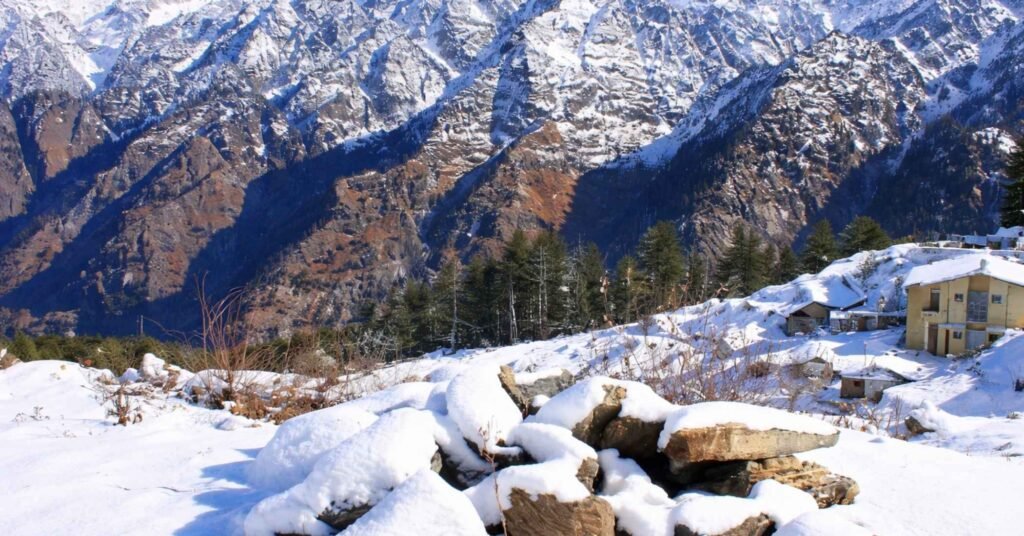
Snow in Auli does not follow a strict calendar. But there is a clear pattern every year. Here is what each month actually looks like on the ground.
December: Snow Begins
Snowfall usually starts in late November and picks up through December. By mid-December, Auli gets its first serious snowfall of the season. Temperatures drop to around 0°C to -5°C at night.
The slopes are not fully packed yet, but the landscape is already turning white. This is a good month if you want fewer crowds and early snow. The skiing season officially kicks off around this time.
January: Peak Snowfall Month
January is the best month for snowfall in Auli. Full stop. The entire valley is covered in thick snow. Temperatures can drop to -8°C or lower at night.
The ski slopes are in the best condition during January. GMVN runs skiing courses and the Auli Ropeway stays operational, though road access from Joshimath can get blocked due to heavy snow. The ropeway becomes your most reliable way in and out.
February: Still Peak Season
February is almost as good as January. Snowfall continues and the slopes remain well-covered. Daytime temperatures are slightly warmer, hovering around 2°C to 5°C, which makes outdoor activities more comfortable.
This is the most popular month for both skiers and casual visitors. Expect more footfall at Cliff Top Club and GMVN Auli Tourist Rest House compared to January.
March (First Half): Last Chance
Snow starts melting in the second half of March. The first two weeks still offer decent snow cover, especially on higher slopes. After mid-March, the skiing season wraps up and the landscape begins to shift toward spring.
If March is your only option, book early and aim for the first week.
Quick Month-by-Month Snapshot
| Month | Average Temperature | Snow Chances |
| December | 0°C to -5°C | Medium |
| January | -3°C to -8°C | High |
| February | 2°C to 5°C | High |
| March (first half) | 4°C to 7°C | Medium |
| March (second half) | 6°C to 10°C | Low |
Snow at Auli typically starts building from late November and begins melting after mid-March. That gives you roughly a 3.5-month solid window to catch reliable snowfall every year.
Top Things to Do in Auli During Snow Season
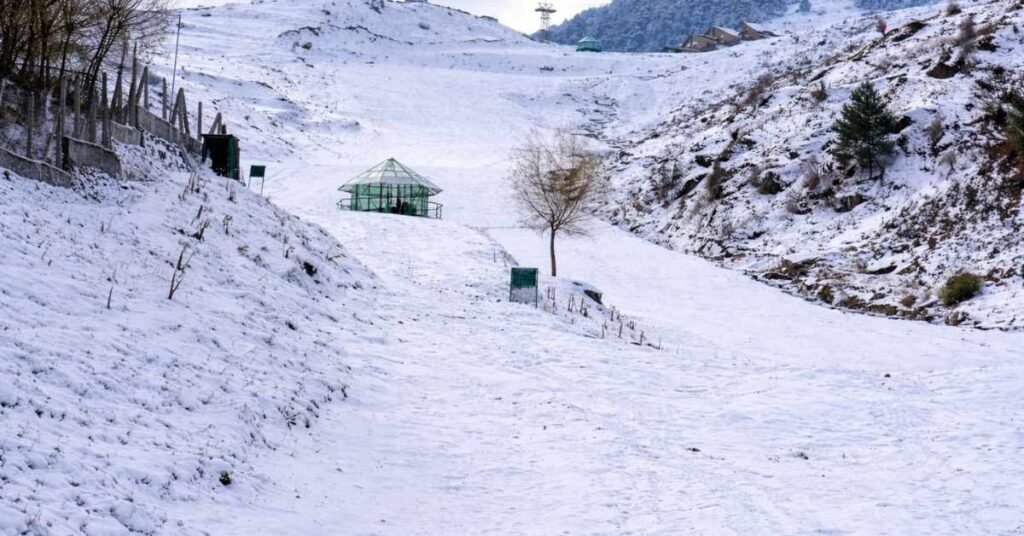
Auli is not just a ski resort. There is plenty to do even if you have never touched a ski in your life. Here are the best activities to plan around during the snow season.
Skiing on the Slopes
This is the main reason most people visit Auli in winter. The runs are well-maintained and suited for both beginners and experienced skiers. GMVN offers structured skiing courses for beginners, covering basics like balance, braking, and turning. Courses run for 7 or 15 days and are affordable compared to private ski schools elsewhere in India.
If you already know how to ski, the longer runs offer solid vertical drops with unobstructed Himalayan views.
Ride the Auli Ropeway
The Auli Ropeway connects Joshimath to Auli and stretches roughly 4 kilometers, making it one of the highest and longest cable cars in Asia. During peak snowfall, when the road gets blocked, the ropeway is the only reliable way to reach Auli.
The ride itself is worth it. You get aerial views of snow-covered peaks and dense forests below. Plan your ride for a clear morning for the best visibility.
Visit the Auli Artificial Lake
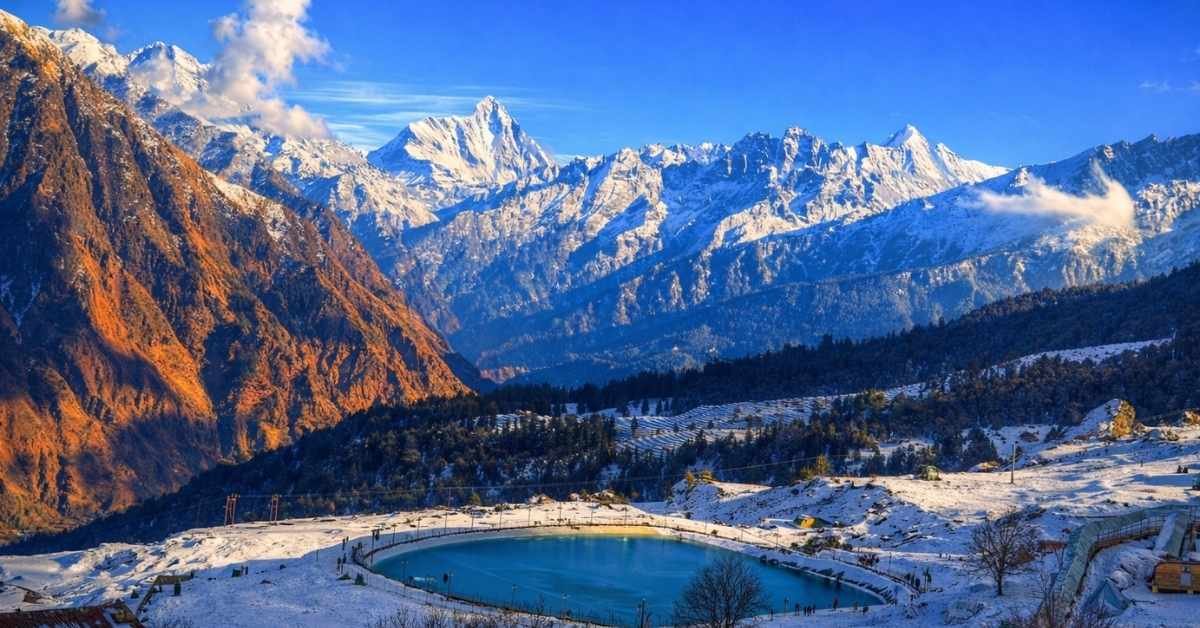
The Auli Artificial Lake is the world’s highest man-made lake. It was built specifically to produce artificial snow for the ski slopes, extending the skiing season when natural snowfall is low. In winter, the area around the lake is completely frozen and snow-covered, making it a great spot for photos and a short walk.
Gorson Bugyal Trek
The Gorson Bugyal trek is a short but rewarding winter walk from Auli. The trail passes through oak forests and opens up into a wide alpine meadow blanketed in snow. On clear days, you get uninterrupted views of Nanda Devi and surrounding peaks. It takes around 2 to 3 hours one way and is suitable for most fitness levels.
Not Sure Where To Go!
Let our Random Country Generator help you discover your next perfect destination.
Use Our Free ToolHow to Reach Auli in Winter Safely
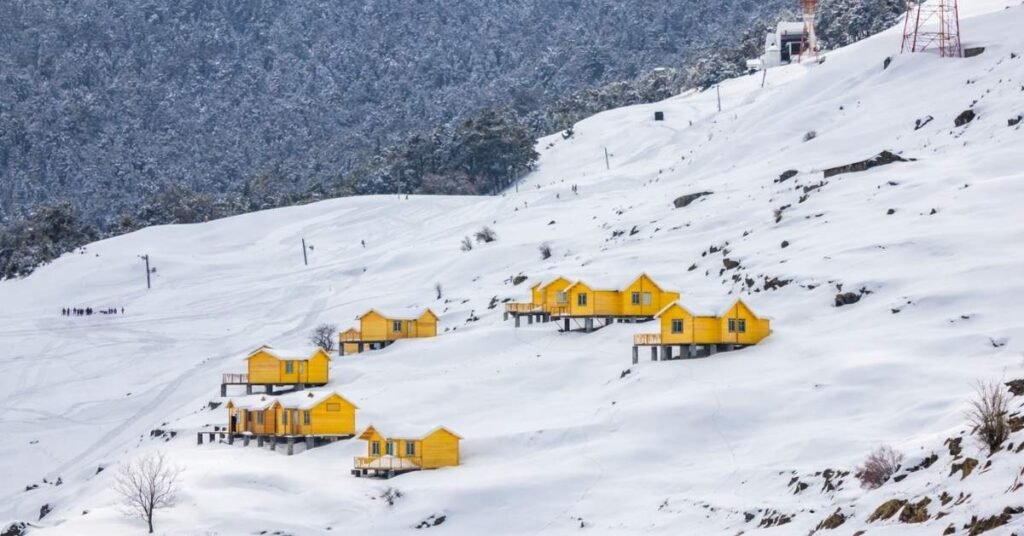
Getting to Auli in winter requires some planning. Roads can close without warning and conditions change fast. Here is the most reliable route.
Step 1: Reach Joshimath First
All routes to Auli pass through Joshimath. Here is how to get there:
- From Dehradun: Around 290 km by road. Take the Rishikesh-Badrinath Highway. Journey takes 9 to 11 hours depending on road conditions.
- From Rishikesh: Around 250 km. Shared taxis and buses run daily from Rishikesh bus stand to Joshimath.
- Nearest Railway Station: Haridwar or Rishikesh. No direct rail connection to Joshimath.
- Nearest Airport: Jolly Grant Airport, Dehradun. Around 270 km from Joshimath.
Step 2: Joshimath to Auli
This is where most travelers make mistakes.
The Joshimath to Auli road is roughly 14 km. In peak winter, heavy snowfall regularly blocks this road for days at a time. Do not count on driving up.
The Auli Ropeway is your best option. It runs directly from Joshimath to Auli, covers around 4 kilometers, and operates even when the road is shut. It is one of the longest cable cars in Asia and takes about 20 minutes.
Book your ropeway ticket early during January and February. It gets crowded fast on clear days.
Quick Safety Tips for Winter Travel
- Carry warm layers. Temperatures drop sharply after sunset.
- Check road and weather updates before leaving Joshimath.
- Book accommodation in advance. Options fill up quickly in peak season.
- Travel during daylight hours only on mountain roads.
Essential Winter Packing & Travel Tips
Packing right for Auli in winter is not optional. The cold here is serious. Temperatures drop below -8°C at night in January. Being underprepared will ruin your trip.
What to Pack
- Thermal inner wear (top and bottom), at least 2 sets
- Heavy woolen sweaters or fleece layers
- Waterproof and windproof outer jacket
- Snow boots or waterproof trekking shoes
- Woolen socks, gloves, and a warm cap
- Sunscreen (SPF 50+) and UV-protection sunglasses
- Lip balm and moisturizer (cold air dries skin fast)
- Personal medications and a basic first aid kit
- Portable power bank (cold drains batteries quickly)
Can You Rent Gear Locally?
Yes. You do not need to carry ski equipment from home. Snow boots, skis, ski poles, and full skiing gear are available on rent in both Joshimath and Auli. GMVN also provides gear as part of their skiing course packages.
This keeps your luggage light and saves money if you are a first-time skier.
Check Weather Before You Go
Always check conditions before leaving for Auli. The India Meteorological Department gives updated forecasts for Uttarakhand hill stations. A quick check can save you from getting stranded.
Joshimath for Non-Skiers — A Cultural and Spiritual Morning Worth Designing
An Auli trip is frequently planned around skiing, and that planning often forgets everyone in the group who is not interested in standing on a frozen slope at altitude in subzero wind. The reality of family travel is that itineraries need to serve multiple people with different energy levels, different physical comfort zones, and genuinely different ideas of a good day.
Joshimath solves this problem quietly and completely.
While the skiing contingent takes the morning gondola up to the slopes, Joshimath itself offers a full, meaningful, and far warmer day on its own terms.
Narsingh Temple
Joshimath is the winter seat of Lord Badrinath, and the Narsingh Temple is the focal point of that sacred transfer. When the Badrinath Temple closes for winter, the deity is ceremonially moved to Joshimath and resides here until the Himalayan passes reopen in spring. Visiting the Narsingh Temple in winter is therefore not a secondary experience. In ritual terms, you are visiting the active seat of one of the most significant Vaishnava shrines in northern India. The temple is fully accessible by road, requires no trekking, and welcomes visitors without the enormous pilgrimage crowds that Badrinath draws during summer. The atmosphere in winter is calm, the priests unhurried, and the surrounding lanes of old Joshimath town carry a weight of quiet religious life that feels entirely different from tourist-facing hill station culture. Manchalamushafir
The Kalpavriksha
A short walk from the main bazaar area, the Kalpavriksha is a mulberry tree estimated to be over 1,200 years old. Tradition holds that Adi Shankaracharya meditated beneath it during his time in Joshimath. Whether you are visiting for the spiritual resonance or purely for the extraordinary fact of standing beside something that has been alive since the 8th century, this tree stops you in your tracks. It is unassuming from a distance and genuinely moving up close.
Joshimath Market
The market lane in Joshimath is the right place to pick up authentic Garhwali woolens, which are noticeably more locally produced and reasonably priced than anything sold in Rishikesh tourist shops. Look specifically for Bal Mithai, a traditional Uttarakhandi sweet with a dense, fudge-like texture that travels well and makes a far better souvenir than anything sold in generic hill station gift shops.
On my last family trip to Auli, we split the day deliberately and it worked better than I expected. My younger cousins and their friends were on the slopes by 9:30 AM. I took my mother and her sister through a completely different morning: a quiet visit to the Narsingh Temple just after it opened, tea in the lane outside, then a slow walk to the Kalpavriksha. By the time the skiers were descending for lunch, we had covered something those slopes simply cannot offer. The older members of the family had warm feet, a genuinely peaceful morning, and stories that held the dinner table just as well as any ski run account. That kind of itinerary split is not a compromise. It is good trip design.
Where to Stay in Auli for the Best Snow Views
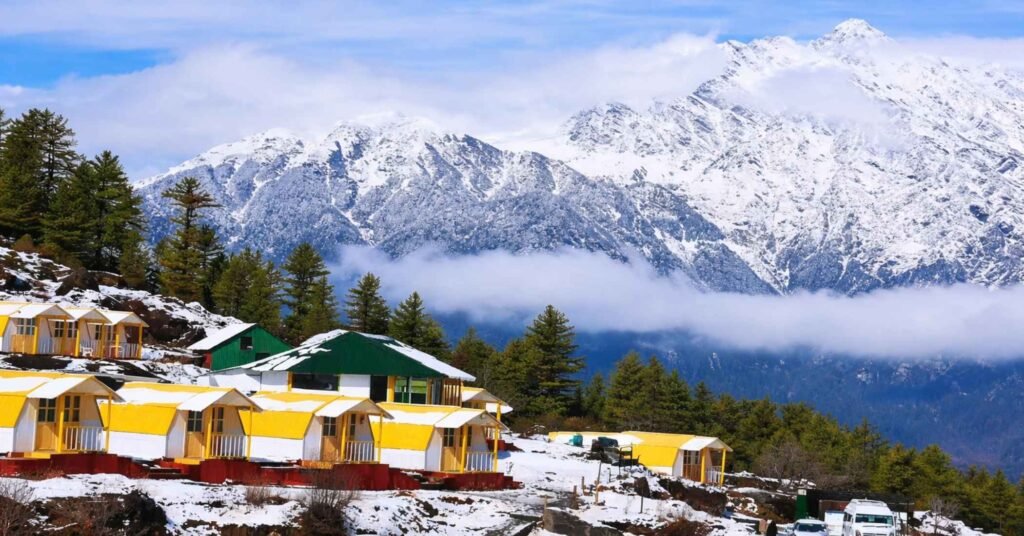
Accommodation in Auli is limited. Book early, especially for January and February. Two properties stand out for winter stays.
GMVN Auli Tourist Rest House
This is the most reliable budget-friendly option in Auli. Run by the Uttarakhand government, it sits right on the slopes and offers direct snow views. It is the base for GMVN skiing courses, so everything is within walking distance. Book directly through the GMVN official website to avoid third-party markups.
Rooms are simple but warm. Hot water and meals are available on-site, which matters a lot when temperatures drop sharply at night.
Cliff Top Club
Cliff Top Club is Auli’s most well-known resort. It sits directly on the ski slopes at high altitude, giving you some of the best panoramic Himalayan views you will find from any hotel in India. Rooms are comfortable, service is good, and the location is hard to beat in winter.
It costs more than GMVN but the slope-side access and views justify it for most travelers.
Auli Ropeway Logistics and 2026 Pricing — What You Must Know Before You Go
The Joshimath-Auli Gondola is not just a scenic attraction. In winter, it is frequently your only viable option for getting up to Auli without spending hours stuck on an ice-blocked road. Understanding exactly how this system works, what it costs, and how to use it without losing half your day in a queue is non-negotiable trip planning.
The Two Lifts Explained
There are two separate aerial systems operating in this corridor, and first-time visitors confuse them constantly.
The Cable Car (Gondola) covers the full 4.15 km distance from Joshimath town up to Auli. The ride takes roughly 20 to 25 minutes and delivers you from the base town directly to the ski area. This is the one you take to reach Auli in the first place. Current 2026 pricing sits at ₹1,000 to ₹1,200 INR per person for a round trip. That rate can shift slightly depending on the operator and the season, so confirm at the booking counter before assuming.
The Chair Lift is a shorter, open-air lift operating within Auli itself. Once you are up at the ski station, this lift carries you higher to access the upper ski slopes and better runs. It costs ₹500 INR per person and is separately ticketed. If you are skiing or want elevated views, budget for this on top of the cable car fare.
Operating Hours and the 5:00 PM Rule
Both systems operate from 9:00 AM to 5:00 PM, and that closing time is enforced. Weather conditions, particularly high winds, can suspend operations without warning at any point during the day. The critical thing to internalize is this: the last cable car descent from Auli leaves at 5:00 PM. Day-trippers who miscalculate their timing face a difficult situation. There is no reliable road descent option during heavy winter snowfall, and arranging alternative transport after dark on a mountain is neither easy nor cheap. Work backwards from that 5:00 PM departure and plan every other part of your day around it.
Beating the Queue
During peak January and February, the Joshimath boarding point can develop queues that run well over an hour by mid-morning. Arrive at the boarding counter by 8:30 AM to get your tickets and position before the rush builds. Booking online where available is the cleaner option, especially for families traveling with children or older members who cannot stand for extended periods in the cold.
Now, for context on why the cable car matters beyond just convenience: I watched the road situation from inside the gondola cabin on my peak-season morning, and the scene below was genuinely striking. A long line of vehicles was essentially frozen in place on the switchback road up from Joshimath, some having sat there for over two hours. From the cable car, we glided over the entire mess in twenty-five minutes, arriving with full energy and no road anxiety. Taking that gondola instead of attempting the drive was the single decision that made that particular day work. I have recommended it without qualification to every traveler since.
Final Verdict: Is Auli Worth It?
Absolutely yes. Auli delivers genuine Himalayan winter without the chaos of more commercial hill stations. January and February give you the best snowfall, best skiing conditions, and the most complete experience.
Plan around the Auli Ropeway, book your stay early, and pack for serious cold. Do that and Auli will not disappoint.
Have a safe and memorable trip.
Frequently Asked Questions About Auli Snowfall
Q1. What is the best time to see snowfall in Auli?
January and February are the best months for snowfall in Auli. Snow is heavy, slopes are fully covered, and skiing conditions are at their peak during this period.
Q2. Does Auli get snow in December?
Yes. Snowfall usually begins in late November and picks up through December. By mid-December, Auli has decent snow cover. It is less crowded than January but the slopes are not fully packed yet.
Q3. Is the road to Auli open in winter?
Not always. The Joshimath to Auli road frequently gets blocked by heavy snow in January and February. The Auli Ropeway is the most reliable way to reach Auli during peak winter.
Q4. Can beginners learn skiing in Auli?
Yes. GMVN offers structured skiing courses for beginners in Auli. Courses run for 7 or 15 days and include gear rental and basic training on the slopes.
Q5. What is the Auli Artificial Lake?
The Auli Artificial Lake is the world’s highest man-made lake. It was built to supply artificial snow to the ski slopes and extend the skiing season when natural snowfall is low.
Q6. How long is the Auli Ropeway?
The Auli Ropeway covers roughly 4 kilometers from Joshimath to Auli. It is one of the highest and longest cable cars in Asia and takes around 20 minutes one way.
Q7. What should I pack for Auli in winter?
Pack thermal wear, heavy woolens, a waterproof jacket, snow boots, gloves, and a warm cap. Sunscreen and UV sunglasses are also important due to high-altitude sun exposure.
Q8. Is Auli good for non-skiers?
Yes. Non-skiers can ride the Auli Ropeway, visit the Auli Artificial Lake, and do the Gorson Bugyal trek for panoramic Himalayan views. The snow scenery alone makes it worth visiting.