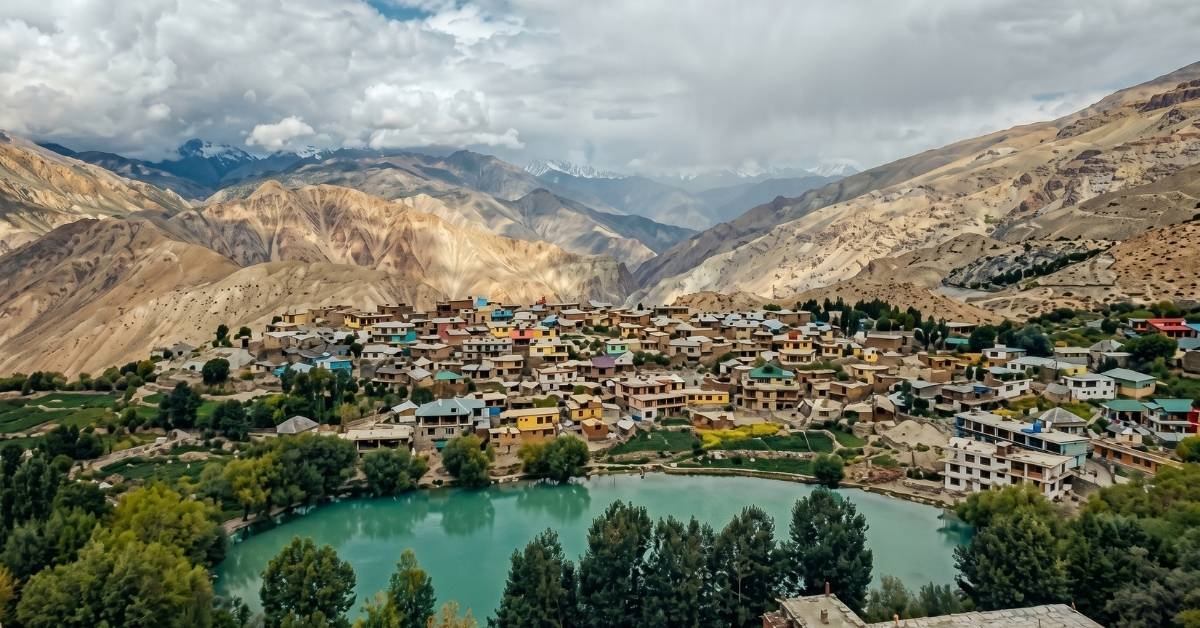
Nako, Himachal Pradesh is a tiny high-altitude village in Kinnaur district, perched at 3,662 meters near the Indo-China border. It has a sacred lake, an 11th-century monastery, and roads that will test your nerves. Perfect for Spiti road trips. Carry cash, expect no ATM, and enjoy the silence.
Nako, Himachal Pradesh is not for everyone. And that is exactly what makes it special.
This small village in the Hangrang Valley of Kinnaur district sits at 3,662 meters (12,014 feet) above sea level. That is higher than most hill stations you have ever visited. The air is thin. The roads are rough. The mobile signals are mostly gone. Yet thousands of travelers make the trip every year, and almost none of them regret it.
Nako is close to the Indo-China border, which already tells you how remote this place is. It is not a weekend getaway. It is a proper expedition that rewards you with one of the most peaceful village experiences in all of Himachal Pradesh.
What you get here is rare. A frozen lake that locals skate on in winter. A monastery founded over a thousand years ago. A confluence of two mighty rivers just down the road. And homestays run by real Kinnauri families who will feed you home-cooked dal and rice like you are their own.
If you are planning a Spiti Valley road trip, Nako is not just a stopover. It is one of the highlights of the entire circuit.
This guide covers everything: how to reach Nako, where to stay, what to see, road conditions, and what to pack. Let us get into it.
Why Nako is the Perfect Spiti Circuit Stopover
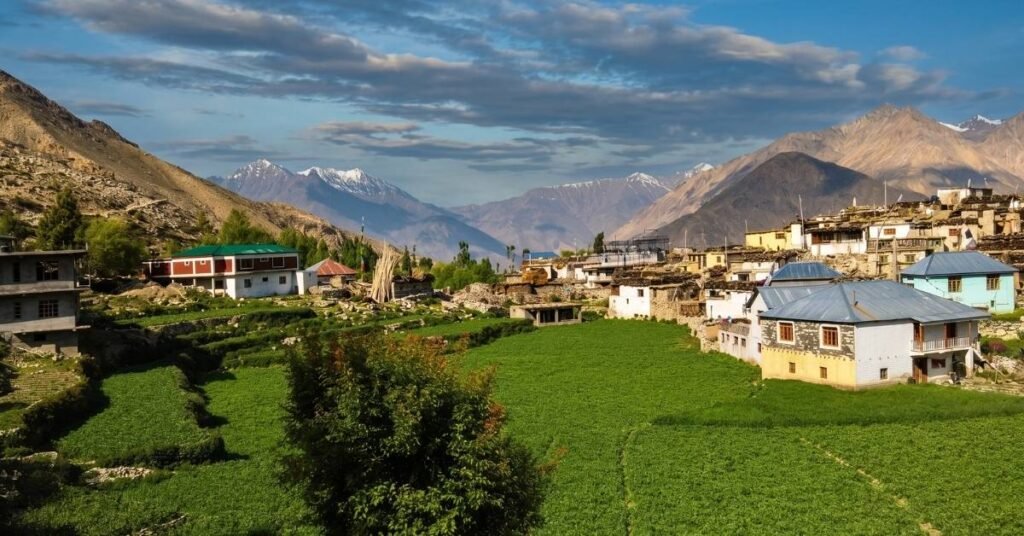
Most travelers rush through Kinnaur to reach Kaza or Tabo. That is a mistake.
Nako is the one stop on the Spiti circuit that does double duty. It gives you a real Himalayan village experience AND helps your body adjust to the altitude before you go higher. Skipping it means missing one of the most underrated villages in Himachal Pradesh and possibly arriving in Kaza with a splitting headache.
Nako Stopover Highlights
| Distance from Shimla | Distance from Kaza | Ideal Stay Duration | Altitude |
| ~320 km | ~110 km | 1 to 2 nights | 3,662 m (12,014 ft) |
The drive from Reckong Peo to Nako takes roughly 3 to 4 hours covering around 100 km. The road follows the Sutlej river gorge, passes through Khab Sangam where the Spiti and Sutlej rivers meet, and then climbs sharply into the Hangrang Valley. It is a dramatic drive. Narrow roads, deep gorges, and zero margin for error.
The Acclimatization Advantage
Here is the thing about altitude sickness. It does not care how fit you are. It hits first-timers and experienced trekkers alike.
Nako at 3,662 meters is a sweet spot. High enough to prepare your body for Kaza at 3,800 meters and beyond, but not so extreme that most healthy travelers struggle badly.
Spending one night here allows your body to produce more red blood cells. Your breathing steadies. Your sleep improves. The next day, you feel genuinely better on the road.
But be warned. Acute Mountain Sickness (AMS) can still hit at this altitude. Watch for these symptoms:
- Persistent headache that does not ease
- Nausea or vomiting
- Dizziness or loss of balance
- Extreme fatigue even after rest
If you feel any combination of these, do not push forward. Descend to Reckong Peo. No view or monastery is worth a medical emergency in a place with no hospital nearby.
Carry Diamox only after consulting a doctor before your trip. Do not self-medicate on the road.
Top Places to Visit in Nako
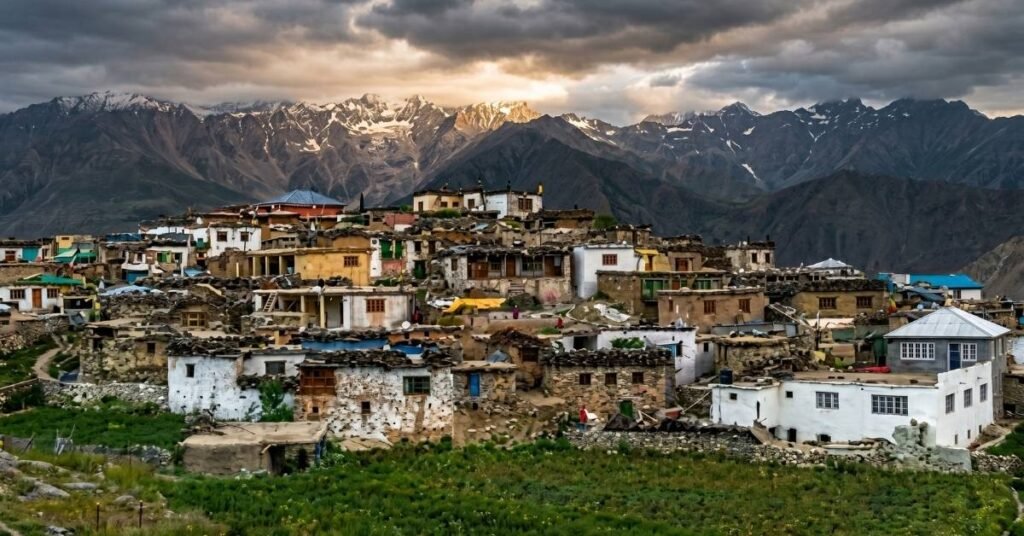
You do not need a long itinerary here. Nako is small. But what it has is quality over quantity. Each attraction carries real history, real spiritual weight, and real natural beauty.
Nako Lake
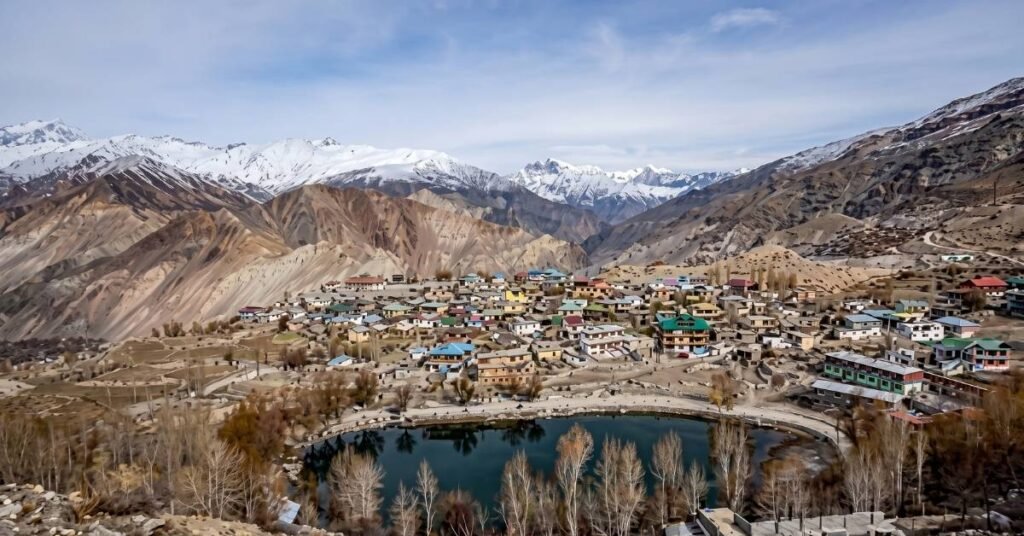
Nako Lake is the heart of the village. Walk to it in under ten minutes from anywhere in Nako. The lake is sacred to the local Buddhist community and has been for centuries.
In summer, the water is calm and reflects the surrounding mountains and willow trees. In winter, the lake freezes completely. Locals have been known to ice skate on its surface during the coldest months. That image alone is worth the journey.
Key features of Nako Lake:
- Sacred high-altitude lake at approximately 3,662 meters
- Surrounded by willow and poplar trees that turn golden in autumn
- Freezes fully in winter, sometimes used for ice skating
- A rock near the lake is believed to carry the footprint of Padmasambhava, also known as Guru Rinpoche, the saint who brought Buddhism to Tibet and the Himalayas
- The footprint site is a quiet, deeply spiritual spot that even non-religious travelers find moving
Do not litter here. The lake is small and fragile. What you bring in, carry out.
Nako Monastery (Chalkhang)
This is not just another monastery you photograph and move on from.
Nako Monastery, locally known as Chalkhang, was founded in 996 AD by Rinchen Zangpo. He was one of the most important Buddhist translators in Himalayan history, responsible for spreading Buddhism across Ladakh, Spiti, and Kinnaur. A monastery he founded over a thousand years ago still standing and still active is remarkable by any measure.
Key features of Nako Monastery:
- Founded in 996 AD, making it over 1,000 years old
- Built by Lotsawa Rinchen Zangpo, the Great Translator of Tibetan Buddhism
- Houses ancient murals painted directly onto the walls, surviving centuries of harsh mountain winters
- Contains rare stucco sculptures that art historians and Buddhist scholars travel specifically to study
- Still an active place of worship for the local community
- Photography rules inside may vary, always ask before pointing a camera
Spend at least 30 to 45 minutes here. Walk slowly. Read what you can. This place rewards patience.
Khab Sangam
Before you reach Nako coming from Reckong Peo, you will pass Khab Sangam. Do not miss it.
This is the confluence point where the Spiti River meets the Sutlej River. Two massive Himalayan rivers merging at the base of steep rocky cliffs is a visual that stays with you long after the trip ends.
Key features of Khab Sangam:
- Located in Kinnaur district, close to the village of Khab
- One of the most dramatic river confluences in all of Himachal Pradesh
- The color difference between the two rivers is visible at the meeting point
- A small bridge and viewpoint area allow you to stop and take it in
- Best visited in the morning when light hits the gorge directly
There is no entry fee. No crowd. Just two rivers and the mountains.
Not Sure Where To Go!
Let our Random Country Generator help you discover your next perfect destination.
Use Our Free ToolHow to Reach Nako & Road Conditions
Getting to Nako is half the adventure. The route is long, the roads are narrow, and there are stretches that will genuinely test your confidence behind the wheel. But it is absolutely doable with the right preparation.
The Main Route
Shimla → Rampur → Reckong Peo → Khab Sangam → Nako
Total distance from Shimla to Nako is approximately 320 km. Plan for 10 to 12 hours of driving spread across at least two days. Most travelers break the journey by staying a night in Reckong Peo or Sangla before pushing on to Nako.
The road follows National Highway 5 (the old Hindustan-Tibet Road) for most of the route. After Reckong Peo, the road narrows significantly and hugs the edge of deep river gorges. This section demands full attention. Overtaking is rare. Reversing for oncoming trucks is common.
From Reckong Peo to Nako is around 100 km and takes 3 to 4 hours depending on road conditions and stops.
A Warning About Malling Nallah
Right after Nako, heading towards Chango and Tabo, you will encounter Malling Nallah. This is one of the most notorious stretches on the entire Spiti circuit. It is a water crossing and a landslide-prone zone that can close without warning, especially during or after rain. Always check the road status locally before you proceed beyond Nako. Ask your homestay host the night before you plan to leave.
Transport Options to Nako
- HRTC Bus: Himachal Road Transport Corporation runs state buses from Shimla to Reckong Peo. From Reckong Peo, local buses and shared cabs go towards Nako, though schedules are limited. Before planning your journey, spend time checking official state bus schedules to confirm timings and availability.
- Self-Drive: The most flexible option. A sturdy car like an Innova, Scorpio, or any 4WD vehicle is strongly recommended. Hatchbacks and sedans struggle on post-Peo roads.
- Royal Enfield or Adventure Bike: A popular choice for bikers doing the full Spiti circuit. Carry extra fuel after Reckong Peo as petrol pumps become scarce.
- Shared Taxi: Available from Reckong Peo to Nako. Affordable, local, and the driver usually knows every bend in the road. Ask at the Reckong Peo taxi stand directly.
Best Places to Stay in Nako
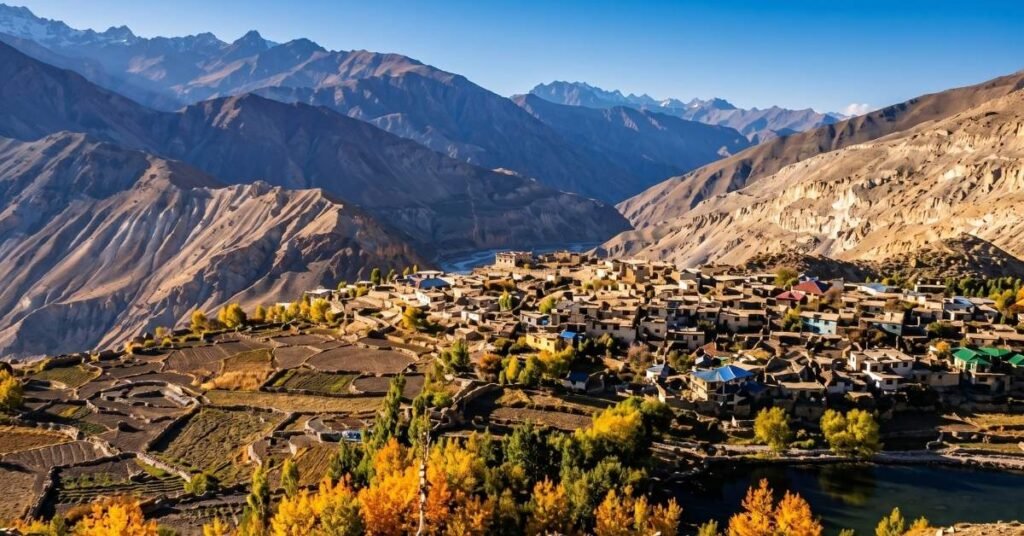
Do not come to Nako expecting a hotel with room service and Wi-Fi. That is not what this place is. What you get instead is something more valuable: a real Himalayan village stay where the host family lives next door, the food is homemade, and the silence at night is absolute.
Accommodation options are limited. That is part of what keeps Nako unspoiled.
What to Expect from Facilities
Because Nako is remote and sits close to the Indo-China border, infrastructure is basic across the board.
- Hot water is usually available in buckets or through solar heaters, not 24-hour geysers
- Electricity can be inconsistent, especially during bad weather
- Mobile connectivity is extremely weak; BSNL works best, Jio and Airtel are mostly unreliable
- Heating arrangements are basic, so carry a good sleeping bag rated for sub-zero temperatures
- ATMs do not exist in Nako; carry all your cash from Reckong Peo
Recommended Stays in Nako
Kinner Camps Nako is the option for travelers who want a more premium experience without leaving the mountains. It offers luxury tent accommodations with proper bedding and a setup that feels curated without being artificial. Good choice for couples or travelers who want comfort alongside the wilderness.
Knaygoh Kinner Home is a highly rated authentic homestay run by a local Kinnauri family. This is the kind of place where you eat what the family eats, wake up to mountain views, and leave with stories that no resort can give you. Ideal for solo travelers, backpackers, and anyone who wants genuine cultural immersion.
Book both options in advance during peak season, which runs from June to September. Rooms fill up faster than most travelers expect.
Crucial Survival Tips: Network, ATMs, & Weather
This section can save your trip. Read it before you pack.
Mobile Network
The signal situation in Nako is straightforward once you know it.
- BSNL is your best bet. It has the widest coverage in remote Kinnaur and Spiti areas. Get a BSNL SIM before you leave Shimla or Reckong Peo if you do not already have one
- Jio and Airtel are largely unreliable past Reckong Peo. Do not depend on them for navigation or calls in Nako
- Internet data is extremely slow even on BSNL. Download offline maps on Google Maps or Maps.me before you enter the valley
- Inform your family about blackout zones before you leave. Set expectations early
ATMs and Cash
- There are no ATMs in Nako. None.
- The last reliable ATM is in Reckong Peo. Withdraw enough cash to cover your full stay in Nako plus the onward journey to Kaza or Tabo
- Carry more than you think you need. Homestays, local dhabas, and small shops only accept cash
- UPI sometimes works on BSNL data but do not rely on it for payments
Best Time to Visit
| Season | Months | Road Status | Experience |
| Peak Summer | June to September | Open and accessible | Best weather, clear skies, full tourist activity |
| Autumn | October | Roads start closing | Fewer crowds, golden foliage, cooler nights |
| Winter | November to April | Roads mostly closed | Heavy snow, extreme cold, village largely cut off |
Do Indians Need a Permit?
No. Indian citizens do not need an Inner Line Permit (ILP) to visit Nako. A valid government-issued photo ID like Aadhaar or a driving license is sufficient.
Foreign nationals do require an ILP. They should obtain it from the District Magistrate’s office in Reckong Peo before proceeding further.
Frequently Asked Questions
Q1: Is the Nako to Kaza road safe for hatchbacks?
Not recommended. The stretch beyond Nako, especially around Malling Nallah, has rough patches, water crossings, and loose gravel sections. A hatchback can make it but the risk of damage to the undercarriage is real. Stick to an SUV, 4WD, or a high-clearance vehicle if possible.
Q2: Does Jio work in Nako village?
Mostly no. Jio connectivity is extremely unreliable in Nako and the surrounding Hangrang Valley. BSNL gives you the best chance of staying connected. Get a BSNL SIM before leaving Shimla or Reckong Peo.
Q3: How much time is enough to explore Nako?
One full day covers the lake, monastery, and village walk comfortably. But one night minimum is strongly recommended for acclimatization and to actually feel the place rather than just photograph it.
Q4: What is the history of Nako Lake?
Nako Lake has been sacred to the local Buddhist community for centuries. It is closely tied to the legacy of Padmasambhava, with a rock near the lake believed to carry his footprint. The lake has held spiritual significance in the Hangrang Valley long before modern tourism arrived.
Q5: Is Nako village safe for solo female travelers?
Yes. Nako is a small, tight-knit Buddhist community. Locals are generally respectful and welcoming. Basic precautions apply as they would anywhere in a remote area.
Q6: What is the Nako to Kaza distance?
Nako to Kaza is approximately 110 km by road. Expect the drive to take 4 to 5 hours due to mountain road conditions, possible stops at Malling Nallah, and the overall pace of Spiti Valley driving.
Final Thoughts on Nako
Nako does not shout for your attention. It does not need to.
This small village in Kinnaur has everything a genuine Himalayan traveler looks for: altitude, history, spirituality, and silence. The roads are hard. The facilities are basic. The rewards are real.
If you are already planning a Spiti circuit, build in at least one night in Nako. Your body will thank you for the acclimatization. Your mind will thank you for the stillness.
And if you are on the fence about whether a remote village with no ATM and patchy network is worth the effort, the answer is yes. It always is.