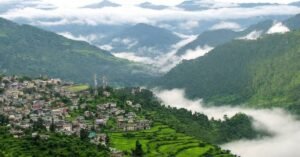
Spiti Valley Milky Way Guide: Best Time, Spots & Photography Tips
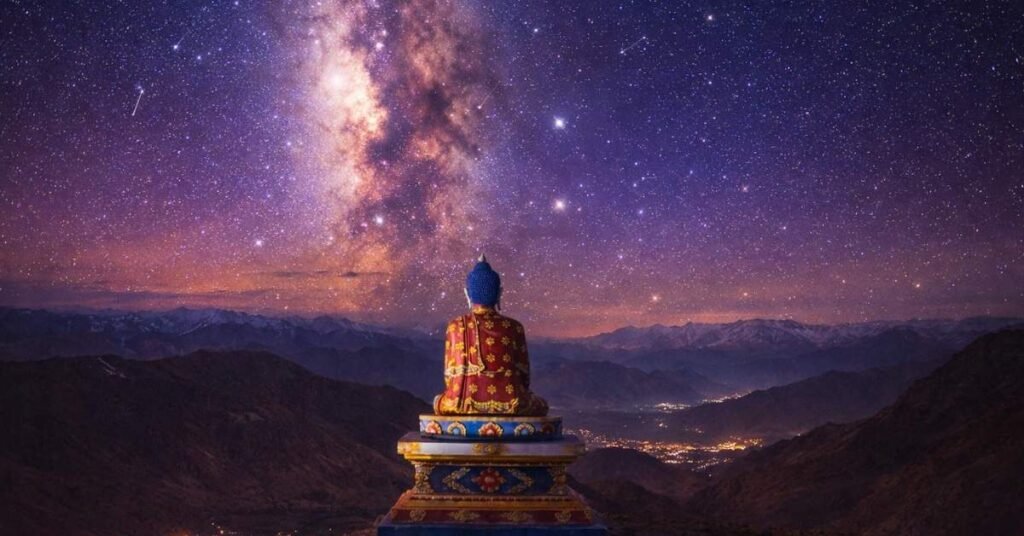
Have you ever looked up at the night sky in your city and seen… nothing? Maybe just one or two faint stars?
Now, imagine standing in a place so high up in the mountains that the stars look like diamonds scattered on a black velvet cloth. Imagine seeing a bright, cloudy band of light stretching across the sky. That is the Milky Way Galaxy, our home in the universe.
Most people never get to see this magic because of city lights. But in Spiti Valley, things are different.
Spiti is known as a “Dark Sky” location. This means there is almost zero light pollution. No streetlights, no tall buildings, and no factory smoke to block your view. Here, the air is thin and clean, making it one of the best places in India—and the world—to see the Milky Way with your naked eye.
In this guide, I am going to share everything you need to know to witness this breathtaking sight. We will cover:
- Why Spiti is perfect for stargazing.
- The exact months to visit for the best views.
- The top 5 spots to take amazing photos.
- Simple tips to capture the galaxy on your camera or phone.
Get ready to chase the stars!
Why Spiti Valley is Perfect for Stargazing
You might be wondering, “Why can’t I see the Milky Way from a hill station like Shimla or Manali?”
The answer lies in three special things that Spiti Valley has. These factors come together to create the perfect window to the universe.
- Zero Light Pollution In big cities, streetlights, car headlights, and billboards create a glow that hides the stars. This is called light pollution. Spiti Valley is very remote. The villages here are small and far apart. When the sun goes down, it gets pitch black. This darkness allows the faint light of the Milky Way to shine brightly.
- Super High Altitude Spiti is not just a hill station; it is a high-altitude desert. Most villages here are over 12,000 feet above sea level! When you are this high up, you are physically closer to space. There is less dust, smoke, and thick air between you and the stars, making the view crystal clear.
- Dry Weather Moisture and clouds are the enemies of stargazing. Because Spiti is a “cold desert,” it rains very less here. The air is extremely dry. This means you get clear, cloudless skies on most nights, giving you a perfect view of the galaxy.
Best Time to See the Milky Way in Spiti
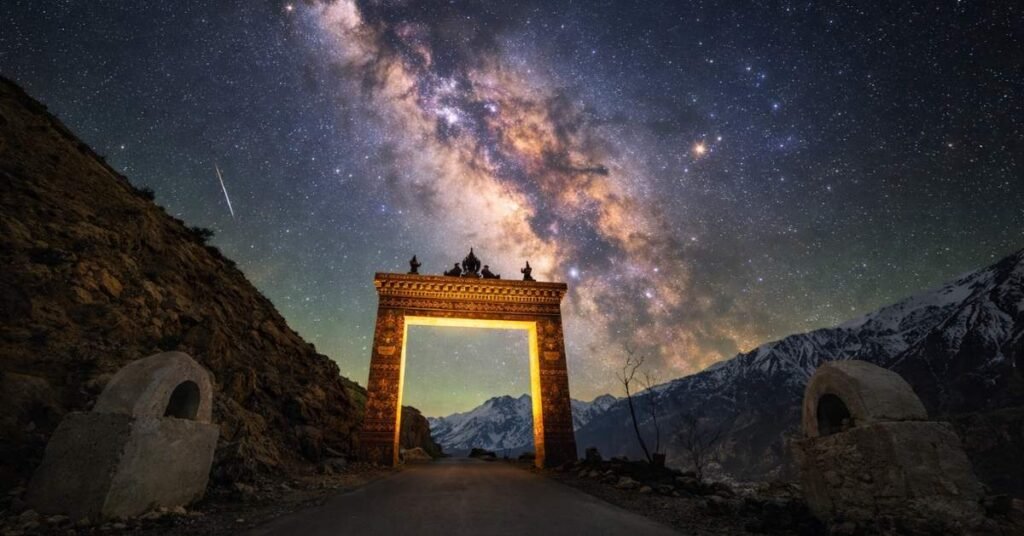
You cannot just pack your bags and go to Spiti on any random date to see the Milky Way. To get that perfect view, you need two things to be just right: the Month and the Moon.
The Best Months: May to September
The Milky Way has a bright center called the “Galactic Core.” This is the most beautiful part. In the Northern Hemisphere (where India is), this core is visible during the summer months.
- May & June: The sky is very clear. The core rises late at night (after 11 PM or midnight). It is cold, but the views are amazing.
- July & August: The core rises earlier (around 9 PM or 10 PM). However, sometimes clouds can appear, so check the weather forecast.
- September: This is often considered the best month. The sky is super clear, the weather is pleasant, and the core is visible right after sunset.
The “New Moon” Secret
This is the most important tip in this entire guide.
Imagine the Moon is a giant, bright streetlamp in the sky. If the Moon is full and bright, its light will wash out the stars. You will see very few stars, and the Milky Way will be invisible.
You must plan your trip around the New Moon.
- New Moon: No moon in the sky. Pitch black darkness. Perfect for stargazing.
- Full Moon: Very bright. Bad for stargazing.
Here is a quick cheat sheet for you:
| Phase | Stargazing Rating | What You Will See |
| New Moon | ⭐⭐⭐⭐⭐ (Best) | Thousands of stars & clearly visible Milky Way. |
| First Quarter | ⭐⭐⭐ (Good) | Moon sets early. Shoot after midnight. |
| Full Moon | ⭐ (Bad) | Only bright stars. No Milky Way. |
| Last Quarter | ⭐⭐ (Okay) | Moon rises late. Shoot early in the evening. |
Top 5 Locations for Milky Way Photography in Spiti
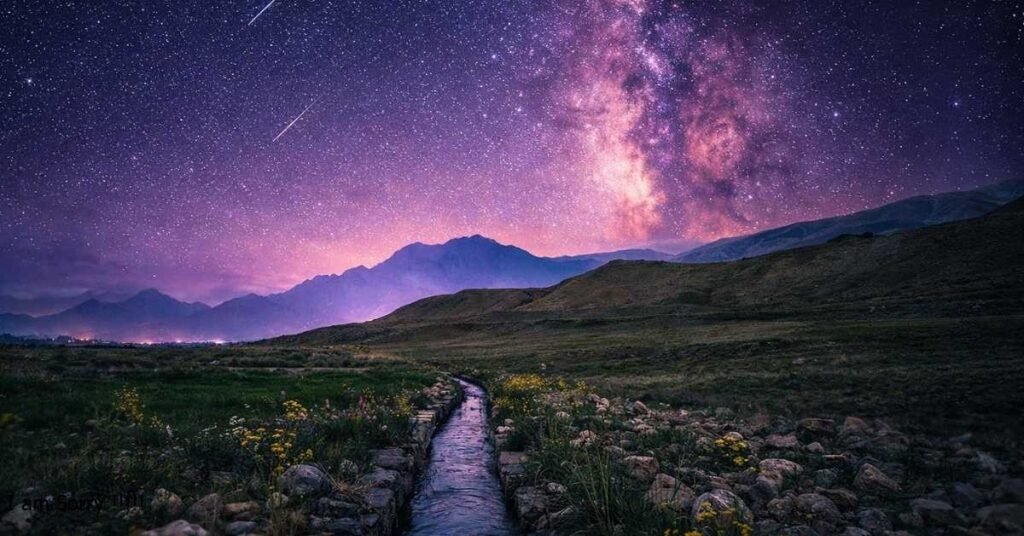
Okay, you know when to go. Now, where exactly should you stand to get that breathtaking photo?
Spiti is huge, but some places are just magical for stargazing. These spots offer something special in the foreground (the object in front of the stars) to make your picture look professional.
Langza Village (The Buddha Statue)
This is the most famous spot in Spiti for night photography.
- The Shot: A giant, golden Buddha statue sits on top of a hill, looking over the valley. Imagine the Milky Way arching right over the Buddha’s head!
- Why it works: The village is very high (14,500 feet), so the sky is incredibly clear. There are almost no lights around the statue at night.
Key Monastery (The Iconic Shot)
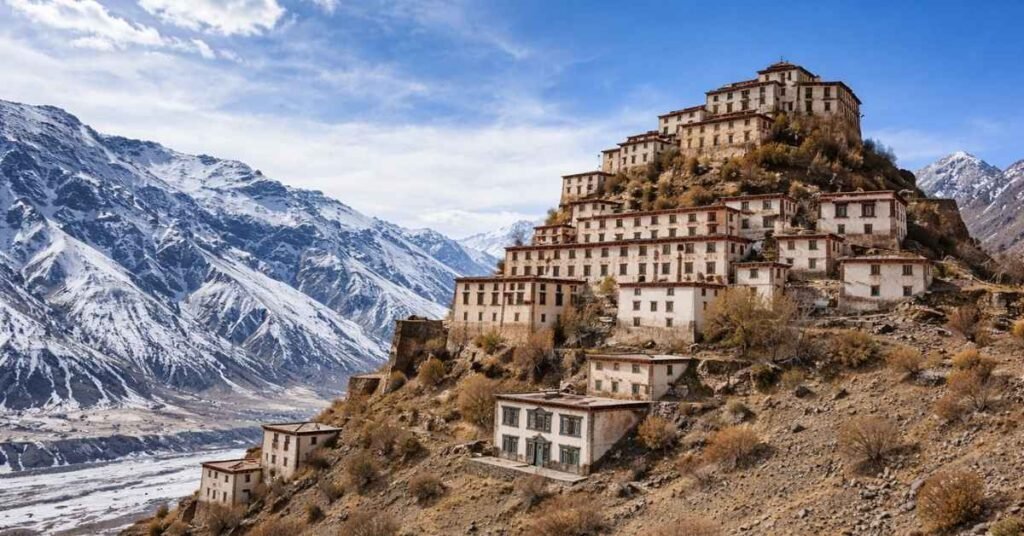
You have probably seen photos of this monastery. It looks like a honeycomb of boxes stacked on a hill.
- The Shot: The monastery lights are usually turned off or very dim late at night. If you are lucky, you can catch the galaxy rising behind the monastery’s unique shape.
- Tip: Try to find a spot on the road below the monastery looking up, or from the hill opposite to it.
Dhankar Lake (The Reflection)
This requires a bit of effort, but the reward is huge. Dhankar Lake is a high-altitude lake situated above Dhankar village.
- The Shot: On a calm night with no wind, the water acts like a mirror. You can see the stars in the sky and their reflection in the lake.
- Warning: It is a steep trek. Only go if you are fit and have a local guide, as walking back in the dark can be tricky.
Chicham Bridge (The Depth)
Chicham Bridge is the highest bridge in Asia!
- The Shot: You can stand on the bridge and shoot the galaxy stretching across the deep gorge below. The depth of the valley makes the sky look even bigger.
- Why it works: It is very open, giving you a full 360-degree view of the sky.
Tabo & The Caves
Tabo is known as the “Ajanta of the Himalayas” because of its ancient monastery and caves.
- The Shot: The old mud caves on the hillside look mysterious under the starlight. You can frame your shot with the caves in the bottom and the galaxy on top.
- Bonus: Tabo is at a slightly lower altitude, so it is warmer than Langza or Komic.
How to Photograph the Milky Way (Simple Guide)
Many people think you need a camera worth ₹1 Lakh to take photos of stars. That is not true! You just need to know the right settings.
Here is the simplest way to take that dream shot.
Gear You Need (The Basics)
- Tripod (Very Important): You cannot hold the camera in your hands. Your hands shake a little bit, and that will make the stars look blurry. You need the camera to be rock steady.
- Camera: A DSLR or Mirrorless camera is best.
- Wide Angle Lens: This lens allows you to capture more of the sky in one photo.
Camera Settings (The Cheatsheet)
Switch your camera to Manual Mode (M) and use these settings. You can save this list on your phone!
- Shutter Speed (15 to 20 Seconds):
- This keeps the camera “eye” open for 20 seconds to collect light.
- Why not longer? If you keep it open for 30 seconds or more, the stars will start to look like small lines because the Earth is rotating. We want sharp dots, not lines.
- Aperture (f/2.8 or lower):
- This opens the lens wide to let in maximum light. If your lens goes to f/1.8 or f/2.8, use that.
- ISO (1600 to 3200):
- This makes the sensor sensitive to light. Don’t go too high (like 6400) or the photo will look grainy (noisy).
- Focus (Manual):
- Auto-focus does not work in the dark. Switch to Manual Focus. Zoom in on the brightest star you can see on your screen and twist the focus ring until the star looks like a sharp, tiny dot.
Can You Shoot the Milky Way with a Mobile?
Yes, you can! Most modern phones (like iPhone 13+, Pixel, Samsung S-series) have great cameras.
- Step 1: Put your phone on a tripod (or rest it against a rock). It must not move.
- Step 2: Open your camera app and look for “Pro Mode” or “Night Mode.”
- Step 3: Set the Shutter Speed to 30 seconds (or the maximum allowed).
- Step 4: Set ISO to 3200.
- Step 5: Click the button and wait. Do not touch the phone until it is done!
Practical Tips & Challenges (Read Before You Go)
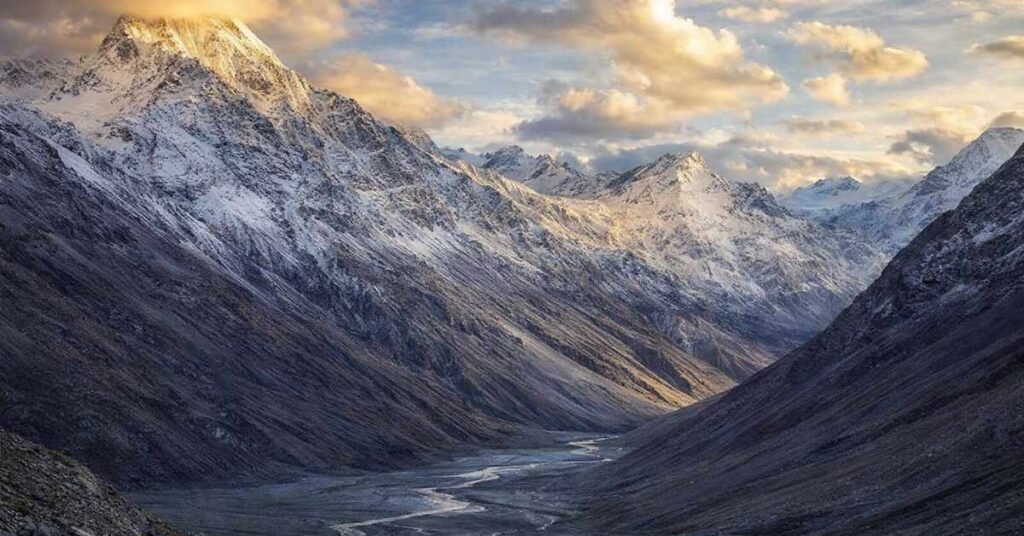
Taking photos of the stars sounds dreamy, but in reality, it can be tough. Spiti is a harsh place. Here are some real challenges you will face and how to beat them. This is the stuff most travel guides forget to tell you!
- It Gets Freezing Cold Even if you visit in June or July, the nights are extremely cold. Temperatures can drop below zero degrees once the sun sets.
- Tip: Wear thermal inners, a heavy down jacket, gloves, and a woolen cap. You cannot press camera buttons if your fingers are frozen!
- Batteries Die Fast Cold weather drains camera and phone batteries very quickly. A battery that lasts 5 hours in Delhi might only last 1 hour in Spiti at night.
- Tip: Keep your spare batteries inside your jacket pocket, close to your body heat. Only take them out when you need to use them.
- Let Your Eyes Adjust When you first step out of your homestay, you might not see many stars. Do not worry.
- Tip: It takes about 20 minutes for human eyes to adjust to true darkness. Avoid looking at your phone screen or bright torches during this time. Suddenly, thousands of stars will “appear” as your eyes get used to the dark.
- Safety First Spiti is home to wildlife like snow leopards and blue sheep, and the terrain is rocky with steep cliffs.
- Tip: Do not wander off too far from the village alone in the pitch dark. Always carry a headlamp (torch) but keep it off when you are shooting photos.
A 5-Day “Stargazer’s Itinerary” for Spiti
To help you plan the best trip, here is a simple 5-day plan designed specially for photography and stargazing. This ensures you see the best spots without getting tired.
Note: This plan starts after you reach Kaza (the main town of Spiti).
- Day 1: Rest & Acclimatize in Kaza
- Daytime: Rest. Your body needs to get used to the high height (altitude). Drink lots of water.
- Night: Do not go far. Just go to the roof of your hotel in Kaza. The sky will still be better than any city!
- Day 2: The Buddha Statue (Kaza to Langza)
- Drive: 1 Hour.
- The Plan: Reach Langza by evening. Book a homestay.
- Night Shoot: Walk to the famous Buddha statue. The village goes silent early, giving you a perfect dark sky.
- Day 3: The Monastery Lights (Langza to Kibber)
- Drive: 1 Hour.
- The Plan: Visit Key Monastery on the way.
- Night Shoot: Stay in Kibber or Chicham. You can drive down slightly to get a shot of the Key Monastery with stars behind it.
- Day 4: Caves & Canyons (Kibber to Tabo/Dhankar)
- Drive: 2-3 Hours.
- The Plan: Head towards Tabo. It is lower and slightly warmer.
- Night Shoot: Shoot the galaxy over the ancient meditation caves in Tabo.
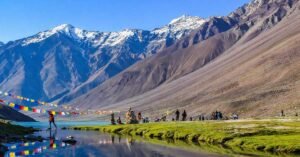
- Day 5: The Grand Finale (Chandratal Lake)
- Drive: 4-5 Hours (Long drive).
- The Plan: This is the best part of the trip. You will sleep in tents near the lake.
- Night Shoot: The sky here is the clearest. Walk near the lake (carefully!) to see the stars reflecting in the water. It is magic.
Frequently Asked Questions (FAQs)
Here are answers to some common questions you might have before planning your trip.
- Is it safe to go out at night in Spiti? Yes, it is generally safe. The local people are very friendly and helpful. However, the terrain is rocky and dark. It is always better to go with a friend or a guide. Do not walk near cliffs in the dark.
- Do I need special permission for photography? You do not need permission for general photography. However, if you are using a drone, you must check with the local police station in Kaza first, as some areas are near the border.
- Is there electricity to charge my camera? In main towns like Kaza and Tabo, yes. But in small villages like Langza or at Chandratal tents, electricity can be rare. Always carry a heavy-duty power bank and spare batteries.
- Which is the single best month for the Milky Way? If I had to pick just one, I would say September. The monsoon is gone, the sky is scrubbed clean, and the galactic core is visible as soon as the sun sets.
Conclusion
Spiti Valley is not just a holiday destination; it is an experience that stays with you forever.
Standing under that blanket of stars, seeing the Milky Way with your own eyes, makes you realize how big and beautiful our universe really is. Whether you are a professional photographer with a big camera or a traveler with a smartphone, the night sky of Spiti welcomes everyone.
So, pack your warmest jacket, charge your batteries, and get ready for the show of a lifetime.
Have you ever seen the Milky Way? Or are you planning your first trip to Spiti? Let me know in the comments below—I would love to help you plan!