
How to Reach Ayodhya from Pune (Complete Travel Guide)
Last updated on January 25th, 2026 at 04:44 am
Introduction
Planning a trip from Pune to Ayodhya? You’re in the right place!
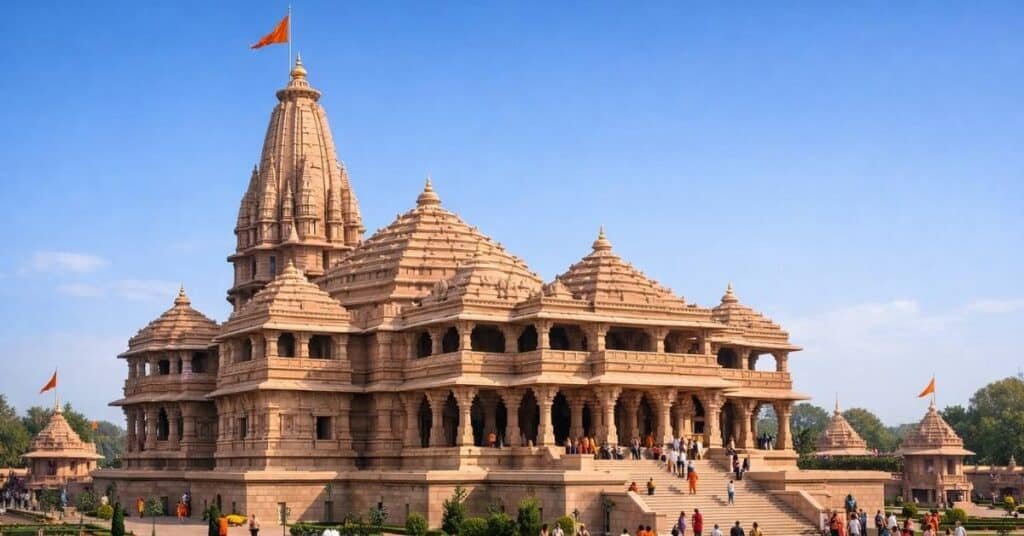
Ayodhya is one of the most important spiritual cities in India — the birthplace of Lord Ram and home to many ancient temples, especially the famous Ram Mandir. People from all over India, including Pune, are now eager to visit Ayodhya to experience its rich history and divine atmosphere.
But how do you actually go from Pune to Ayodhya?
There are many ways: by train, flight, bus, or car — and in this guide, we’ll help you pick the best way that suits your budget, time, and comfort.
You’ll find:
- The easiest train options from Pune to Ayodhya
- Flight routes if you want to save time
- Bus and road trip tips
- Local travel options in Ayodhya
- Clear answers to common questions
- Tables and bullet points to make things simple
Let’s begin your journey from Pune to Ayodhya — step by step!
Pune to Ayodhya: Distance & Travel Overview
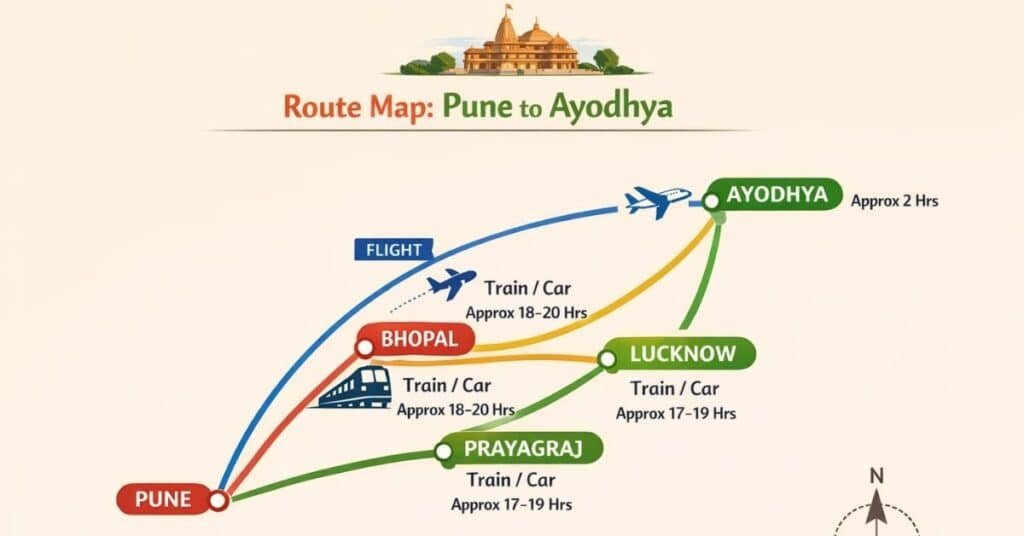
The distance between Pune and Ayodhya depends on how you travel. Here’s a quick overview of all options:
| Mode of Travel | Distance (Approx) | Travel Time (Approx) |
| By Train | 1,500+ km | 24–32 hours |
| By Flight (via Lucknow or Varanasi) | 1,400–1,600 km | 4–7 hours (including layovers & transfers) |
| By Bus | 1,500+ km | 30–38 hours |
| By Car | 1,450–1,600 km | 30–36 hours |
Key Points:
- Flight is the fastest way (but may not be direct).
- Train from Pune to Ayodhya is the most budget-friendly option.
- Driving or taking a bus is a long journey but possible if you like road trips.
Now that you have a basic idea, let’s dive deeper into each travel option.
Pune to Ayodhya Train Journey (Best for Budget Travel)
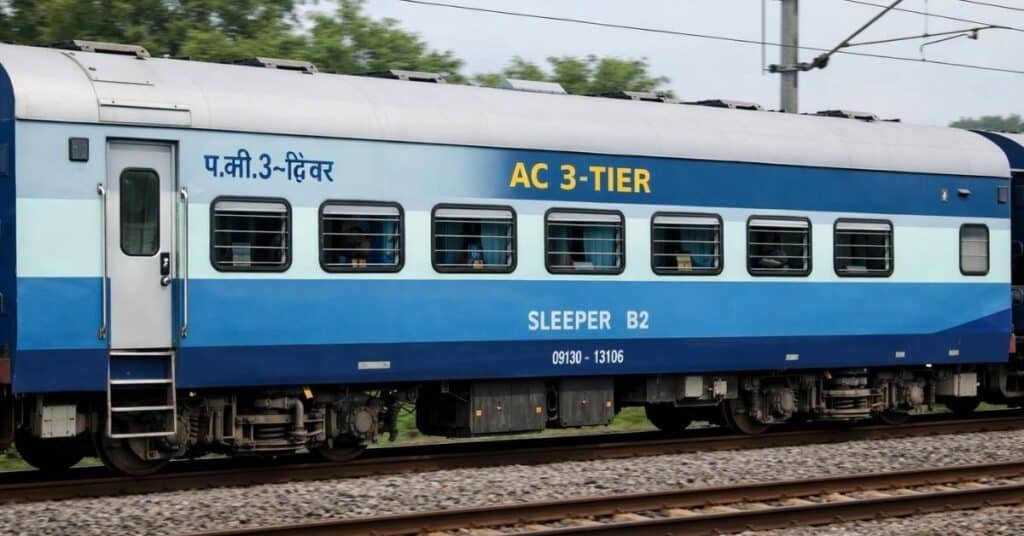
Travelling by Pune to Ayodhya train is one of the most popular and affordable ways to reach this holy city. Many pilgrims, families, and budget travelers choose the train because it offers comfort, safety, and good connectivity across India.
At present, there is no direct train from Pune to Ayodhya, but you can easily reach Ayodhya by changing trains at major railway stations like Lucknow, Varanasi, or Prayagraj.
Let’s understand the full journey step by step.
Route Options (With Simple Connections)
You start your journey from Pune Junction (PUNE) and travel to a major city close to Ayodhya. From there, you take a short connecting train or bus to Ayodhya Cantt (AYC), the main railway station in Ayodhya.
Most Used Routes:
- Pune → Lucknow → Ayodhya Cantt
- One of the easiest and fastest routes
- Many local trains and buses are available from Lucknow to Ayodhya
- One of the easiest and fastest routes
- Pune → Varanasi → Ayodhya Cantt
- Good option if you also want to visit Kashi Vishwanath Temple
- Good option if you also want to visit Kashi Vishwanath Temple
- Pune → Prayagraj → Ayodhya Cantt
- Popular during festival seasons and pilgrim travel
- Popular during festival seasons and pilgrim travel
Major Stations to Know
Understanding station names helps in smooth booking and travel:
| City | Station Name | Station Code |
| Pune | Pune Junction | PUNE |
| Lucknow | Lucknow Junction | LKO |
| Varanasi | Varanasi Junction | BSB |
| Prayagraj | Prayagraj Junction | PRYJ |
| Ayodhya | Ayodhya Cantt | AYC |
Popular Trains for Pune to Ayodhya Route
Here are some well-known trains you can use for the first part of your journey:
| From | To | Train Name | Travel Time |
| Pune | Lucknow | Pune–Lucknow Superfast Express | 28–30 hours |
| Pune | Varanasi | Gyan Ganga Express | 30–32 hours |
| Pune | Prayagraj | Pune–Prayagraj Express | 29–31 hours |
From Lucknow, Varanasi, or Prayagraj, take a passenger train, MEMU, or bus to Ayodhya Cantt. This final journey usually takes 3–5 hours.
Total Travel Time
On average, the full Pune to Ayodhya train journey takes:
- 30 to 34 hours, depending on:
- Waiting time between connecting trains
- Train speed
- Weather and seasonal rush
- Waiting time between connecting trains
Seat Types & Comfort Guide
For such a long journey, choosing the right seat is important:
| Class | Comfort Level | Best For |
| Sleeper (SL) | Basic | Budget travelers |
| 3AC | Good | Families, long trips |
| 2AC | Very Good | Elderly, comfort seekers |
| 1AC | Premium | Maximum comfort |
Ticket Price Range (Approx)
| Class | Price Range |
| Sleeper | ₹600 – ₹900 |
| 3AC | ₹1,500 – ₹2,300 |
| 2AC | ₹2,500 – ₹3,500 |
| 1AC | ₹4,000+ |
(Prices may change during festivals and peak seasons)
Smart Train Booking Tips
- Book tickets at least 2–3 weeks in advance
- Use IRCTC website or app for official booking
- Check PNR status a day before travel
- Carry a valid ID proof
- Pack light food, water, and a small pillow or blanket
- Keep your phone charged and save station names offline
Reaching Ayodhya from Ayodhya Cantt Station
Once you arrive:
- Auto-rickshaws and e-rickshaws are easily available
- Taxis can take you to Ram Mandir, Hanuman Garhi, and hotels
- Most temples are within 5–15 minutes from the station
Pune to Ayodhya by Flight (Fastest Travel Option)
If you’re looking to save time and travel quickly, taking a flight is the best option. However, there’s no direct flight from Pune to Ayodhya at the moment. But don’t worry — you can still reach Ayodhya by flying to a nearby airport, then traveling by taxi or bus.
Let’s see how to do it.
Step-by-Step Flight Route
- Fly from Pune to Lucknow or Varanasi
These are the two nearest airports to Ayodhya.- Lucknow Airport (LKO) – about 135 km from Ayodhya
- Varanasi Airport (VNS) – about 200 km from Ayodhya
- Lucknow Airport (LKO) – about 135 km from Ayodhya
- Take a cab, bus, or train from the airport to Ayodhya
Popular Flights from Pune
Here are some common connecting flights from Pune Airport (PNQ):
| Airline | Route | Stops | Approx Duration |
| IndiGo | Pune → Lucknow | 1 stop (Delhi/Hyderabad) | 5–6 hours |
| Air India | Pune → Varanasi | 1 stop (Delhi) | 6–7 hours |
| IndiGo | Pune → Lucknow | Non-stop (limited days) | 2.5 hours |
Note: Direct flights may not run daily. Always check the schedule while booking.
Airport to Ayodhya Transfers
After landing at Lucknow or Varanasi:
- From Lucknow:
- Take a taxi (₹2,000–₹3,000) — 3–4 hour journey
- Or book a bus from Kaiserbagh Bus Stand
- Take a taxi (₹2,000–₹3,000) — 3–4 hour journey
- From Varanasi:
- Taxis available (₹2,500–₹3,500) — 4–5 hour journey
- Trains and buses also operate between Varanasi and Ayodhya
- Taxis available (₹2,500–₹3,500) — 4–5 hour journey
Flight Cost Range
| Route | Fare (Approx) |
| Pune → Lucknow | ₹5,000 – ₹9,000 |
| Pune → Varanasi | ₹5,500 – ₹10,000 |
Prices depend on the season and how early you book.
Flight Booking Tips
- Book early for cheaper fares
- Use apps like MakeMyTrip, Skyscanner, or Google Flights
- Check if luggage is included (low-cost airlines may charge extra)
- Look for early morning flights to save time and avoid delays
- After reaching Lucknow/Varanasi, book cabs via Uber, Ola, or local taxi apps
This option is best for:
- People with limited time
- Senior citizens or families who want a comfortable journey
- Those visiting Ayodhya during festivals or weekends
Pune to Ayodhya by Bus (Budget Road Journey)
Traveling from Pune to Ayodhya by bus is a long journey, but it’s still an option for those looking for affordable travel and who enjoy road trips. Though there are no direct government buses between Pune and Ayodhya, you can reach Ayodhya by taking a private sleeper or semi-sleeper bus with a transfer at a major city like Nagpur, Jabalpur, or Lucknow.
Route Overview
The road distance between Pune and Ayodhya is about 1,500 km, and the journey can take anywhere between 30 to 38 hours, depending on stops and traffic.
Bus Travel Options
Here’s how you can plan a bus trip:
- Take a long-distance bus from Pune to Lucknow or Varanasi
- From there, take another bus or train to Ayodhya
Sample Travel Plan
- Pune → Lucknow (via sleeper or AC bus)
- Lucknow → Ayodhya (local bus, 3–4 hours)
Private Bus Operators (For Pune to Lucknow Route)
Some private bus companies offer multi-day buses or split journeys with transfer cities:
| Operator | Bus Type | Duration | Fare (Approx) |
| Saini Travels | Non-AC Sleeper | 32–36 hrs | ₹2,500 – ₹3,500 |
| VRL Travels | AC Sleeper | 30–34 hrs | ₹3,500 – ₹4,500 |
| Sharma Travels | Semi-Sleeper | 28–33 hrs | ₹2,000 – ₹3,000 |
Note: These may stop at Nagpur or other cities where you’ll need to change buses.
Booking Platforms
You can book tickets easily on:
- RedBus
- AbhiBus
- MakeMyTrip
Always check:
- If the journey is direct or involves a transfer
- Layover time between connecting buses
- Reviews of the bus service
Bus Travel Tips
- Carry a neck pillow, light snacks, and water bottles
- Keep your charger and power bank handy
- Wear comfortable clothes for the long ride
- Download offline maps in case of network loss
- Double-check boarding and drop points before the journey
This option is best for:
- Budget-conscious travelers
- Those who prefer road travel over air or train
- Adventure lovers who enjoy long scenic drives
Pune to Ayodhya by Car (A Long but Flexible Road Trip)
If you love road trips and want full control over your journey, you can drive from Pune to Ayodhya in your own car or book a private cab. While this is the longest travel option, it gives you the freedom to choose your own route, stops, and timing.
Road Distance & Duration
- Total distance: Around 1,450 to 1,600 km
- Approx travel time: 30 to 36 hours (excluding rest stops)
- Ideal for: Families, group travelers, or those who love driving through multiple states
Recommended Driving Route
Here’s one of the most commonly used and smoother routes:
Pune → Aurangabad → Nagpur → Jabalpur → Rewa → Prayagraj → Ayodhya
This route follows NH 52 and NH 30, which are mostly in good condition with many fuel stations and food stops along the way.
Estimated Cost Breakdown
| Expense Type | Approx Cost |
| Fuel (Petrol/Diesel) | ₹10,000 – ₹13,000 |
| Toll Charges | ₹1,500 – ₹2,000 |
| Hotel Stay (if needed) | ₹1,000 – ₹2,500 (per night) |
| Food & Misc. | ₹1,000 – ₹1,500 |
Total Budget: ₹14,000 – ₹18,000 (for a round trip, cost can double)
Hiring a Private Taxi from Pune
If you don’t want to self-drive, you can hire an outstation cab from:
- Ola Outstation
- Savaari
- Gozo Cabs
Estimated cab fare (one-way): ₹13,000 – ₹18,000
(Price varies by car type – Sedan, SUV, etc.)
Road Trip Tips
- Start your trip early in the morning to avoid traffic
- Use Google Maps or offline navigation apps
- Take breaks every 4–5 hours to avoid fatigue
- Book a hotel in advance for overnight rest
- Carry extra mobile charger, spare tire, and basic first-aid
- Keep toll money and car documents handy
This option is best for:
- Groups traveling together
- Pilgrimage families who want comfort + stops
- People who want to visit other places like Nagpur, Varanasi, Prayagraj on the way
Local Transportation in Ayodhya
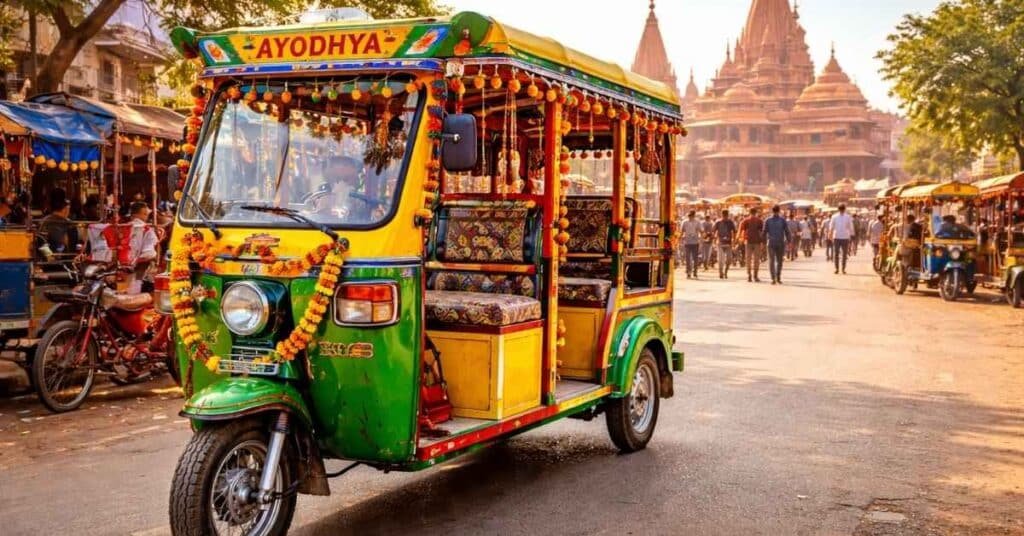
Once you arrive in Ayodhya — whether by train, flight, bus, or car — getting around the city is easy and budget-friendly. Most of the temples and tourist places are located within a few kilometers of each other.
Here are the best ways to travel inside Ayodhya:
Auto-Rickshaws
- Easily available near railway stations, bus stands, and major temples
- Affordable for short trips (₹30–₹100 depending on distance)
- Best for 1–3 people traveling locally
E-Rickshaws
- Popular in temple areas like Ram Janmabhoomi, Hanuman Garhi, and Kanak Bhawan
- Eco-friendly and low cost
- Great for small families or senior citizens
Taxis & Cab Services
- Local taxis can be booked at the station or via hotel reception
- For app-based services like Ola or Uber, availability may be limited in some parts
- Good option for temple hopping or half-day trips
Local Buses
- Operated by UPSRTC (Uttar Pradesh Transport)
- Buses run to nearby towns like Faizabad, Lucknow, and Prayagraj
- Not ideal for tourists within the city, but helpful for intercity connections
Walking Around
- Many spiritual spots in Ayodhya are close to each other
- Walking is safe and peaceful, especially near the Saryu River Ghats and temple lanes
- Shops, eateries, and stalls are found along the way
Tip:
If you’re visiting during festivals or crowded days, e-rickshaws and walking might be better than taxis due to traffic near temples.
Pune to Ayodhya Travel Options: Full Comparison Table
| Travel Mode | Approx Time | Approx Cost | Comfort Level | Best For | Booking Platforms | Special Notes |
| Flight via Lucknow or Varanasi | 4 to 7 hours (including layover & cab) | ₹8,000 – ₹15,000+ | ★★★★☆ | Fast travel, senior citizens, luxury seekers | MakeMyTrip, Yatra, Indigo, Goibibo | No direct flight to Ayodhya yet, taxi needed from Lucknow or Varanasi |
| Train (Pune to Ayodhya via Lucknow/Varanasi) | 24 to 32 hours | ₹500 – ₹3,000+ | ★★★☆☆ | Budget travelers, solo pilgrims, group tours | IRCTC, RailYatri, Goibibo | No direct train; transfer needed at major stations |
| Bus (Pune to Ayodhya via Lucknow/Varanasi) | 30 to 38 hours | ₹3,500 – ₹7,500+ | ★★☆☆☆ | Budget-friendly road option, night travelers | RedBus, AbhiBus, MakeMyTrip | May involve multiple bus changes; tiring for elderly |
| Car / Taxi (Self-Drive or Rental) | 30 to 36 hours (with breaks) | ₹10,000 – ₹20,000+ | ★★★★☆ | Families, flexible road trippers, stopovers | Ola Outstation, Savaari, Gozo Cabs | Great for visiting en route cities like Nagpur, Rewa, Prayagraj |
Note:
- All prices are one-way and may increase during festivals or last-minute bookings
- Travel times may vary due to weather, traffic, or seasonal rush
- Comfort level is rated for long-distance travel based on average user reviews
Best Time to Visit Ayodhya from Pune
Planning your trip at the right time makes a big difference in your travel experience. Ayodhya can get very crowded during major festivals and hot during summer, so here’s a guide to help you choose the best time to go from Pune to Ayodhya.
Weather-wise Best Time
| Season | Months | Travel Experience |
| Winter | November to February | Best time – cool, pleasant weather |
| Summer | April to June | Very hot – avoid if possible |
| Monsoon | July to September | Moderate rain – greenery but occasional delays |
Best Months:
- November to February – ideal for temple visits and sightseeing
- March & October – mild weather and fewer crowds
Festival Seasons (Peak Times)
Ayodhya is famous for its grand religious events. If you want to witness spiritual celebrations, consider these times:
- Ram Navami (March–April):
- Birth of Lord Ram, huge celebrations at Ram Janmabhoomi
- Birth of Lord Ram, huge celebrations at Ram Janmabhoomi
- Diwali (October–November):
- Ayodhya is decorated with millions of diyas, especially near the Saryu Ghats
- Ayodhya is decorated with millions of diyas, especially near the Saryu Ghats
- Makar Sankranti, Holi, and Dussehra also attract large gatherings
Note:
During festivals, hotels fill fast, trains may get full, and roads can get crowded. Book early if traveling at these times.
Who Should Travel When?
- Pilgrims & temple visitors: Winter months are perfect
- Families with kids or elderly: Avoid peak summer and festival rush
- Budget travelers: Off-season (July–September) offers better deals
Travel Tips for Pune to Ayodhya Journey
No matter which route you take — by train, flight, bus, or car — a few smart tips can make your Pune to Ayodhya trip smoother, safer, and more comfortable. Whether you’re traveling alone, with family, or during a festival season, these tips will help you plan better.
Before You Travel
- Book Early
During peak seasons and festivals like Ram Navami or Diwali, train tickets and hotel rooms fill up fast. Book at least 2–4 weeks in advance. - Check Timings
Double-check train and flight timings on official apps like IRCTC or airline websites. These can change due to weather or seasonal rush. - Pack Essentials
Carry:- A valid ID proof (Aadhaar, PAN card, etc.)
- Power bank, mobile charger
- Water bottle and dry snacks
- Light shawl or jacket (if traveling in winter)
- Medicines or prescriptions if needed
- A valid ID proof (Aadhaar, PAN card, etc.)
Safety Tips
- Avoid sharing travel details with strangers
- Always keep a lock on your bags, especially in trains and buses
- Carry some cash, but avoid large amounts — ATMs are available in Ayodhya
- Keep emergency contacts saved and your phone charged at all times
Temple Visit Tips
- Dress modestly when visiting temples — wear traditional or simple clothes
- Visit main temples like Ram Janmabhoomi early in the morning to avoid crowds
- Carry a small bag for footwear (most temples require you to leave shoes outside)
- Photography may not be allowed in some temples — check signs or ask locals
General Travel Advice
- Use apps like Google Maps, RedBus, MakeMyTrip, and Ola/Uber (in Lucknow or Varanasi)
- Eat at clean and hygienic places — ask locals or hotel staff for trusted food stalls
- Drink bottled water only, especially if you’re new to North Indian climate
Must-Visit Places in Ayodhya

Ayodhya is one of the most sacred cities in India, deeply connected to the life of Lord Ram. The temples and spiritual spots here are not just places of worship — they are windows into India’s ancient history and faith.
Let’s explore the top places to visit in Ayodhya, complete with their historical importance and why they are worth your time.
Ram Janmabhoomi (Ram Mandir)
Historical Significance:
Believed to be the exact birthplace of Lord Ram, this site holds centuries of spiritual, cultural, and legal importance. After a long wait, the grand Ram Mandir is now open to devotees, becoming a symbol of devotion and peace.
Why Visit:
- Experience the newly built, world-famous Ram Mandir
- Be part of history in the making
- Feel a deep sense of peace and devotion
- Witness grand temple architecture and spiritual energy
Hanuman Garhi
Historical Significance:
Built in the 10th century, this temple is dedicated to Lord Hanuman, who is believed to have lived here to protect Ram Janmabhoomi. It stands on a small hill, offering views of the entire city.
Why Visit:
- Seek blessings before visiting Ram Mandir
- Climb the sacred steps as an act of devotion
- Enjoy panoramic views of Ayodhya
- Explore the spiritual strength of Lord Hanuman
Kanak Bhawan
Historical Significance:
This beautiful temple was gifted to Sita by Kaikeyi, Ram’s stepmother. It has golden idols of Ram and Sita and features stunning Rajasthani-style architecture.
Why Visit:
- See the golden idols of Ram and Sita
- Enjoy peaceful darshan with fewer crowds
- Admire the colourful artwork and wall designs
- Capture photos of the beautiful inner courtyard
Saryu River Ghats
Historical Significance:
The Saryu River is mentioned in many Hindu scriptures and is considered holy. It’s believed that Lord Ram took Jal Samadhi here. Pilgrims come here for spiritual cleansing.
Why Visit:
- Take a holy dip in the river
- Attend the peaceful evening aarti
- Enjoy a quiet sunset boat ride
- Great spot for photos and reflection
Nageshwarnath Temple
Historical Significance:
Founded by Kush, son of Lord Ram, after he lost his armlet and found it with a Shiva devotee. The temple honors Lord Shiva and stands as proof of Ayodhya’s multi-deity devotion.
Why Visit:
- Explore a less crowded, ancient temple
- Seek blessings from Lord Shiva
- Add variety to your Ayodhya temple tour
- Attend special aartis during Shivratri
Treta Ke Thakur
Historical Significance:
This sacred temple marks the place where Lord Ram performed the Ashwamedha Yagna. The black stone idols of Ram, Sita, Lakshman, and Hanuman are said to be thousands of years old.
Why Visit:
- Witness ancient black stone idols
- Visit a site directly linked to Ramayan events
- Great for religious history lovers
- Often calm and peaceful
Tulsi Smarak Bhawan
Historical Significance:
Built in memory of Goswami Tulsidas, the author of Ramcharitmanas, this is a cultural hub that features Ramayan plays, exhibits, and old manuscripts.
Why Visit:
- Learn more about Tulsidas and Ramayan
- Attend live Ramleela performances
- Visit the Ramayan Library and museum
- Great for kids and spiritual learners
Ram Katha Park
Historical Significance:
This is a large open-air park designed for spiritual discourses, cultural functions, and events. Though not ancient, it supports the city’s growing religious tourism.
Why Visit:
- Attend live Ram Katha and Bhajan programs
- Relax in a peaceful, green area
- Great spot for families and picnics
- Cultural programs during festivals
Local Tip:
Most of these places are within 2–5 km of each other. Hire an e-rickshaw or auto for a half-day tour. You can also walk through Ram Path, the main spiritual corridor of the city.
Frequently Asked Questions (FAQs) – Pune to Ayodhya Travel
Here are the most common questions travelers ask when planning a journey from Pune to Ayodhya. These answers are designed to be quick, clear, and helpful, especially for first-time visitors.
Is there a direct train from Pune to Ayodhya?
No, there is currently no direct train from Pune to Ayodhya. However, you can take a train from Pune to Lucknow, Varanasi, or Prayagraj, and then a connecting train or bus to Ayodhya Cantt.
How long does the Pune to Ayodhya train journey take?
The total journey takes about 30 to 34 hours, depending on your train connections and layover time.
What’s the cheapest way to reach Ayodhya from Pune?
The cheapest way is by train. Sleeper class tickets cost around ₹600–₹900. You can reach Ayodhya via Lucknow or Varanasi with one change.
Can I drive from Pune to Ayodhya in one day?
Technically yes, but not recommended. It’s a 1,500 km journey that takes about 30–36 hours. You should plan to take at least one overnight break for safety.
What’s the best time to visit Ayodhya from Pune?
The best time is from November to February when the weather is pleasant and ideal for temple visits. Avoid peak summers and plan early during festivals.
Do I need to book in advance for temples in Ayodhya?
For general darshan, no advance booking is needed. But during festivals like Ram Navami or Diwali, it’s wise to book hotels and travel tickets in advance due to high crowds.
Are there budget hotels near Ram Mandir?
Yes, Ayodhya has many budget and mid-range hotels, lodges, and dharamshalas near Ram Janmabhoomi and Ayodhya Cantt station. Online platforms like Booking.com and Goibibo list them with photos and prices.
How far is Lucknow Airport from Ayodhya?
Lucknow Airport is about 135 km from Ayodhya. The road trip takes about 3.5 to 4 hours by taxi or bus.
What should I pack for Ayodhya trip from Pune?
- Lightweight, modest clothes
- Comfortable footwear (for walking and temple visits)
- Personal medicines
- Power bank and torch
- ID proof
- Shawl or sweater (if visiting in winter)
Is it safe to travel alone from Pune to Ayodhya?
Yes, it’s generally safe. Just follow regular travel precautions:
- Keep your belongings secure
- Avoid late-night travel in unknown areas
- Prefer verified hotel bookings and known transport options
Conclusion: Best Way to Reach Ayodhya from Pune
Ayodhya is a city filled with spiritual energy, history, and divine connection. Whether you’re planning a religious pilgrimage, a family trip, or a personal journey, reaching Ayodhya from Pune is very much possible — and now, simple to plan.
If you’re on a budget:
- Take a train via Lucknow, Varanasi, or Prayagraj.
- It’s affordable, reliable, and gives you time to enjoy the journey.
If you want speed and comfort:
- Take a flight to Lucknow or Varanasi, then a short cab/bus ride to Ayodhya.
- Best for families, senior citizens, or time-bound visitors.
For affordable road travel:
- Choose a multi-leg bus route or combine bus + train.
- Not ideal for elderly, but manageable for youth or groups.
For freedom and flexibility:
- Drive your own car or hire a taxi for a scenic road trip.
- Stop at cities like Nagpur, Jabalpur, or Prayagraj along the way.
Final Tips:
- Book in advance during festival seasons
- Plan for at least 2 days in Ayodhya to visit all key places
- Stay near Ram Janmabhoomi for easy access to temples
- Respect local customs, and enjoy the peaceful aura of the city
We hope this guide helped you understand how to reach Ayodhya from Pune in the best way possible.