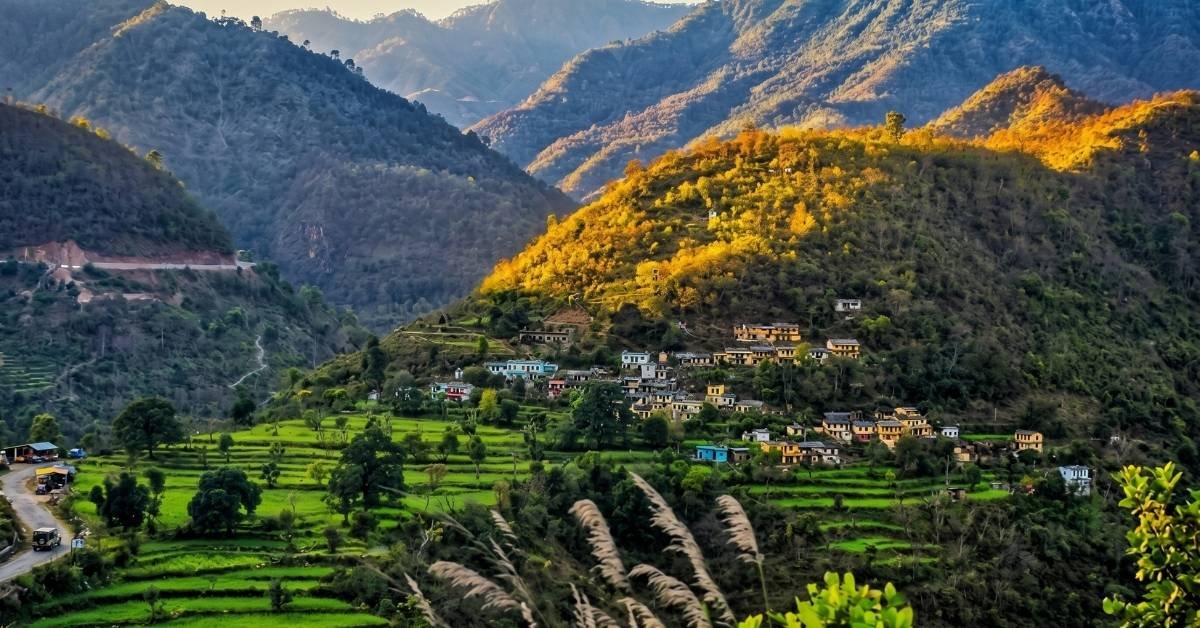
If you only have time for three places, go to Munsiyari for raw Himalayan beauty, Chopta for the trek of your life, and Binsar if you want jaw-dropping panoramic views without the crowd. These three offbeat places in Uttarakhand will reset you completely.
I have spent 11 days straight in Delhi without stepping outside. Deadlines, traffic noise, and the same four walls. When I finally broke, I did not go to Manali. I did not go to Shimla. I pulled up a map of Uttarakhand and picked a road that had almost no pins on it.
That decision changed how I travel.
Uttarakhand has two faces. One is the tourist circuit everyone knows: Mussoorie, Nainital, Haridwar, Rishikesh. The other face is quieter, older, and honest. These offbeat places in Uttarakhand do not perform for you. They just exist, and that is exactly why they work.
Here are the five places I keep going back to.
Munsiyari: Gateway to Johar Valley
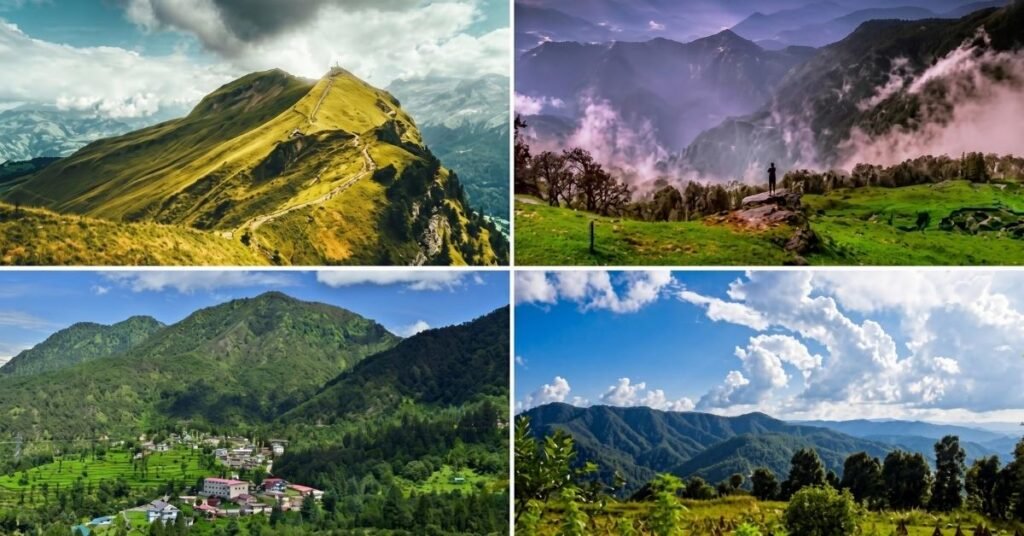
Munsiyari sits at roughly 2,200 metres and stares directly at the Panchachuli Peaks. Five snow-covered summits lined up like a wall of ice. I stood on the Thamri Kund trail at 6 AM and could not speak for a full minute.
This place is called “Little Kashmir” for a reason. But unlike Kashmir, there is no crowd here pulling you in five directions.
Munsiyari is also the base camp for the Milam Glacier trek, one of the most underrated high-altitude treks in India. If you like trekking, this is not optional.
| Best For | Best Time | Network Connectivity |
| Panchachuli views, glacier treks | May to June, September to November | Weak. BSNL works in patches. Inform family before you go. |
Vibe Check: Remote, raw, and zero pretense. The kind of place where your phone dies and you do not panic.
Chopta: Mini Switzerland of India
People throw the “Mini Switzerland” label around loosely in India. Chopta earns it.
Sitting at around 2,680 metres in the Kedarnath Wildlife Sanctuary, Chopta is the base camp for Tungnath, which is the world’s highest Shiva temple. The meadows here are covered in rhododendron forests in spring. In winter, they go white and completely silent.
The trek to Tungnath is only 3.5 kilometres but the altitude hits you if you are not acclimatised. I made the mistake of rushing it once. Do not rush it.
Most tourists who do the Kedarnath or Badrinath circuit never detour to Chopta. That is their loss and your gain.
Not Sure Where To Go!
Let our Random Country Generator help you discover your next perfect destination.
Use Our Free ToolKhirsu: Uttarakhand’s Best-Kept Secret
I had never heard of Khirsu until a local driver near Pauri mentioned it. He said, “Sahab, wahan koi nahi jaata.” Nobody goes there.
He was right.
Khirsu sits in Pauri Garhwal and is completely covered in oak, pine, and apple orchards. The Himalayan views here cover the central range, including peaks like Trishul and Nanda Devi on a clear day. There is almost no commercial activity. No resorts with infinity pools. No “Instagram sunset point” boards.
It is just a village with extraordinary views and very good silence.
Binsar: Wildlife and 360-Degree Views
Binsar sits inside the Binsar Wildlife Sanctuary in Almora district. The place is spread across 47 square kilometres of dense oak and rhododendron forest.
The main draw is Zero Point. From here, you get a 360-degree unobstructed view of Nanda Devi, Kedarnath, Trishul, and over 300 kilometres of Himalayan ranges. On a clear winter morning, it is genuinely one of the best viewpoints in all of India.
The sanctuary also has leopards, Himalayan deer, and over 200 bird species. If you combine views with wildlife, nothing in this region beats Binsar. For more information on the sanctuary and visiting rules, check the Uttarakhand Forest Department.
Kanatal: Secluded Retreat Near Mussoorie
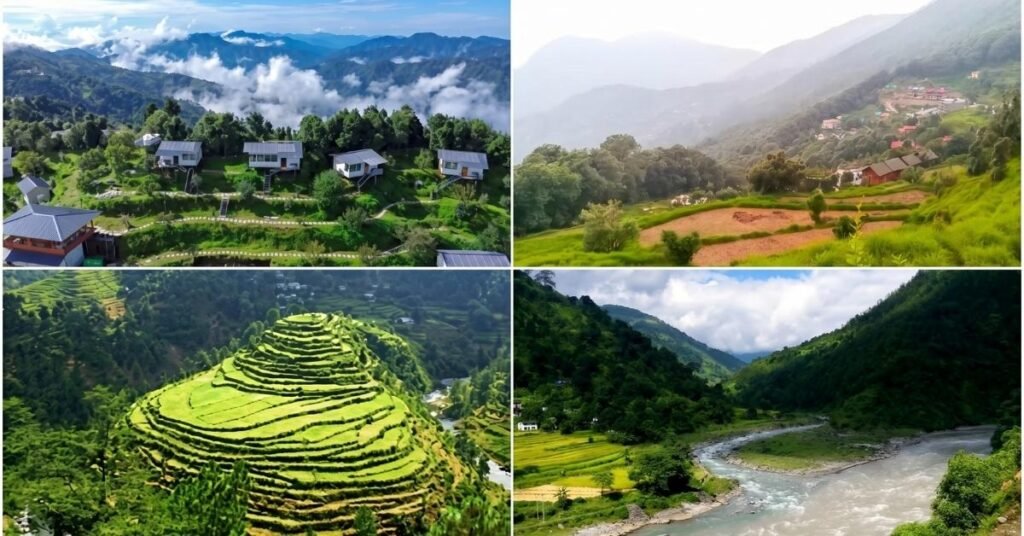
Kanatal is only about 78 kilometres from Dehradun, yet it feels like a completely separate world from the noisy Mussoorie mall road crowd.
At 2,590 metres, Kanatal offers dense deodar forests, apple orchards, and complete quiet. There is a small but clean camping scene here that has started picking up, but it is still a fraction of the crowd you will find at Lansdowne or Chakrata.
I spent two nights here doing absolutely nothing. No itinerary. No waterfalls to tick off. Just forest walks and one very good cup of chai from a roadside stall.
That is the entire point.
Pangot: An Avian Paradise Near Nainital
Most people leave Nainital without knowing that a 15-kilometre drive puts them in one of India’s most important birding zones.
Pangot sits quietly above the Nainital valley and records over 580 bird species. Himalayan griffons, koklass pheasants, khalij pheasants, and the rare lammergeier have all been spotted here. Serious birders plan entire trips around this one village.
What I love most about Pangot is the contrast. You can hear the Nainital crowd from a distance, but the moment you enter the forests here, it cuts to silence. No honking. No tour groups. Just birds calling at dawn and the smell of pine.
If you are not a birder, come anyway. The forest walks alone are worth it.
Kausani: Where Gandhi Wrote and the Sun Sets Hard
Gandhi called Kausani the “Switzerland of India” after staying at what is now the Anasakti Ashram. He wrote his commentary on the Gita here. That context alone gives this place a different weight.
The Ashram is open to visitors and still functions as a meditation and study centre. The panoramic view from the Ashram grounds covers Trishul, Nanda Devi, and Panchachuli on a clear day. Sunrise and sunset here are genuinely among the best Himalayan light experiences I have had.
Things to keep in mind before visiting Kausani:
- The roads narrow significantly after Almora. If you are driving, go slow.
- Most tea gardens nearby are best visited between March and May during the first flush.
- Anasakti Ashram closes for lunch hours. Plan your visit for early morning or late afternoon.
- Mobile connectivity is average. Airtel works better than Jio in this pocket.
- Carry cash. ATMs exist but run out over weekends.
Dharchula: Where India Ends and the Mountains Begin
Dharchula sits right on the Indo-Nepal border, separated from the Nepali town of Darchula by the Kali River. I crossed a suspension bridge here once just to stand in the middle and look both ways at the same time.
This town does not try to be a tourist destination. It is a working border town with military presence, local trade, and a rawness that most hill stations have lost.
The surrounding Himalayan terrain is dramatic and largely unexplored. Dharchula is also the starting point for the Adi Kailash and Om Parvat yatra, which is gaining traction as a quieter alternative to the main Kailash Mansarovar route.
If you want to feel like you are at the edge of the known world, this is the place.
Chaukori: Tea Gardens at 2,010 Metres
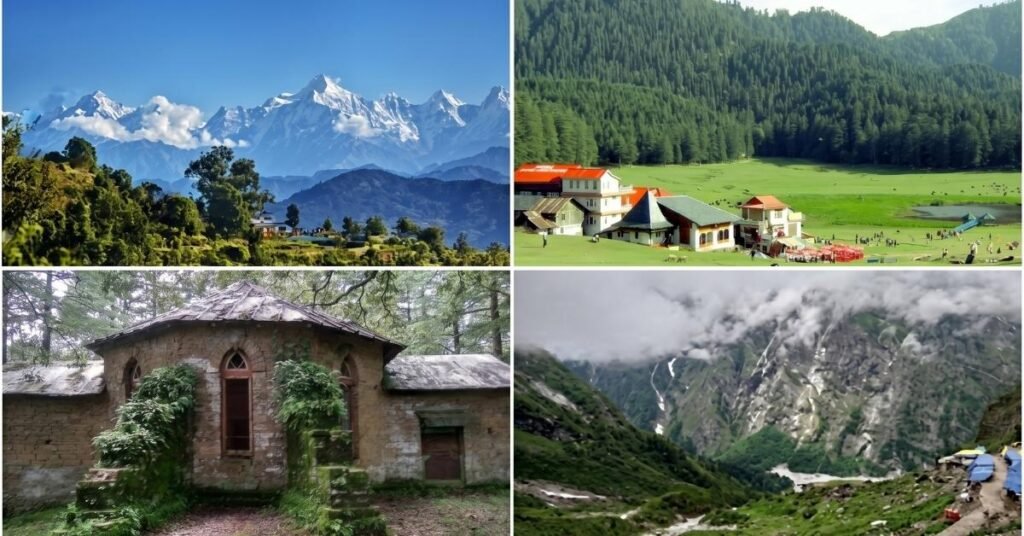
Chaukori is a small hamlet in Pithoragarh district that sits surrounded by tea gardens and unobstructed Himalayan views. The combination of both in one frame is something I had not seen before coming here.
The tea gardens are run by small local cooperatives and you can walk through them freely in the morning. The views of Nanda Devi and Panchachuli from the ridge are sharp and close-feeling, the way the mountains appear when the air is completely clear.
There is almost no commercial noise here. A few guesthouses, a few locals, and a lot of open sky.
Peora: The Village That Feels Like a Fairytale
Peora is tucked inside the Mukteshwar range in Nainital district and is the kind of place that travel writers keep to themselves. Dense forests, fruit orchards, zero traffic, and a valley view that goes on forever.
Getting here is part of the experience.
| Road Condition | Ideal Vehicle | Nearest Petrol Pump |
| Narrow, steep, and unpaved in final stretch | SUV or 4×4 strongly recommended | Mukteshwar, approx. 11 km away |
I arrived here after dark once and genuinely thought I had taken a wrong turn. Then morning came and I saw the valley. I stayed two extra days.
Abbott Mount: A Colonial Secret in Champawat
Abbott Mount is one of those places that feels like it was forgotten by time, and somehow survived better because of it.
Located in Champawat district, this tiny colonial settlement was established by a British merchant named John Harold Abbott in the 1900s. The old church here, St. Anne’s Church, still stands with its original architecture intact. The wood, the stained glass, the silence inside. It is one of the most photogenic spots I have found in all of Uttarakhand.
The bungalows around the church are mostly heritage structures. The entire area is covered in dense oak and pine, and the light in the mornings here is the kind photographers wait hours for.
Almost nobody knows this place exists. That is the entire appeal.
Mana Village: The Last Indian Village
Mana sits 3 kilometres from Badrinath at roughly 3,200 metres and holds the official title of the last inhabited village before the Indo-Tibet border.
The Mahabharata connection here is not mythology for locals. It is geography. The Vyas Gufa, a natural cave where sage Ved Vyas is believed to have dictated the Mahabharata to Ganesha, sits right inside the village. I walked inside that cave and stayed longer than I planned to.
There is also Bhim Pul, a massive natural rock bridge over the Saraswati River, said to have been placed by Bhima himself during the Pandavas’ final journey.
Most Badrinath visitors drive past Mana without stopping. That is a genuine mistake.
Pithoragarh: The Mini Kashmir of Kumaon
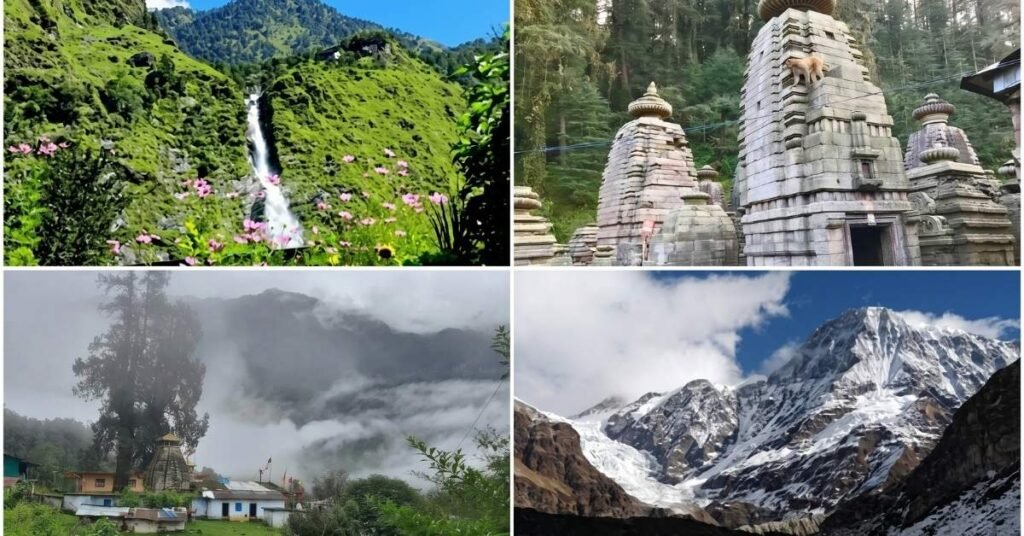
Pithoragarh is the administrative headquarters of its district, but it functions as a launchpad for some of the most dramatic Himalayan terrain in India.
The Soar Valley here offers a flat green bowl surrounded by snow peaks, something you rarely see at this altitude. The town also sits on the route to Adi Kailash, Narayan Ashram, and the Dharchula border region.
It is not a “just passing through” kind of place once you actually stop and look around.
Jageshwar: Temples Inside a Deodar Forest
Jageshwar is a cluster of over 100 ancient stone temples dating back to the 9th century, sitting inside one of the densest deodar forests in Uttarakhand.
The combination is unlike anything else on this list. You walk under massive deodar trees, and then suddenly there are temples everywhere, carved in stone, quiet and covered in moss.
The spiritual calmness here is not manufactured. It is structural. The forest creates it. The absence of commercial noise preserves it.
I visited on a Tuesday morning with almost no other visitors. It was one of the most peaceful hours I have spent anywhere.
Mandal Village: The Anti-Mussoorie
Mandal sits in Chamoli district along the Mandakini river valley and is almost completely off the tourist radar.
Why Mandal beats crowded Mussoorie:
- No mall road, no honking, no horse rides with touts
- Dense forest walks with zero foot traffic
- The Ansuya Devi temple trail here is scenic and completely uncrowded
- Local homestays offer genuine Garhwali meals, not tourist menus
- Mobile network is weak, which means actual disconnection
Sometimes the best version of a hill station is the one that never became one.
Khati Village: Where the Pindari Trek Truly Begins
Khati is the last inhabited village on the route to Pindari Glacier in Bageshwar district. After Khati, there are no more houses, no more shops, and no more mobile signals.
I reached here after a full day of walking through dense forest and river crossings. The village welcomed me with a kerosene lamp, a wooden cot, and a meal cooked on firewood. That is not a complaint. That is the point.
Khati offers pure, unfiltered Kumaoni rural life. The locals are trekkers by necessity, not lifestyle. They carry loads up to the glacier camps and know every stone on that trail.
If you are planning the Pindari Glacier trek, do not treat Khati as a stopover. Spend a night and actually talk to the people here.
Dayara Bugyal: A Meadow That Changes With Every Season
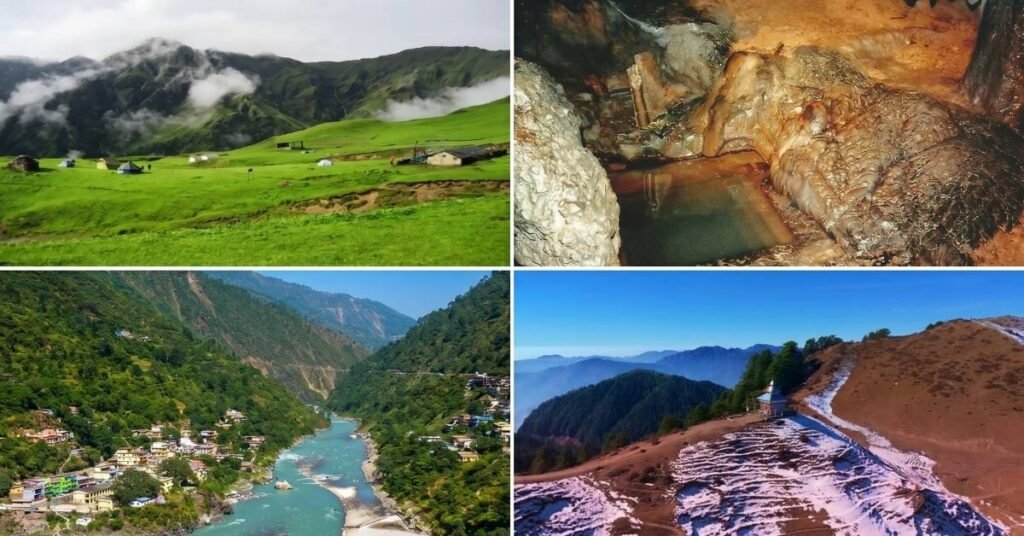
Dayara Bugyal sits at around 3,048 metres in Uttarkashi district and is one of the most expansive high-altitude meadows in the Indian Himalayas.
In summer, it is a wide green carpet with 360-degree views of peaks including Bandarpunch and Draupadi ka Danda. In winter, it turns into a natural snow slope that skiing enthusiasts have quietly been using for years.
The trek to Dayara is moderately difficult and takes two days from the base village of Barsu. I did it in October when the meadow grass had turned gold. The light at that altitude in autumn is something I keep trying to describe and always fail.
Patal Bhuvaneshwar: The Cave Temple That Goes Deep
Patal Bhuvaneshwar is not a metaphor. It is a real limestone cave that goes 160 metres underground, located in Pithoragarh district.
Inside, there are natural rock formations that have been interpreted as Shiva’s matted hair, the four yugas, and the heads of four mythological serpents. The cave is narrow in sections and requires crawling. It is humid, it is dark, and it is completely unlike any temple experience I have had above ground.
The spiritual weight of this place is different. It does not feel constructed. It feels discovered. You can check the cave’s location and plan your approach via Google Maps.
Gwaldam: The Quiet Bridge Between Garhwal and Kumaon
Gwaldam sits at the border of Garhwal and Kumaon divisions, overlooking the Trishul peak and the Bageshwar valley below.
It is a small town with apple orchards, a peaceful lake called Gwalnaag, and the kind of unhurried pace that feels like a different era. Not many people stop here because it sits between more famous destinations. That oversight works entirely in your favour.
Chakrata: The Hill Station the Army Kept Quiet
Chakrata is a cantonment town in Dehradun district with restricted entry permits, which has accidentally preserved everything that other hill stations have lost.
Dense forests, hidden waterfalls like Tiger Falls, and zero commercialisation. The permit requirement filters out casual crowds entirely.
| Safety Level | Vibe | Budget per Day |
| High, active military presence | Quiet, disciplined, and genuinely clean | Rs. 800 to Rs. 1,500 including stay and meals |
I have recommended Chakrata to at least a dozen people. Not one has come back disappointed.
Practical Road Trip Tips
- Hatchbacks can reach Kausani, Binsar, Pangot, and Kanatal without issues. For Munsiyari, Khati, and Patal Bhuvaneshwar, take an SUV or book a local Bolero.
- Jio is unreliable above 2,500 metres. Airtel and BSNL perform better in Kumaon. Always download offline maps before leaving the last major town.
- Carry a basic medical kit. The nearest hospitals with proper facilities are in Almora, Pithoragarh, or Dehradun. Do not assume a village will have a pharmacy.
- Carry cash. Always. ATMs thin out fast once you leave district headquarters.
Before You Go
I have stood at enough Himalayan viewpoints to know one thing. The mountains do not owe you anything. They were here before us and will be here long after.
Pack light. Drive slow. Pay local guides fairly. Carry your trash back down.
These offbeat places in Uttarakhand are still beautiful because most people have not found them yet. Keep it that way.
FAQs
Which is the safest offbeat place for a solo female traveller?
Kausani, Binsar, and Pangot are the safest. Good homestay networks, low crime, and easy road access.
Is Jio available in these villages?
Mostly no. Jio drops significantly after Almora and Pithoragarh. Carry a BSNL SIM as backup.
Can I take a small car to Chopta and Munsiyari?
Chopta is manageable in a hatchback until the last 5 kilometres. Munsiyari requires an SUV on the final stretch.
What is the best month to visit these offbeat places?
May to June and September to November cover most destinations. Avoid monsoon for road safety.
Are homestays better than hotels here?
Yes. Homestays give you local food, honest directions, and a more real experience. Most cost between Rs. 600 and Rs. 1,200 per night.
Do these places require any permits?
Chakrata requires an inner line permit from Dehradun. Mana Village and routes toward the Tibet border need registration at checkpoints.