Khanqah e Moula: The Heart of Old Srinagar (Ultimate Visitor Guide)
What is Khanqah-e-Moula?
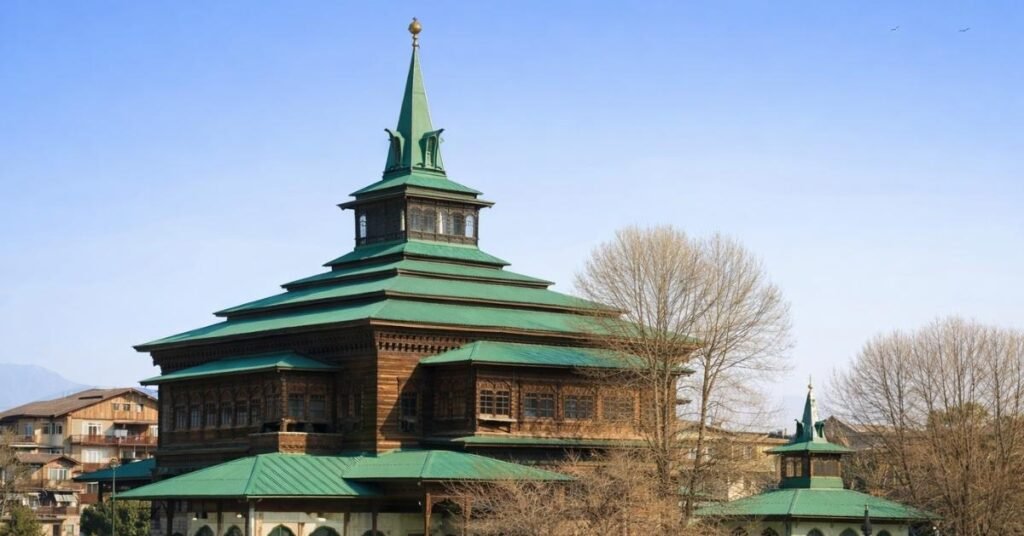
If you walk along the banks of the Jhelum River in the old part of Srinagar, you will see a stunning wooden building with a tall, green spire. This is Khanqah-e-Moula. It is one of the oldest and most famous religious sites in Kashmir.
Think of it as a giant, beautiful piece of art made almost entirely of wood. It was built hundreds of years ago to honor a very important saint. For the people of Kashmir, this place is not just a building; it is the “heart” of their city. It is a place where people go to feel calm, say a prayer, and look at the beautiful river flowing by.
If you are visiting Srinagar, this is a spot you cannot miss. It tells the story of how Kashmir became the “Valley of Saints.”
The Story of Shah-e-Hamadan
To understand why this place is so special, we have to talk about a man named Mir Sayyid Ali Hamadani. He is often called “Shah-e-Hamadan,” which means “The King of Hamadan” (a city in Persia).
About 600 years ago, he traveled all the way from Persia to Kashmir. He didn’t come alone; he brought 700 followers with him! These followers weren’t just religious teachers; they were also master craftsmen.
Before he arrived, Kashmir was very different. Shah-e-Hamadan and his team taught the local people new ways to make beautiful things. Because of him, Kashmir became famous for:
- Pashmina Shawls: Very soft and warm wool blankets.
- Papier-mâché: Colorful boxes and trays made from paper pulp.
- Carpet Weaving: Detailed rugs with beautiful patterns.
- Wood Carving: Intricate designs carved into walnut wood.
He didn’t just teach people how to pray; he taught them how to earn a living and create art. This is why people from all religions in Kashmir respect him so much. Khanqah-e-Moula was built on the exact spot where he used to sit and meditate.
Why the Architecture is a Masterpiece
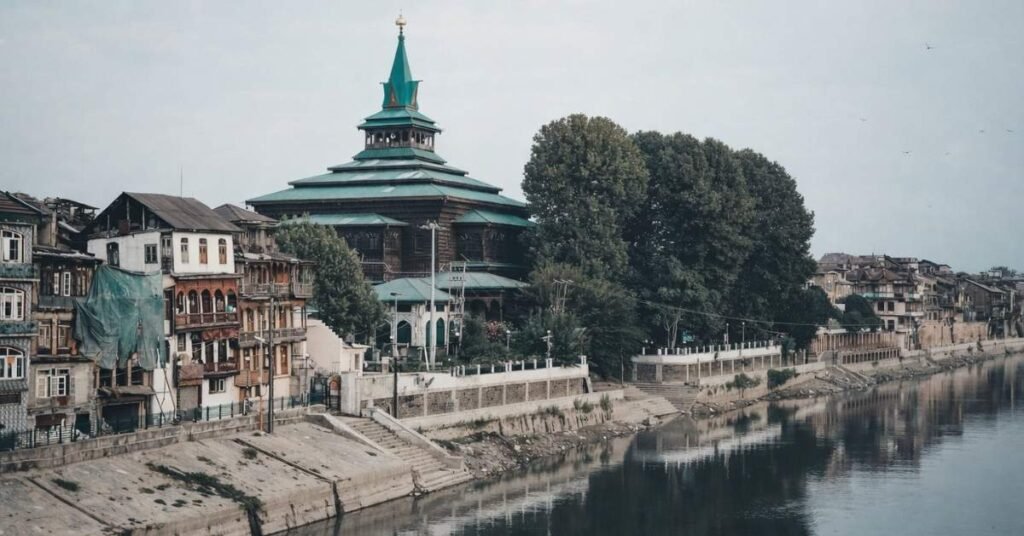
One of the coolest things about Khanqah-e-Moula is how it was built. If you look closely at the walls and the roof, you won’t see many metal nails or modern cement. Instead, the builders used a special way of fitting pieces of wood together like a giant, beautiful 3D puzzle.
The building is made mostly from heavy wooden logs. The people who built it hundreds of years ago were so smart that they used the wood in layers. This actually helps the building stay strong even during earthquakes!
What makes it look so beautiful?
- The Spire: On the very top of the roof, there is a tall, pointed spire that reaches toward the sky. It is covered in green and gold, and it glows when the sun hits it.
- The Walls: The walls are decorated with something called “Khatamband.” This is a Kashmiri art where small pieces of wood are joined together to make geometric patterns like stars and squares.
- The Colors: Inside and outside, you will see bright colors and golden designs. There are also giant hanging lamps (chandeliers) that make the whole room sparkle.
It doesn’t look like a typical mosque you might see in other parts of the world. Because it was built by local craftsmen, it looks like a mix of Persian and Kashmiri styles. It’s like a “time machine” that shows you how talented artists were 600 years ago.
Essential Visitor Information
Planning a visit to Khanqah-e-Moula is easy, but there are a few things you should know to make your trip smooth and respectful. Since this is a very holy place, visitors are expected to follow certain rules.
Quick Facts for Your Visit
| Feature | Details |
| Entry Fee | Absolutely Free (No ticket needed) |
| Best Time to Visit | Early morning or late afternoon for the best photos |
| How Much Time? | 45 minutes to 1 hour |
| Photography | Allowed outside, but usually not inside the main hall |
Dress Code and Rules
To show respect to the local culture and the saint, please keep these points in mind:
- Cover Your Head: Both men and women should cover their heads before entering the shrine area. It is a good idea to carry a small scarf or handkerchief in your pocket.
- Modest Clothing: Make sure your shoulders and knees are covered. Avoid wearing sleeveless tops or short pants.
- Remove Your Shoes: Like most spiritual places in India, you must take off your shoes before stepping onto the wooden platforms. There are safe places to leave them near the entrance.
- Non-Muslim Visitors: While everyone is welcome to admire the beautiful architecture from the courtyard and the riverbank, the very inner room is usually reserved for those offering prayers. However, the view from the outside is so beautiful that it’s still worth the trip!
How to Reach Khanqah-e-Moula
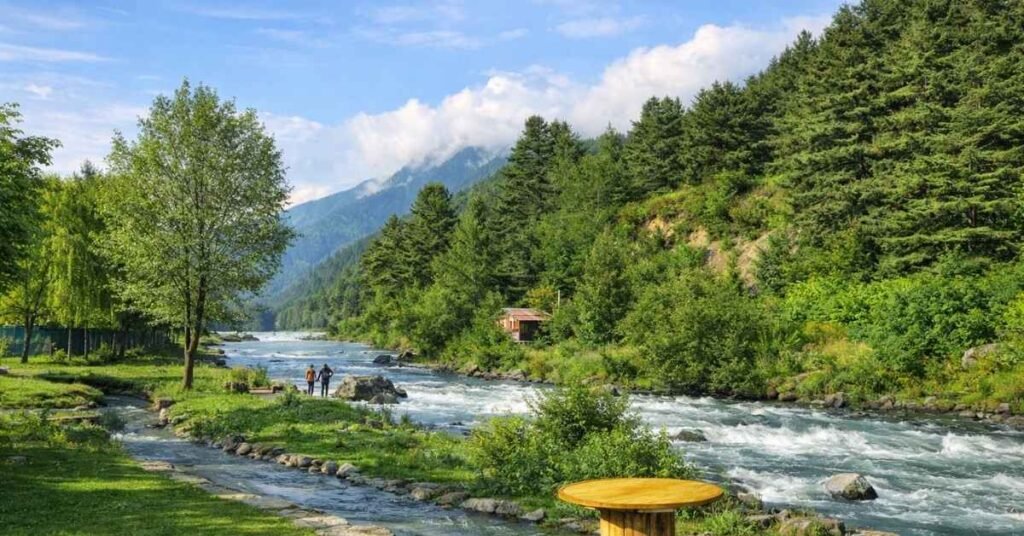
Khanqah-e-Moula is located in the “Old City” of Srinagar, which locals call Downtown. It is a busy, colorful area full of markets and narrow streets. Getting there is an adventure by itself!
By Auto-Rickshaw or Taxi
If you are staying near Lal Chowk (the main center of Srinagar), you can easily find an auto-rickshaw or a taxi.
- Distance: It is only about 3 to 4 kilometers away.
- Time: It takes roughly 15-20 minutes, depending on the traffic.
- Tip: Always agree on the price with the driver before you start your journey.
The Shikara Ride (The Most Beautiful Way)
If you want a truly magical experience, you can take a Shikara (a traditional wooden boat) from parts of the Jhelum River.
- As you float down the river, you will see the shrine appearing on the bank.
- Seeing the green spire reflected in the water is one of the best views in all of Kashmir. It’s perfect for a “post-card” photo!
Walking through the Markets
If you like exploring, you can ask a taxi to drop you at Zaina Kadal. From there, you can walk through the old markets. You will see shops selling copper pots, spices, and colorful fabrics. Just follow the smell of fresh Kashmiri bread and the sound of the river, and you will find the shrine.
Best Time to Visit
While Khanqah-e-Moula is open all year round, choosing the right time can make your visit even more special. Kashmir changes with the seasons, and so does the vibe around the shrine.
- The Golden Months (April to October): This is the best time for weather. The air is cool, and the Jhelum River is full of water, which makes for amazing reflections of the building.
- The Annual Festival (Urs): On the 6th day of the Islamic month of Zilhaj, a major festival called the “Urs of Shah-e-Hamadan” takes place. Thousands of people visit to offer prayers. It is very crowded but very exciting to see the local culture in full bloom.
- Daily Timing: The best time of day is early morning. The city is quiet, the birds are chirping by the river, and the sun hitting the wooden walls makes them look like they are glowing. Late afternoon is also great because you can watch the sunset over the Jhelum.
Even in winter, when it snows, the shrine looks like something out of a fairy tale, with white snow resting on its green roof. Just make sure to wear very warm socks since you have to take your shoes off!
Hidden Gems Nearby (The Walking Tour)
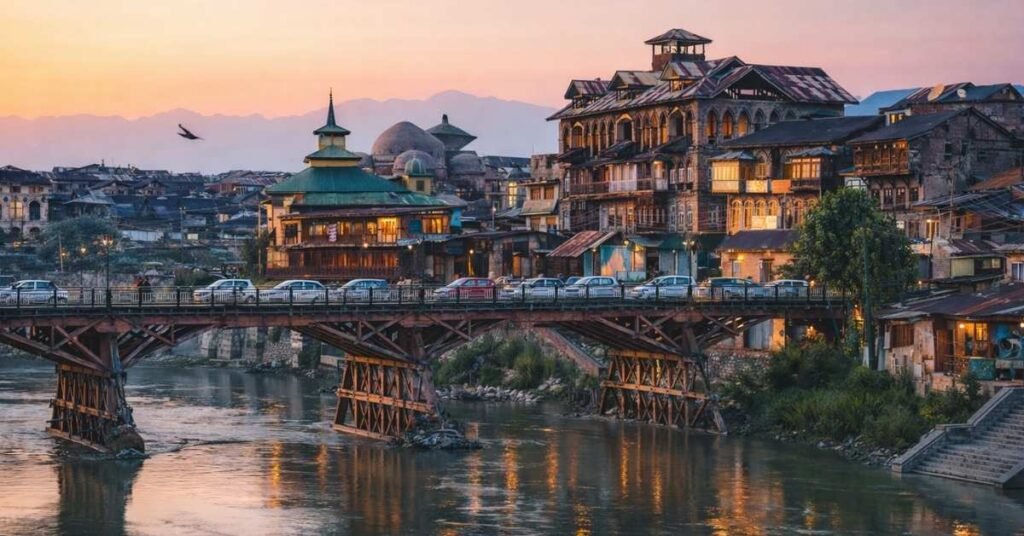
Since Khanqah-e-Moula is in the heart of the Old City, there are many other cool places you can see just by walking for a few minutes. You don’t need another taxi!
- Pathar Masjid: Just across the river is the “Stone Mosque.” Unlike Khanqah-e-Moula, which is made of wood, this one is made of solid grey stone. It was built by Empress Noor Jahan and has very tall arches.
- Zaina Kadal Bridge: This is an old bridge nearby. It is the perfect spot to stand and take a photo of the shrine. From here, you can see the wooden houses of the old city lining the river.
- Maharaj Ganj Market: This is one of the oldest markets in Srinagar. If you want to see where locals buy authentic Kashmiri copper plates, giant walnuts, or colorful spices, this is the place. It feels like stepping back 100 years in time!
- The Tomb of Zain-ul-Abidin’s Mother: This is a unique brick building with domes that look like they belong in Central Asia. It is very close and great for people who love history.
Exploring these spots makes your trip more than just a quick visit; it becomes a real adventure through the history of Srinagar.
Why You Must Visit Khanqah-e-Moula
Visiting Khanqah-e-Moula isn’t just about seeing an old building; it is about feeling the “soul” of Kashmir. Most tourists stay near the famous Dal Lake, but coming here gives you a look at the real, everyday life of Srinagar.
It is a place where history, art, and peace all come together. Whether you are a history buff who loves old stories, an artist who admires beautiful woodwork, or just a traveler looking for a quiet moment by the river, this shrine has something for you.
When you stand in the courtyard and hear the river rushing by, you realize why this spot has been kept special for over 600 years. It is a reminder of the kindness of the saints and the amazing talent of the Kashmiri people. Your trip to the valley simply isn’t complete without a stop at this wooden masterpiece.
Frequently Asked Questions (FAQ)
Visitors often have a few questions before heading into the heart of the Old City. Here are the most common ones to help you plan your trip:
Is Khanqah-e-Moula safe for tourists?
Yes, it is very safe! The people in the Old City are known for their hospitality. However, like any busy market area, it is always a good idea to keep an eye on your belongings and visit during daylight hours.
Can women enter the shrine?
Yes, women are welcome to visit the shrine complex. There are specific areas where everyone can sit and enjoy the peace, though the very inner prayer hall may have specific sections for men and women.
Is there an entry fee?
No, there is no ticket or entry fee. It is a place of worship, so it is open to everyone for free.
How much time should I spend there?
Most people spend about 45 minutes to an hour. If you plan to walk through the nearby markets or take a Shikara ride, set aside about 2 to 3 hours for the whole experience.
Can I visit during prayer times?
You can visit at any time, but during the five daily prayers, it gets very crowded with local worshippers. If you want a quiet experience for photography, try visiting between the prayer timings.