Last updated on August 9th, 2026 at 08:00 am
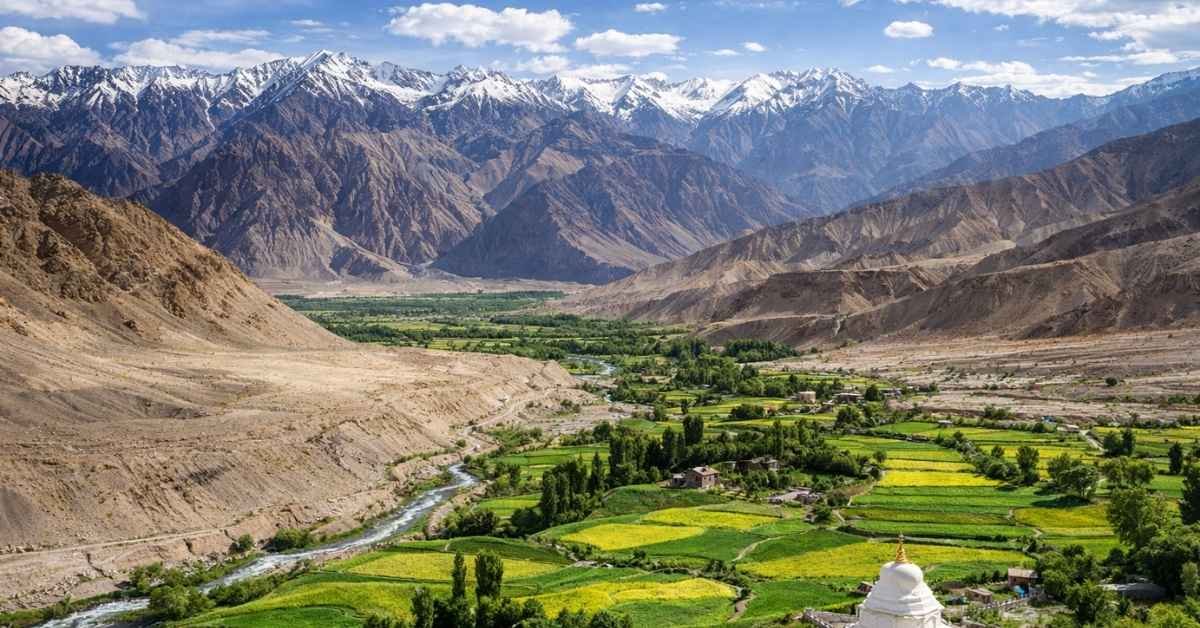
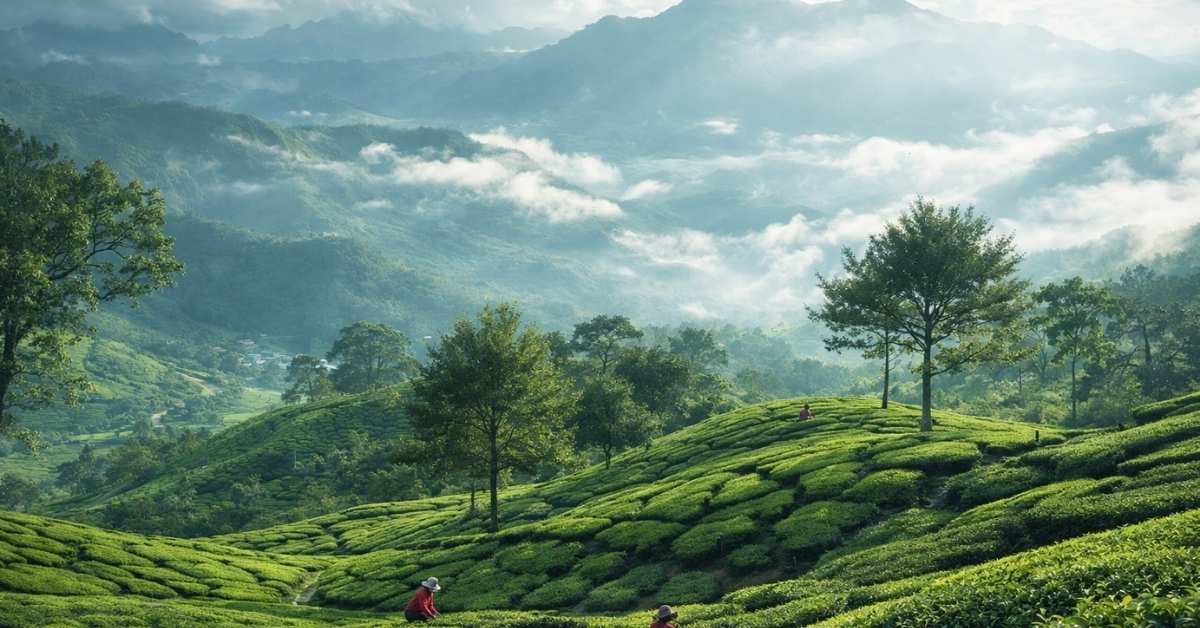
Jibhi Tirthan Valley in Himachal Pradesh is one of North India’s most peaceful hill escapes. No crowds, no chaos. Just pine forests, a cold river running past your stay, and actual silence. If you want a real break from city life, this is it.
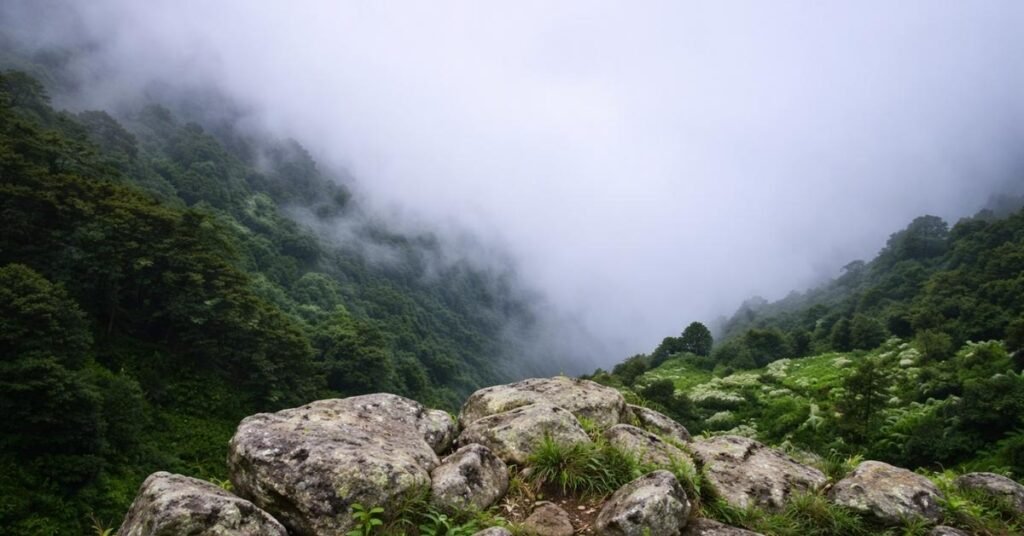
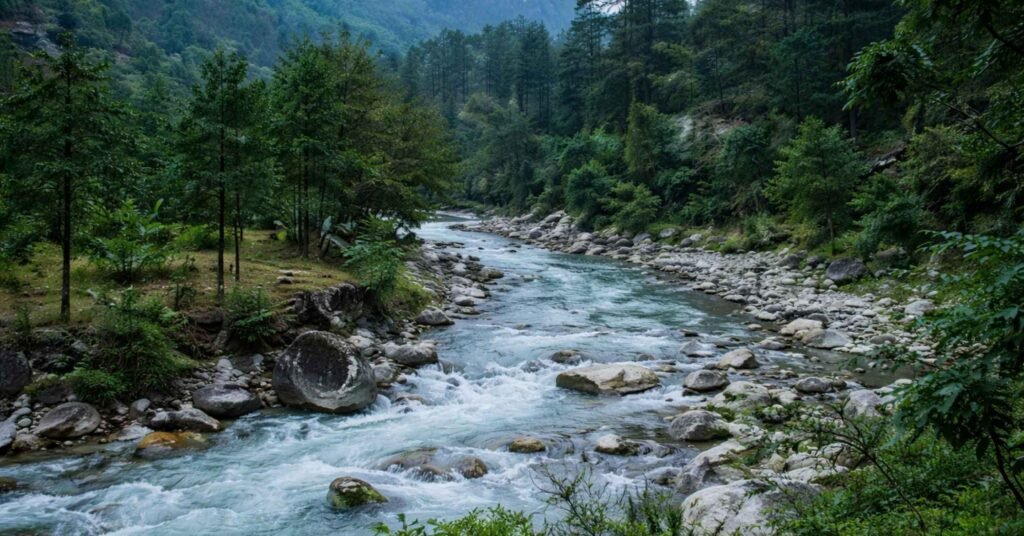
Jibhi Tirthan Valley sits in the Banjar tehsil of Kullu district, roughly 165 km from Manali. The Tirthan River cuts right through it. You sleep to the sound of water. You wake up to fog in the trees.
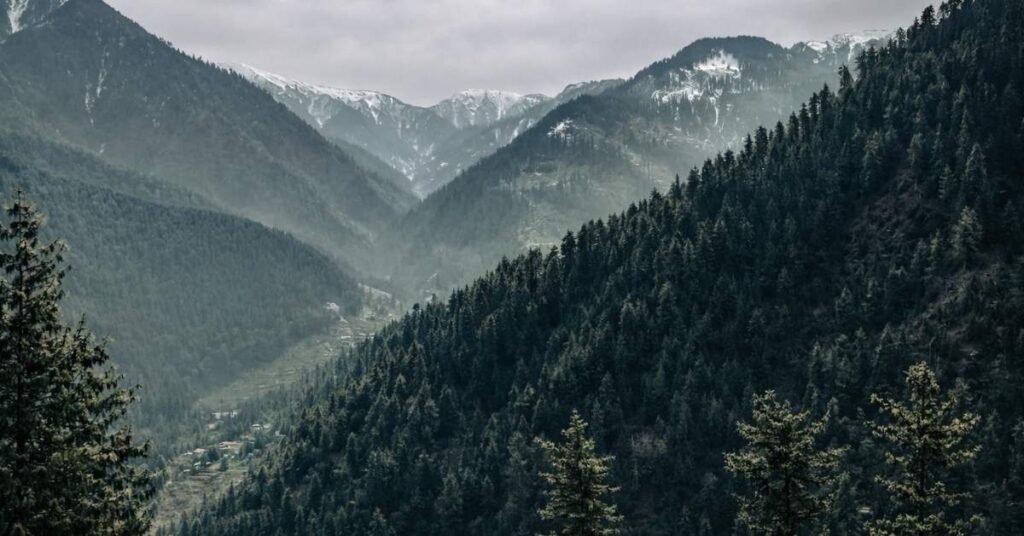
This valley is part of the Great Himalayan National Park buffer zone, a UNESCO World Heritage Site since 2014. That status keeps it protected and, more importantly, keeps it quiet.
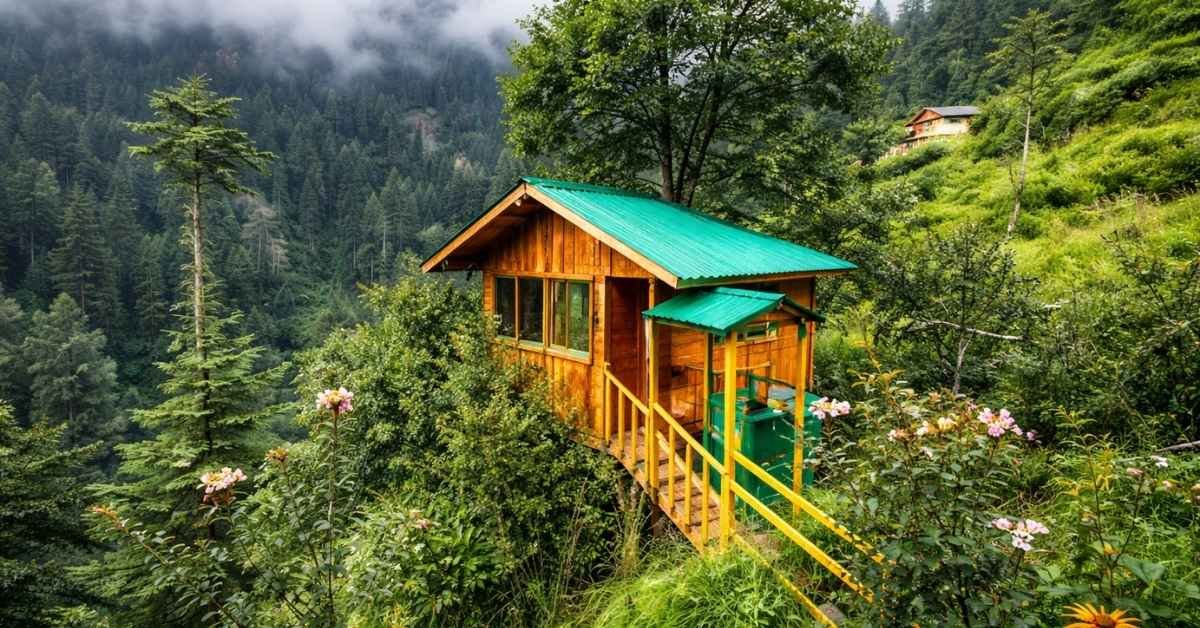
Treehouses, riverside cottages, trout fishing, hidden waterfalls. It delivers without overpromising.
Jibhi vs. Tirthan Valley: What is the Difference?
Most people use both names together, but they are two different places.
Jibhi is a small village in the Banjar Valley. It has dense pine forests, wooden guesthouses, and a growing cafe culture. It is the more “social” of the two. Great for first-time visitors.
Tirthan Valley runs along the Tirthan River. It is quieter, more raw, and borders the Great Himalayan National Park. Serious trekkers and trout fishing lovers head here.
Quick comparison:
| Jibhi | Tirthan Valley | |
| Vibe | Cozy, cafe culture | Raw, nature-first |
| Best For | Relaxation, waterfalls | Trekking, fishing |
| Crowds | Slightly more | Very less |
| GHNP Access | Buffer zone | Direct entry point |
Both are close to each other. Most travelers cover both in one trip.
How to Reach Jibhi Tirthan Valley
There is no direct bus to Jibhi. You need to plan the last stretch yourself.
By Bus (Budget Option)
Board any Manali-bound bus from Delhi’s Kashmere Gate ISBT or Chandigarh. Do not go all the way to Manali. Get off at Aut Tunnel, which is roughly a 12 to 14 hour overnight journey from Delhi.
From Aut, you have two options:
- Local bus to Banjar, then another short ride to Jibhi
- Shared or private taxi straight to Jibhi (easier with luggage)
Aut to Jibhi is about 35 km. Budget around Rs. 500 to 800 for a taxi from Aut.
By Air
Nearest airport is Bhuntar (Kullu-Manali Airport), roughly 50 km from Jibhi. Flights operate from Delhi. From Bhuntar, hire a taxi directly to Jibhi.
By Train
No direct train reaches Jibhi. The closest major railhead is Chandigarh. From there, take a bus or hire a cab toward Aut.
By Road (Self Drive)
Delhi to Jibhi is around 520 km via NH3 and NH305. Plan for 12 to 13 hours minimum.
A few things to know before you drive:
- Roads are smooth until Aut
- After Banjar, roads get narrow and steep
- Avoid driving after dark on mountain stretches
- A hatchback works fine; no need for an SUV unless you plan to go to Jalori Pass
Fill fuel at Banjar town. It has the last reliable petrol pump before Jibhi.
Not Sure Where To Go!
Let our Random Country Generator help you discover your next perfect destination.
Use Our Free ToolBest Time to Visit Jibhi Tirthan Valley
Jibhi is a year-round destination, but each season feels completely different.
| Season | Months | Weather | Vibe |
| Spring | March to May | 15°C to 25°C | Best time, clear skies, flowers bloom |
| Summer | June | 20°C to 28°C | Warm days, good for trekking |
| Monsoon | July to September | Heavy rain | Landslide risk, roads can close |
| Autumn | October to November | 10°C to 20°C | Crisp air, golden forests |
| Winter | December to February | -2°C to 10°C | Snow, very peaceful, fewer tourists |
Best Time: March to May
This is peak season for a reason. The temperature stays between 15°C and 25°C. Rhododendrons are in full bloom. The Tirthan River is full but not dangerous. Jalori Pass opens up after winter. Everything is accessible.
For Snow Lovers: January and February
You will get snow in Jibhi village itself. Very beautiful. But be warned, the road to Jalori Pass can have black ice patches. It gets dangerous and sometimes closes completely. Check road conditions before heading up.
Avoid: July to September
Monsoon brings landslide risk on narrow mountain roads. Not worth the gamble unless you are flexible with plans.
Top Places to Visit in Jibhi and Tirthan
Jibhi Waterfall
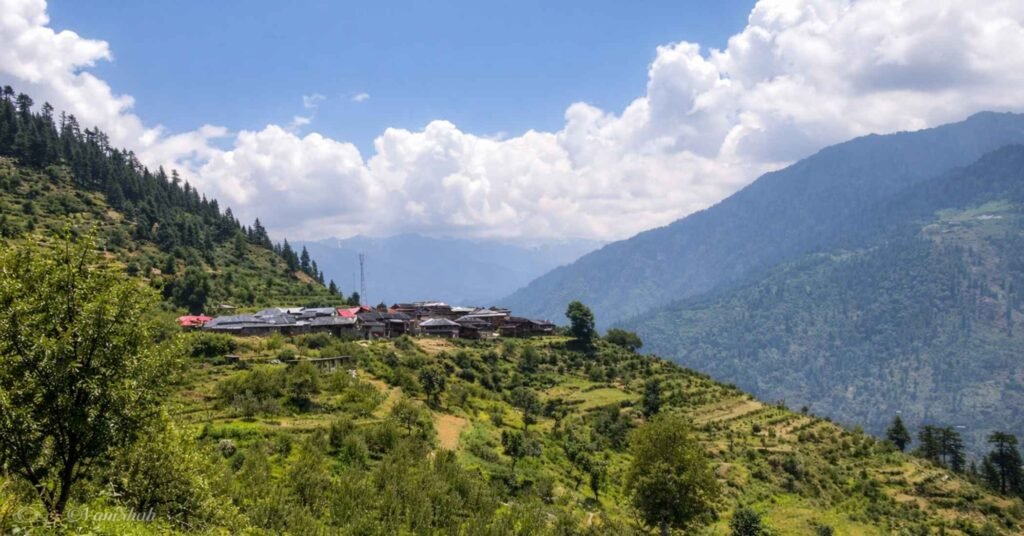
This is the most visited spot in Jibhi and for good reason. A short walk from the main village leads you to a natural waterfall with a small pool at the base. The water is ice cold even in May. Locals swim here in summer. The trail is easy and takes about 20 minutes on foot. Go early morning to avoid the weekend crowd.
Mini Thailand (Kulhi Katandi)
Not many people know about this one. Kulhi Katandi is a hidden stretch along the river with smooth flat rocks, clear shallow water, and a landscape that looks nothing like typical Himachal. Locals call it Mini Thailand because of how different it looks. No entry fee, no signboards, no crowd. Ask locals for directions as it is not well marked on maps.
Jalori Pass
At 3,120 meters above sea level, Jalori Pass is one of the most accessible high altitude passes in Himachal Pradesh. You can drive up to the top, no trek needed. The views are wide and open. On a clear day you can see deep into the Himalayan ranges. It also acts as the starting point for the Serolsar Lake trek. Roads stay open from late April onwards depending on snowfall.
Serolsar Lake
From Jalori Pass, a 5 km trek through dense oak and rhododendron forest takes you to Serolsar Lake. The trail is moderate and well defined. The lake sits quietly in the forest with a small temple dedicated to Budhi Nagin Mata on its banks. No vehicles, no noise. Just the lake, the trees, and the birds. Carry water and snacks as there are no shops on the trail.
Chehni Kothi
This is one of the most underrated stops near Jibhi. Chehni Kothi is a 300 plus year old tower fort built in the 17th century. It stands tall on a ridge above the village of Chehni. The architecture is traditional Himachali, built without modern materials, using stone and wood. The climb to reach it takes about 30 to 40 minutes. The view from the top over the valley is worth every step. History lovers will find it genuinely fascinating.
Beyond Jibhi: Offbeat Villages You Must Explore
Most travelers spend their entire trip within the main Jibhi market stretch, never realizing that the real magic of this valley is hiding in the hamlets just a short walk or drive away. These three villages deserve a spot on every itinerary.
Rashala Village
Rashala is barely 2 to 3 km from Jibhi’s main market, yet it feels like a completely different world. The moment you cross into this village, the noise of the chai shops and bike rentals fades into a deep, deodar-scented silence. Walking through Rashala during apple harvest season genuinely felt like stepping back in time. Locals were carrying wooden baskets loaded with fresh apples down narrow stone paths, completely unbothered by the slow influx of travelers discovering this place.
What has changed in recent years, though, is the accommodation scene. Luxury treehouses like Whispering Pines have quietly set up in Rashala’s dense forest cover, offering travelers a premium stay without having to trade the wilderness for comfort. If you can budget for it, a night in one of these treehouses with nothing but apple orchards and deodar canopy around you is worth every rupee.
Why go: Dense deodar forests, apple orchards, luxury treehouse stays, and a peace level that the main market simply cannot offer.
Sajwar Village
If Rashala is the quieter side of Jibhi, Sajwar is a different planet entirely. Located 13 to 15 km from Jibhi, sitting at an altitude of roughly 2,200 to 2,300 meters (around 7,546 ft), Sajwar falls within the buffer zone of the Great Himalayan National Park. The village has no ATMs, limited to no mobile connectivity, and operates on a rhythm that most of us have completely forgotten.
I personally loved how quiet Sajwar was compared to the main Jibhi market. There is no performance here, no “Instagram sunrise” crowds, no cafes selling oat milk lattes. It is a traditional farming village where people still live by the Ailyak philosophy, a beautiful Himachali concept of slow, unhurried living that the rest of the world has branded and sold as “wellness tourism.” Here, it is just life.
A quick practical note: carry enough cash before heading to Sajwar. There are no digital payment fallbacks, and you will need physical money for anything from a cup of chai to a small purchase from a local family.
Why go: Authentic village life, GHNP buffer zone proximity, zero commercialization, and the kind of silence that actually resets you.
Bini Village
Bini does not get the attention it deserves, mostly because reaching a cliff-top village takes more effort than pulling up at a riverside homestay. But if you are carrying a drone or even just want panoramic views that are genuinely jaw-dropping, Bini belongs on your list. The traditional Pattu-wearing locals (a thick handwoven fabric worn as a shawl or wrap in mountain communities) add a cultural texture to Bini that you rarely photograph without stopping to talk first.
Culture & Heritage: Temples and The Fagli Festival
Jibhi is often reduced to its cafes and rivers in travel content, but this valley has a deep cultural and spiritual identity that runs centuries deep. Two things you cannot miss if you want to understand the soul of Banjar Valley.
Shringa Rishi Temple
Getting to Shringa Rishi Temple requires a short detour from your usual Jibhi itinerary, but it is one I would push anyone to take. The temple is located in Bagi village, about 4 km from Jibhi towards Banjar, followed by an uphill walk. Shringa Rishi is the ruling deity of the Banjar Valley, which already tells you why this temple holds such cultural weight in the region.
The architecture alone is reason enough to visit. Traditional Himachali wooden temple craftsmanship, with intricately carved panels and layered roofing, lines every surface. It is the kind of handiwork that makes you stop mid-climb and stare.
From Shringa Rishi Temple, Chehni Kothi (the famous ancient tower) is roughly a further 2 km away, about a 1-hour steep walk from this point. Most trekkers combine both into a single half-day outing, and I would recommend the same. Do not attempt the uphill stretch in flat footwear.
The Fagli Festival (Phagli)
The Fagli Festival is one of those experiences that makes you genuinely grateful for stumbling onto a place before the travel algorithm homogenizes it completely. Celebrated in mid-February or early March, Fagli marks the end of winter and the arrival of spring in the Banjar Valley. The timing is intentional: the community comes together to collectively let go of the dark season and call in the warmth.
What makes Fagli unforgettable is how entirely unpolished it is. Local men wear hand-carved wooden masks, dry grass skirts, and yellow floral headgear, then perform ritualistic dances accompanied by deep, rolling drums. The dances are meant to ward off evil spirits that linger from the winter months.
Seeing those wooden masks and hearing the drums echoing through the cold February air gave me literal goosebumps. There was nothing staged about it. No one was performing for a camera or a hashtag. The drummers and dancers were doing exactly what their village has done for generations, and that rawness, that complete distance from commercial tourism, hit differently. If you can time your Jibhi trip around late February, do it.
Best Things to Do for an Unforgettable Trip
Trout Fishing in Tirthan River
The Tirthan River is one of the cleanest rivers in Himachal Pradesh. It is home to wild Brown Trout. Fishing here is a proper experience, not a tourist gimmick.
Here is what you need to know:
- A daily fishing license costs just Rs. 100
- Licenses are issued by the Himachal Pradesh Fisheries Department
- Catch and release is encouraged to protect the river ecosystem
- Best fishing months are March to May and September to November
- Hire a local guide for better spots along the river
Trekking in Great Himalayan National Park
The Great Himalayan National Park is a UNESCO World Heritage Site since 2014. It covers over 900 sq km of protected forest and alpine terrain.
A few things to keep in mind:
- Entry requires a permit from the GHNP forest office
- Popular trails include Tirthan Valley to Rolla and further into the core zone
- Hiring a registered local guide is mandatory for core zone treks
- Wildlife includes snow leopard, Himalayan thar, and over 375 bird species
- The buffer zone around Jibhi is freely accessible
Cafe Hopping in Jibhi
Jibhi has quietly built a solid cafe culture. Small wooden cafes serve fresh food, good coffee, and river views.
What to expect:
- Most cafes are run by locals or young travelers who stayed back
- Try Maggi, momos, and local Himachali dal
- Most cafes have no WiFi, which is honestly the point
Perfect 3-Day Jibhi Tirthan Valley Itinerary
Day 1: Arrive and Settle In
- Reach Jibhi by morning if you took an overnight bus from Delhi
- Check into your stay, freshen up, and eat a proper meal first
- Head to Jibhi Waterfall in the afternoon, it is a short walk from the village
- After the waterfall, ask locals to guide you toward Mini Thailand (Kulhi Katandi)
- Spend the evening by the river, most stays have seating right on the bank
- Sleep early, you have a big day tomorrow
Day 2: Jalori Pass and Serolsar Lake
- Start by 7 AM, drive up to Jalori Pass (3,120 meters)
- Spend 20 minutes at the top taking in the views
- Begin the Serolsar Lake trek right from the pass, it is a 5 km trail one way
- The full trek takes 3 to 4 hours return
- Carry water, snacks, and a light jacket, it gets cold near the lake
- Return to Jibhi by evening
- Have dinner at one of the local cafes in the village
Day 3: Fishing, Fort, and Farewell
- Wake up early and head to the Tirthan River for trout fishing
- Get your Rs. 100 daily license before you start
- By late morning, drive to Chehni Kothi, the 17th-century fort
- The climb takes 30 to 40 minutes but the valley view from the top is worth it
- Head back toward Aut by afternoon to catch your onward bus or cab
Jibhi Trip Budget & Cost Breakdown (2026 Estimates)
Jibhi is no longer the Rs. 500-a-night backpacker hideout it was five or six years ago. The word got out, the cafes multiplied, and the “treehouse in the Himalayas” content went viral enough times that prices adjusted accordingly. That is not necessarily a bad thing since better infrastructure means better stays, but it does mean you need to plan your budget more carefully than the outdated guides suggest.
I will be honest: I ended up spending considerably more on food than I had budgeted, because the cafe culture here is surprisingly premium now. A pizza and pasta meal at one of the popular cafes like Enzo’s or Bleeblu can easily run Rs. 1,200 to 1,500 per head. When you are enjoying the mountains and the atmosphere, it does not feel like much. But over five to seven days, those meals add up fast. Carry extra cash as a buffer.
2026 Daily Budget Estimates
| Expense Category | Budget Traveler (Per Day) | Mid-Range Traveler (Per Day) |
| Accommodation | Rs. 400 – 800 (Hostel beds) | Rs. 2,000 – 4,000 (Riverside Homestays) |
| Food & Dining | Rs. 400 – 600 (Local Dhabas) | Rs. 1,000 – 1,500 (Cafes like Enzo’s, Bleeblu) |
| Local Transport | Rs. 200 – 300 (Shared cabs/Buses) | Rs. 1,500 – 2,000 (Private Taxi hires) |
| Activities | Rs. 100 (Fishing License) | Rs. 1,000+ (Guided treks/GHNP permits) |
One price correction that every old blog gets wrong: A private taxi from Aut Tunnel to Jibhi now costs around Rs. 1,200 to 1,500. Any guide still quoting Rs. 500 for this stretch is working off 2021 data. Budget accordingly.
Where to Stay and Eat
Do not come to Jibhi looking for five-star hotels. They do not exist here, and that is the whole point.
What you will find instead:
- Wooden homestays run by local families
- Treehouses perched above pine forests
- Riverside camps with bonfire setups at night
Ailyak Stays is one of the most well-known options in Jibhi. It sits right on the riverbank and books up fast during long weekends. Reserve in advance.
Budget stays start from around Rs. 800 per night. Mid-range riverside options go up to Rs. 3,000.
What to Eat
Skip the pasta menus at tourist cafes. Ask your homestay host for local Himachali food.
- Siddu is a must-try. It is a steamed wheat bread stuffed with poppy seeds or lentils.
- Fresh trout cooked by locals is another highlight.
Practical Travel Tips You Must Know (2026 Updates)
No sugar coating here. These are the ground realities before you pack your bag.
Cash
- Jibhi has no reliable ATM
- Withdraw enough cash at Banjar town before heading in
- Most homestays and local shops do not accept UPI or cards reliably
Fuel
- Fill your tank at Banjar
- It has the last proper petrol pump before Jibhi
- Do not assume you will find fuel further up
Mobile Network
- Jio and Airtel 4G work fine in Jibhi main village
- Signal drops completely on the Jalori Pass trek
- Download offline maps before you leave
Medical
- Carry your own basic medicines, think painkillers, altitude sickness tablets, and band aids
- The nearest proper hospital is far from Jibhi
- Do not rely on finding a pharmacy in the village
Frequently Asked Questions
Is Jibhi safe for solo travelers?
Yes, Jibhi is very safe for solo travelers, including women. Locals are friendly and the village is small and walkable.
How many days are enough for Jibhi Tirthan Valley?
3 days is the sweet spot. You can cover Jibhi, Jalori Pass, Serolsar Lake, and Tirthan Valley comfortably without rushing.
Can we see snow in Jibhi? Yes, snowfall happens in January and February. Book your stay in advance through Himachal Pradesh Tourism to find verified options during peak winter season