Dzukou Valley Trek Guide 2026: Routes, Costs & DIY Itinerary
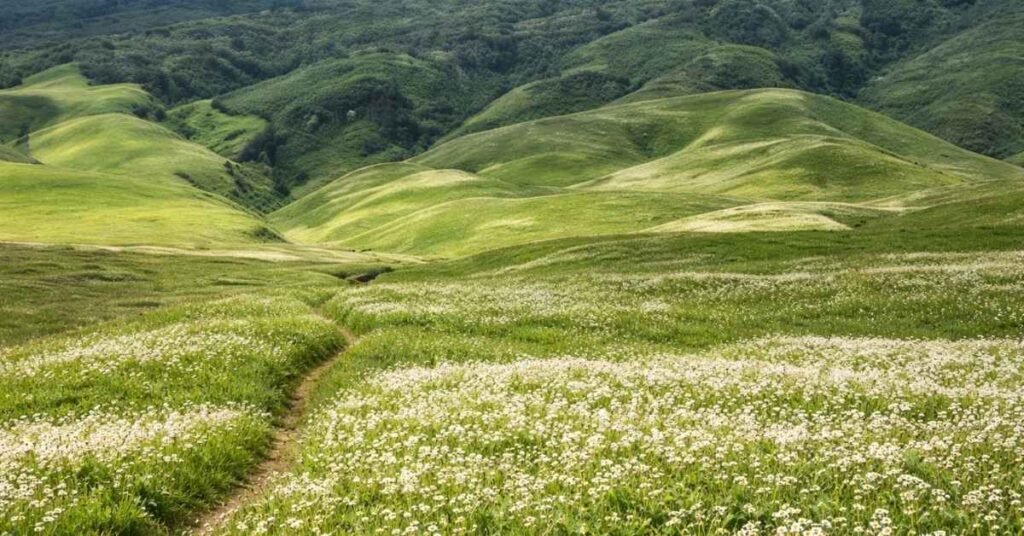
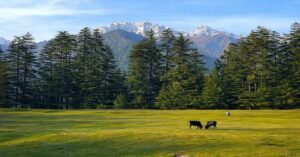
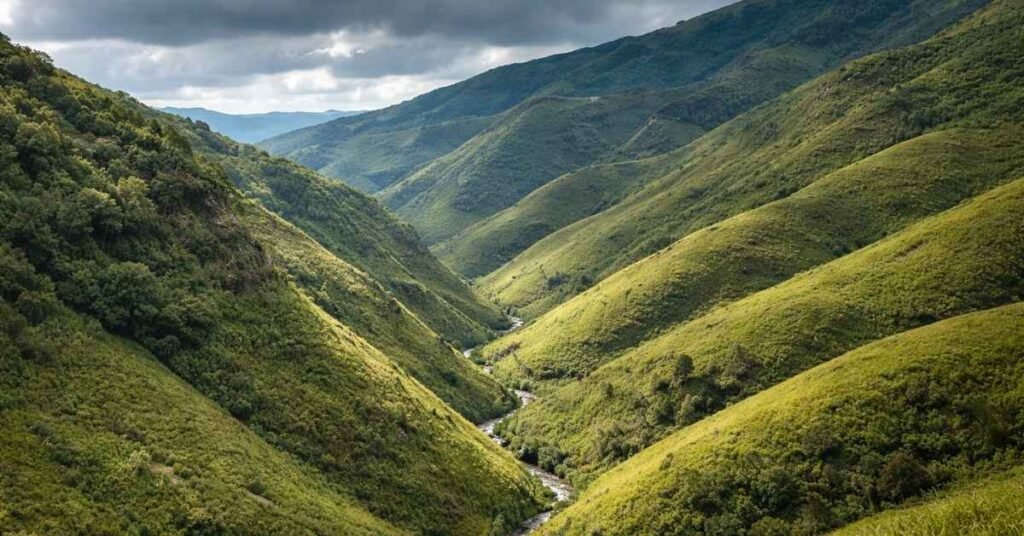
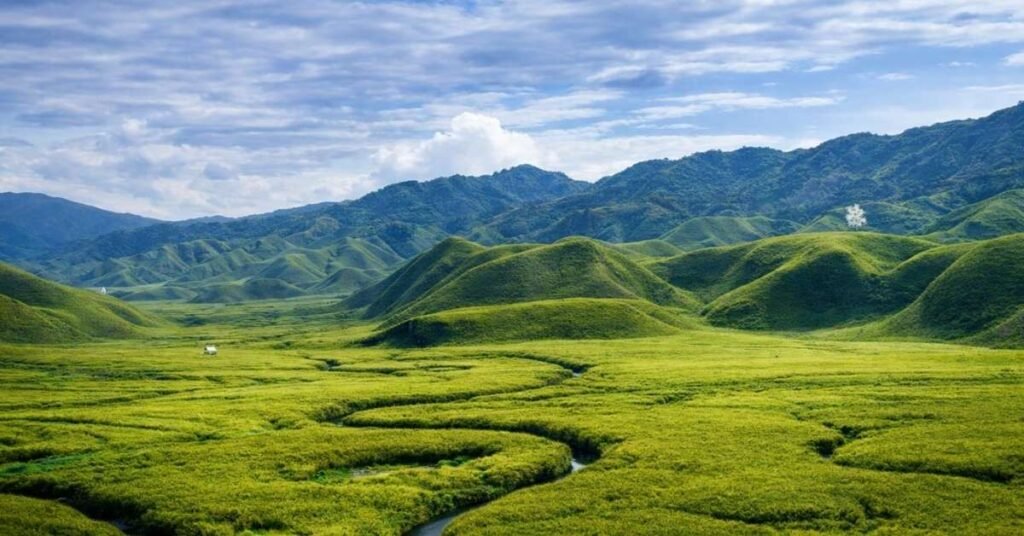
Imagine standing in a place where the hills look like they are covered in a soft, green carpet that rolls on forever. There are no cars, no honking horns, and the air is so clean it feels sweet. This is Dzukou Valley.
Located on the border of Nagaland and Manipur, Dzukou is often called the “Valley of Flowers” of the North East. It is famous for its rare Dzukou Lily, which you can’t find anywhere else in the world. Whether you are a college student on a budget, a solo traveler, or someone looking for peace, this valley welcomes everyone.
Many people think you need to book an expensive tour package (costing ₹7,000 or more) to visit here. That is not true.
I have written this guide to show you exactly how to do this trek on your own (DIY). It is safe, easy to plan, and costs much less than you think. In this blog, I will break down everything—from which bus to take, to exactly where to sleep—so you can travel with confidence.
Quick Facts: Dzukou Valley at a Glance
Before we start planning your trip, here is the most important information you need to know in seconds.
| Feature | Details |
| Location | Nagaland & Manipur Border (Entry from Kohima, Nagaland) |
| Altitude | 2,452 meters (8,045 feet) |
| Trek Difficulty | Easy to Moderate (Suitable for beginners) |
| Trek Distance | Approx. 9 km (One way via Viswema) |
| Best Time to Visit | June to September (For Flowers) or Nov to Jan (For Winter) |
| Mobile Network | Weak/None. You might get a weak BSNL signal at the Guest House, but do not rely on it. |
| ATM Availability | None in the valley. The last ATM is in Kohima. |
Step 1: Getting the Inner Line Permit (ILP)
Nagaland is a protected state. This means you cannot just walk in; you need a special pass called the Inner Line Permit (ILP). Think of it like a ticket to enter the state.
If you are an Indian citizen living outside Nagaland, you must have this.
How to Get It (2 Ways)
- Online (Easiest Way):
- Visit the official website: ilp.nagaland.gov.in.
- Fill out the form, upload your ID (Aadhaar/Voter ID) and a photo.
- Cost: Approx. ₹200 – ₹300.
- Time: It usually takes 1-2 working days to get approved. Print it out and keep it with you.
- Offline (At Dimapur):
- You can go to the DC Office in Dimapur.
- Fill out a physical form and submit it with your ID.
- Warning: This process is slow. It can take half a day or even a full day. I highly recommend the online method to save time.
Note for Foreigners: You do not need an ILP. You need to register yourself at the local police station (Foreigner Registration Office) when you arrive.
Step 2: Reaching the Base Camp (Transport Logistics)
Dzukou Valley does not have an airport or train station. The nearest city is Dimapur. Here is exactly how to go from your home to the starting point of the trek.
Reaching Dimapur (The Gateway)
- By Train: Dimapur Railway Station is well connected to Guwahati and Kolkata.
- By Air: Dimapur Airport has flights from Kolkata and Guwahati.
Dimapur to Kohima (The Capital)
Once you reach Dimapur, you need to go to Kohima, the capital city. It is about 70 km away.
- Go to the Taxi Stand: Walk out of the railway station. You will see a line of “Yellow/Green Taxis” or “Tata Sumos.”
- Shared Taxi (Budget Option): You sit with other passengers.
- Cost: ₹400 – ₹500 per person.
- Private Taxi (Comfort Option): You book the whole car.
- Cost: ₹3,500 – ₹4,000.
- Time Taken: 3 to 4 hours (Traffic can be heavy).
Kohima to the Trek Point
You cannot start walking from Kohima. You need to drive another 20 km to one of the two starting villages: Viswema or Jakhama.
- Take a Local Taxi: go to the “Network Stand” in Kohima.
- To Viswema (Recommended for Beginners):
- Ask the driver to drop you at “Viswema Trek Point.”
- Important: Most shared taxis (₹150) will only drop you at the highway junction. From the highway, there is a steep, muddy road uphill to the actual trekking point.
- Tip: If you are in a group, hire a big car (pickup truck) from Kohima directly to the top of the trek point (Cost: ~₹2,500). If you walk from the highway, you waste 1 hour of energy on a boring mud road!
Step 3: Choosing Your Route (Viswema vs. Jakhama)
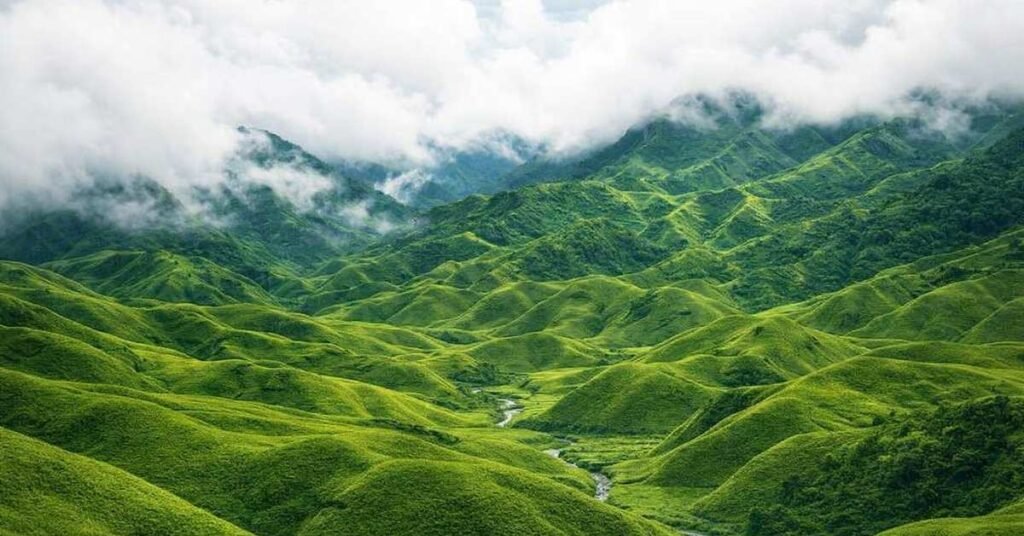
This is the most common question I get: “Which path should I take?” There are two ways to enter the valley, and they are very different.
Option A: The Viswema Route (The Gentle Way)
This is the most popular route, and it is the one I recommend for beginners.
- The Path: It starts with a steep climb through a forest for about 45 minutes to 1 hour. After that, the path becomes almost flat and walks along the side of the mountains.
- Why choose it: It is less tiring. You get to enjoy the views without losing your breath.
- Best for: Entry (Going up).
Option B: The Jakhama Route (The Steep Way)
This route is shorter but much harder. Locals often use this, but it can be tough for tourists.
- The Path: It is mostly tall stone steps. Imagine climbing a staircase that never ends! It is very steep and hard on your knees.
- Why choose it: It is faster if you are fit.
- Best for: Exit (Coming down).
My Pro Tip: Do the “Dzukou Circuit.” Start your trek from Viswema (easier to climb up) and come down via Jakhama (faster to walk down). This way, you see both sides of the valley!
Step 4: The Trek Experience & Duration
So, what does the trek actually feel like? Here is a simple timeline of what your day will look like if you take the Viswema route.
Part 1: The Steep Climb (45 Minutes – 1 Hour)
Once the taxi drops you at the end of the muddy road, the real trek begins. You will enter a forest with stone steps.
- It is steep and tiring.
- You will be surrounded by bamboo and tall trees.
- Advice: Take small steps. Do not run. Drink water.
Part 2: The Valley Walk (2 Hours)
This is the magical part. Suddenly, the steep climbing stops. The path becomes flat and narrow.
- You will walk along the edge of the green hills.
- You will see burnt trees (ghost trees) from old forest fires—they look spooky but beautiful.
- The wind here is strong and cool. This is the best place for photos!
Part 3: Reaching the Guest House
After walking for about 2 to 3 hours in total, you will see a small building with a green roof in the distance. That is the Dzukou Valley Guest House.
- You have made it!
- Total Time: 3 to 4 hours (depending on your speed).
- Total Distance: Approx 9 km.
Accommodation & Facilities: The Reality Check
This is the most important part to manage your expectations. Do not expect luxury. The Dzukou Guest House is a basic shelter to keep you safe from the cold and wind.
There are two main ways to stay here. Booking is “First Come, First Serve.” You cannot book online.
The Guest House Rooms
- VIP Room (Private): There are very few of these (usually just 2). They have a bed and an attached toilet.
- Cost: Approx. ₹2,000 – ₹3,000 per room.
- Availability: Extremely hard to get unless you reach very early.
- Dormitory (The Common Hall): This is a large open hall with wooden floors. You sleep on the floor along with other trekkers.
- Cost: Approx. ₹50 per person for the space.
- Mattress & Blanket: You have to rent these separately.
- Mattress: ~₹100
- Blanket: ~₹100
- Cleanliness: The blankets are reused. If you are particular about hygiene, bring a thin sleeping liner or bedsheet.
Camping (Tents)
If you want to sleep under the stars, you can camp in the open ground in front of the Guest House.
- Bring Your Own Tent: You just pay a small camping fee (approx. ₹100).
- Rent a Tent: The Guest House caretakers rent out tents.
- Cost: ₹1,000 – ₹1,500 (depending on size).
Toilets & Water
- Toilets: There are separate shared toilets (Indian style) outside the dorms. They are basic.
- Water: There is running water in the taps, but it is freezing cold. There is no geyser or hot water for bathing. Most people do not shower here!
- Drinking Water: There is a natural stream, but it is better to buy boiled water from the kitchen or use chlorine tablets.
Food Options in the Valley
You do not need to carry a heavy gas stove or cylinders. The Guest House has a kitchen that serves hot, basic meals.
What is on the Menu?
The menu is limited because everything has to be carried up the mountain by porters.
- Tea / Coffee: ₹20 – ₹40
- Maggi / Noodles: ₹50 – ₹70
- Full Meal (Rice, Dal, Potato Sabzi): ₹200 – ₹250
- Omelette: ₹50
Cooking Yourself (Budget Tip)
If you want to save money, you can cook your own food, but there are rules.
- You cannot use the kitchen stove.
- You must buy Firewood from the caretakers (Cost: ~₹200 per bundle) and cook in the designated fireplace area.
- Recommendation: Unless you are a pro camper, just buy the food from the kitchen. It saves you the hassle of carrying heavy utensils and groceries.
Pro Tip: The kitchen closes early (around 7:30 PM – 8:00 PM). Order your dinner as soon as you reach the Guest House to ensure you get food!
Best Time to Visit: Seasons Explained
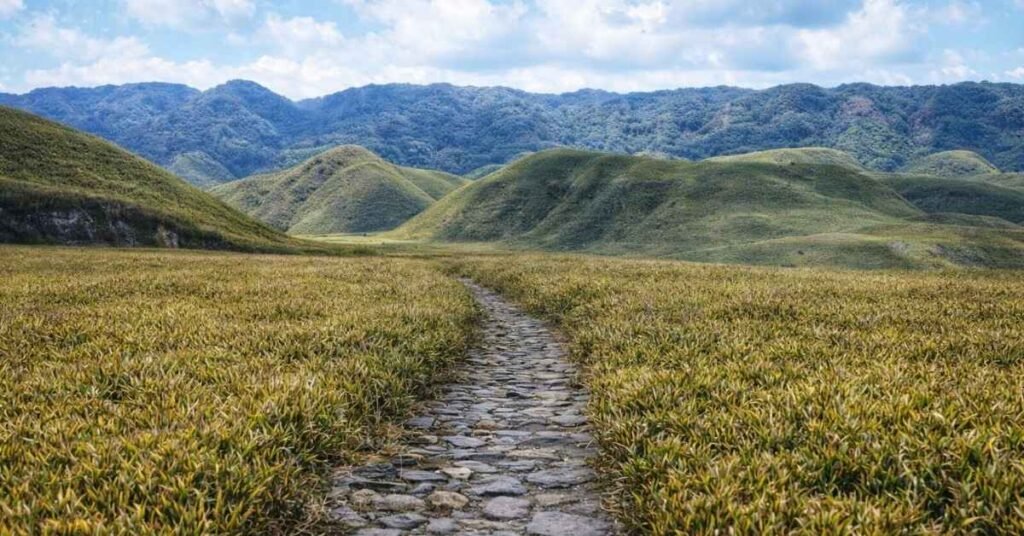
Dzukou Valley changes its color depending on when you visit. There are two main seasons, and both offer a completely different experience.
The Dzukou Lily Season (Late June – August)
This is the most famous time to visit.
- What to expect: The entire valley turns lush bright green. If you are lucky, you will see the rare pink Dzukou Lilies blooming.
- The Challenge: It is the monsoon season. It will rain—a lot. The trail will be muddy, slippery, and there will be leeches. You must carry a good raincoat and waterproof shoes.
The Winter Frost Season (November – January)
This is becoming very popular for adventure lovers.
- What to expect: The valley turns golden-brown. The sky is usually crystal clear with amazing sunrises. The highlight is the frost—in the early morning, the entire bamboo forest is covered in white ice crystals. It looks like a winter wonderland!
- The Challenge: It gets freezing cold. Temperatures can drop below zero at night. You need very warm woolen clothes and a high-quality sleeping bag.
When to Avoid: Try to avoid late February to April. The valley is dry, brown, and there are often forest fires. It is not as beautiful as the other seasons.
Total DIY Budget Breakdown (Per Person)
This is the part tour operators don’t want you to see. Here is exactly how much it costs to do this trek comfortably on your own for 2 Days and 1 Night (starting and ending at Dimapur).
Note: These prices are estimates for a solo traveler sharing taxis. If you travel in a group, it gets even cheaper!
| Expense Item | Estimated Cost (₹) |
| ILP Permit | ₹200 |
| Taxi (Dimapur ↔ Kohima) | ₹1,000 (₹500 x 2 ways) |
| Taxi (Kohima ↔ Viswema) | ₹1,000 (approx. shared/hire mix) |
| Valley Entry Fee | ₹100 |
| Dormitory Stay | ₹50 |
| Mattress + Blanket Rent | ₹200 |
| Food (4 Meals + Tea) | ₹800 |
| Miscellaneous (Water/Snacks) | ₹200 |
| TOTAL ESTIMATED COST | ₹3,550 |
Essential Packing List
Since you have to carry your own bag up the mountain, you need to pack light but smart. Do not bring heavy suitcases! Here is exactly what you need:
- Good Walking Shoes: You do not need expensive trekking boots, but your shoes must have good grip. Sports shoes with a strong sole are fine.
- Raincoat / Poncho: The weather in the valley is unpredictable. It can rain anytime.
- Power Bank: There is no electricity to charge phones at the Guest House. A 10,000mAh power bank is a lifesaver.
- Warm Clothes: Even in summer, it gets cold at night. Bring a jacket, a woolen cap, and thick socks.
- Torch / Headlamp: It gets pitch dark after sunset. You will need this to go to the toilet or find things in your bag.
- Toilet Paper & Wet Wipes: The toilets do not have tissue paper.
- Water Bottle: Bring a reusable bottle to fill up at the stream or kitchen.
- Cash: There are no ATMs and no UPI/Google Pay up there. Carry enough cash for food and rent.
Frequently Asked Questions (FAQs)
Is Dzukou Valley safe for solo female travelers?
Yes, absolutely. Nagaland is very safe for tourists. The locals are helpful, and you will find many other trekkers on the route. Just make sure to reach the Guest House before it gets dark (around 4:00 PM in winter).
Is there any mobile network in the valley?
Generally, no. You might get a very weak BSNL signal at specific spots near the Guest House, but you cannot make calls or use the internet. Inform your family beforehand that you will be out of contact for 24 hours.
Can I park my car/bike at the start of the trek?
Yes. At the Viswema starting point, there is usually a small space where locals park vehicles, but it is at your own risk. It is safer to leave your vehicle at your hotel in Kohima or at the parking areas in Viswema village and take a local taxi to the top.
Conclusion
Dzukou Valley is more than just a trek; it is an experience that stays with you. The silence of the valley, the strange beauty of the dead trees, and the joy of sipping hot tea in the cold wind—these are moments money can’t buy.
Now that you have this guide, you don’t need to worry about expensive packages or confusing routes. You have the map, the budget, and the plan. All you need to do now is pack your bag and go.
Have you visited Dzukou Valley yet, or are you planning to go soon? Let me know in the comments below if you have any questions!
Verdict: A tour agency charges ₹7,500+. Doing it yourself costs around ₹3,500. You save nearly 50%!