Chicham Bridge Spiti: The Truth About Asia’s Highest Bridge
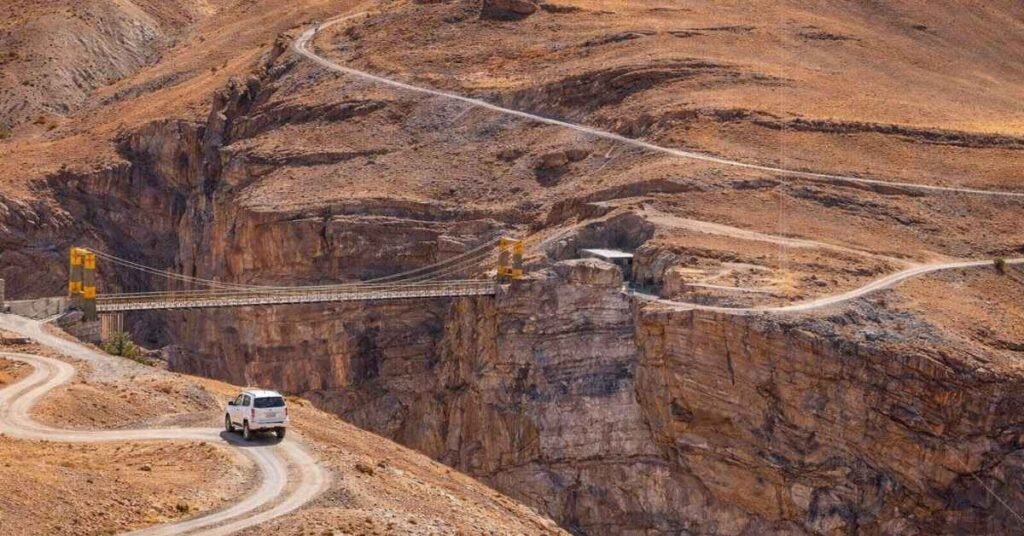
Imagine standing on a steel bridge that is floating high above the clouds. The wind is blowing hard against your face. When you look down, you see a deep, dark canyon that drops down 1,000 feet. Your heart starts beating faster!
Welcome to Chicham Bridge in Spiti Valley.
For a long time, travelers have called this place one of the most exciting spots in India. It is famous for being the highest bridge in Asia. But, most people make a big mistake. They just drive here, click a selfie, and leave.
They miss the real magic.
Just across this bridge lies the tiny, hidden village of Chicham. It is a place where snow leopards roam and the stars shine brighter than anywhere else. In this guide, I will tell you everything about the bridge, the village, and how to reach this amazing place safely.
The Engineering Marvel: Chicham Bridge Facts
Building a bridge on flat land is easy. But building a bridge at the top of a mountain? That is a super difficult task!
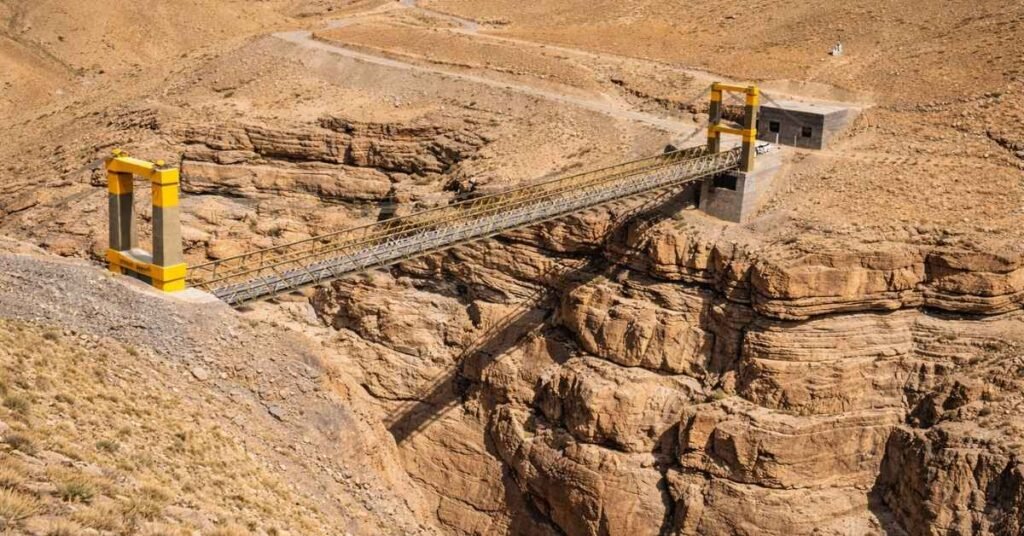
The Chicham Bridge is a true wonder of engineering. It took the government 15 long years to complete it. Before this bridge was built, the local people of Chicham village had a very hard time. They had to use a dangerous ropeway (a basket on a wire) to cross the deep canyon to get to the other side.
The bridge finally opened in 2017, and it changed everything. It connects the village of Kibber to Chicham. Because of this bridge, the journey to the next big town, Losar, became shorter by 40 kilometers!
Here are the mind-blowing facts about this bridge:
- Height: It stands at a dizzying height of 13,596 feet (4,145 meters) above sea level. This makes it the highest bridge in Asia.
- The Drop: Below the bridge flows the Samba Lamba Nallah. It is a gorge (a deep valley) that is 1,000 feet deep. If you look down, the cars at the bottom would look like tiny ants!
- Length: The bridge is about 114 meters long.
- Type: Many people on the internet call it a “suspension bridge” (a bridge that hangs from cables and swings). That is wrong. It is actually a Stiffened Steel Truss Bridge. This means it is made of strong steel beams and does not swing or shake when you drive on it.
Beyond the Bridge: Exploring Chicham Village
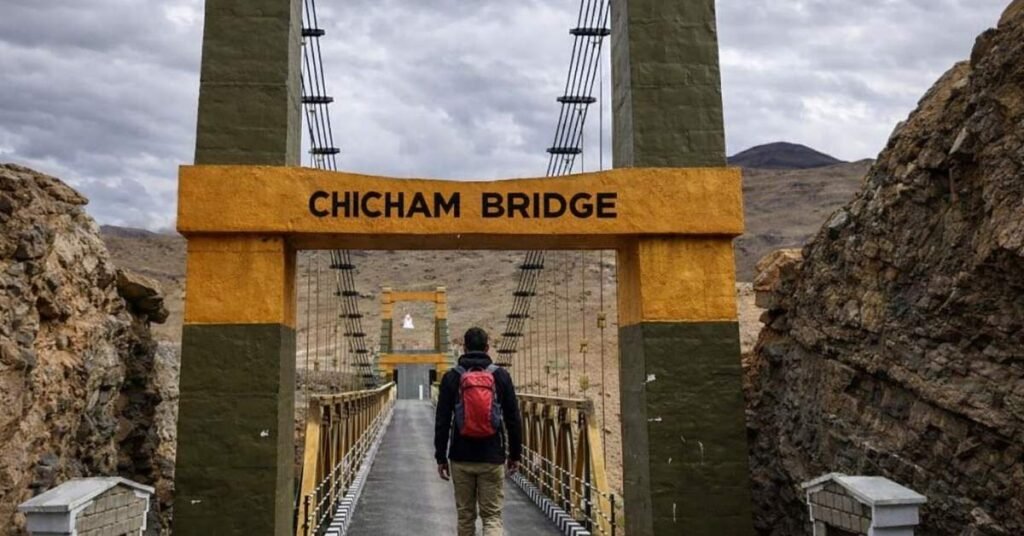
Most tourists make a big mistake. They drive to the bridge, take a quick photo, and turn their cars back toward Kaza. Please don’t do that!
The real treasure is just across the bridge.
When you cross over, you enter Chicham Village. It is a small, peaceful village with only a few houses. Unlike the busy town of Kaza, Chicham is very quiet. The houses here are traditional Spitian homes made of mud and stone. They are painted white with red borders and look beautiful against the brown mountains.
The people here live a simple life. They grow peas and barley in the summer. They are very warm and friendly. If you smile at them, they will likely invite you in for a cup of hot tea!
The Land of the “Ghost Cat”
Chicham is not just a pretty village. It is famous for something wild. This area is part of the Kibber Wildlife Sanctuary.
In the winter, this place becomes the home of the Snow Leopard. Local people call it the “Ghost Cat” because it is very hard to see. Photographers from all over the world come to Chicham in the freezing winter just to get one look at this beautiful animal.
Where to Stay in Chicham
You will not find big, fancy hotels with swimming pools here. Chicham offers something better: Homestays.
A homestay means you stay in a local family’s house. You eat what they eat, and you sleep in a warm room in their home. It is the best way to understand their culture.
- Tara Homestay: This is the most famous place to stay here. The hosts are known for being very helpful.
- Amenities: Do not expect luxury. You will get a clean bed, heavy blankets, and delicious home-cooked food like Dal-Chawal or Thukpa (noodle soup). Most toilets are dry compost toilets (traditional style), which is good for nature.
Things to Do in Chicham (More Than Just a Photo)
Since you have traveled so far to reach this remote place, you should spend some time enjoying it. Here are the best things to do in and around Chicham.
- Walk on the Bridge (Carefully): Driving over the bridge is fun, but walking on it is thrilling! You can feel the strong mountain wind hitting your face. You can peek over the railing to see the deep gorge below.
- Important Tip: Be careful! Cars and bikes also use this bridge. Do not stand in the middle of the road for a selfie. Stay on the side.
- Go Stargazing: In big cities, we cannot see many stars because of all the streetlights. But in Chicham, the sky is pitch black at night. You can see thousands of stars. If you are lucky, you might even see the Milky Way galaxy stretching across the sky like a cloud of light.
- Spot Wildlife: Keep your eyes open! Even if you don’t see a Snow Leopard, you might see other animals. Look for Blue Sheep (Bharal) grazing on the steep cliffs. They are very good climbers. You might also see the Golden Eagle flying high above looking for food.
- Visit Nearby Gems: Chicham is very close to other famous spots. You can easily visit them on the same day:
- Kibber Village: Just 15 minutes away. It is another beautiful high-altitude village.
- Key Monastery: About 30-40 minutes away. It is the biggest and most famous monastery in Spiti. It looks like a castle on a hill.
How to Reach Chicham (Detailed Route)
Chicham is located in the Lahaul and Spiti district of Himachal Pradesh. Reaching here is an adventure in itself because the roads wind through high mountains.
There are two main ways to reach Chicham Bridge.
Route 1: The Kaza Route (Most Popular)
Most travelers reach Chicham from the main town of Kaza. This is the easiest way.
- The Path: Kaza → Key Monastery → Kibber Village → Chicham Bridge.
- Road Condition: The road is mostly good and tarred (black-topped). It is a short and scenic drive.
- Time: It takes about 45 minutes to 1 hour to drive from Kaza to Chicham.
Route 2: The Manali Route (The Shortcut)
If you are coming from Manali, you don’t actually have to go all the way to Kaza first! You can take a turn before Kaza.
- The Path: Manali → Atal Tunnel → Kunzum Pass → Kiato.
- The Turn: At Kiato, you will see a bridge on your right side. Cross that bridge and follow the road. It leads directly to Chicham.
- Why use this route? This is the route that saves you 40 kilometers if you are going towards Losar or Manali from Chicham.
Here is a simple table to help you understand the distances:
| Starting Point | Distance to Chicham | Estimated Time |
| Kibber Village | 6 km | 15 mins |
| Kaza Town | 20 km | 1 hour |
| Manali | 175 km | 8-9 hours |
| Tabo | 68 km | 2.5 hours |
Note on Buses: Buses are not very frequent here. There is a local bus that goes from Kaza to Chicham in the evening, but timings can change. It is best to hire a taxi or ride a bike.
Best Time to Visit Chicham
When should you pack your bags? It depends on what you want to see. The weather in Spiti changes a lot, so you must choose carefully.
Summer (May to September) – The Best Time for Everyone
This is the most popular time to visit.
- Weather: The sun is out, and it is not too cold. The temperature is pleasant (around 15°C to 25°C during the day).
- Scenery: The fields in Chicham village are green with crops. The roads are clear of snow, making driving easy.
- Who should go: Families, bikers, and anyone who wants a relaxing trip.
Winter (November to March) – For the Brave Only
This is the time for serious adventure lovers.
- Weather: It gets extremely cold! Temperatures can drop to -20°C or even lower. Everything freezes, even the water in the pipes.
- Roads: The road from Manali to Kaza is CLOSED due to heavy snow. You can only reach Chicham from the Shimla route.
- Why go? This is the only time you can spot the Snow Leopard. The big cats come down from the high mountains to hunt near the village.
- Who should go: Wildlife photographers and people who can handle extreme cold.
Important Warning: Avoid traveling in late April or October. These are “changeover” months. There is a high risk of sudden snowfall or melting snow causing landslides on the roads.
Essential Travel Tips (Read Before You Go)
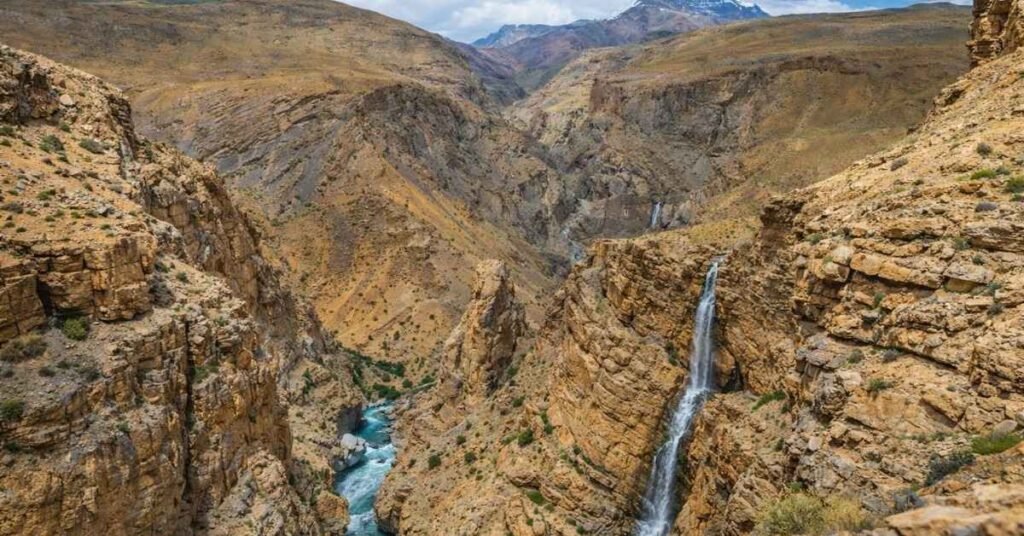
Spiti Valley is not like a city. It is a wild and remote place. To have a safe and happy trip to Chicham, you need to know these important tips.
- Mobile Network (Will my phone work?):
- BSNL: This is the most reliable network in Spiti. It usually works for calls.
- Jio: Jio 4G has started working in Kaza and even in Kibber/Chicham recently! You might get internet, but it can come and go.
- Airtel/Vodafone: These networks usually do not work well in Chicham. Do not rely on them.
- Altitude Sickness (AMS):
- Chicham is very high up (13,596 ft). The air here has less oxygen.
- The Rule: Do not go straight to Chicham on your first day. Stay in Kaza for 1 or 2 days to let your body get used to the thin air. Drink lots of water. If you feel a bad headache or dizziness, go down to a lower height immediately.
- Cash is King:
- There are no ATMs in Chicham Village.
- The nearest ATM is in Kaza. Most homestays in Chicham only accept cash. So, withdraw enough money in Kaza before you drive up here.
- Fuel (Petrol/Diesel):
- There is no petrol pump in Chicham.
- The last petrol pump is in Kaza (which is the world’s highest petrol pump!). Make sure your tank is full before you leave Kaza.
- Respect the Locals:
- The people here are very religious. Do not play loud music. Do not litter or throw plastic wrappers in the gorge. Keep this beautiful place clean.
FAQs About Chicham
Here are answers to the most common questions travelers ask about this place.
Is Chicham Bridge safe to cross?
Yes, absolutely. It is a strong steel bridge made for cars, buses, and trucks. It is very safe. However, always drive slowly because the bridge is narrow and there might be tourists walking on it.
What is the exact height of Chicham Bridge?
The bridge is located at an altitude of 13,596 feet (4,145 meters) above sea level.
Can we visit Chicham Bridge in winter?
Yes, but it is very difficult. The roads are full of snow and it is extremely cold (-20°C). You need a 4×4 vehicle and an experienced driver. Most regular tourists should avoid winter.
How far is Chicham from Kaza?
Chicham is about 20 kilometers away from Kaza. It takes roughly 45 minutes to drive there.
Is there any entry fee for the bridge?
No, there is no entry fee. You can visit the bridge for free.
Conclusion
Chicham Bridge is more than just a pile of steel. It is a lifeline for the people of Spiti and a gateway to adventure for us. Standing on that bridge, with the cold wind in your hair and the deep valley below, is a feeling you will never forget.
But remember, the real beauty is not just the bridge—it is the village across it. So, next time you visit, don’t just rush back. Stay for a night, sip some hot tea with the locals, and watch the stars.
Have you ever visited Spiti Valley? Or are you planning your first trip? Let me know in the comments below!