Last updated on April 30th, 2026 at 07:46 am
The three highest waterfalls in Odisha are Barehipani (399m, Mayurbhanj), Khandadhar in Sundargarh (244m), and Duduma (157m, Koraput). Barehipani ranks as the 2nd highest waterfall in all of India.
Odisha does not get the credit it deserves. Every major waterfall in Odisha punches well above its weight — in height, in raw volume, and in sheer remoteness. While mainstream travel lists keep cycling through the same destinations, this state quietly holds some of the most dramatic cascades on the subcontinent.
This guide cuts straight to what matters: verified heights, correct districts, best travel windows, and the facts that most other blogs get wrong.
The Giants: Highest Waterfalls in Odisha
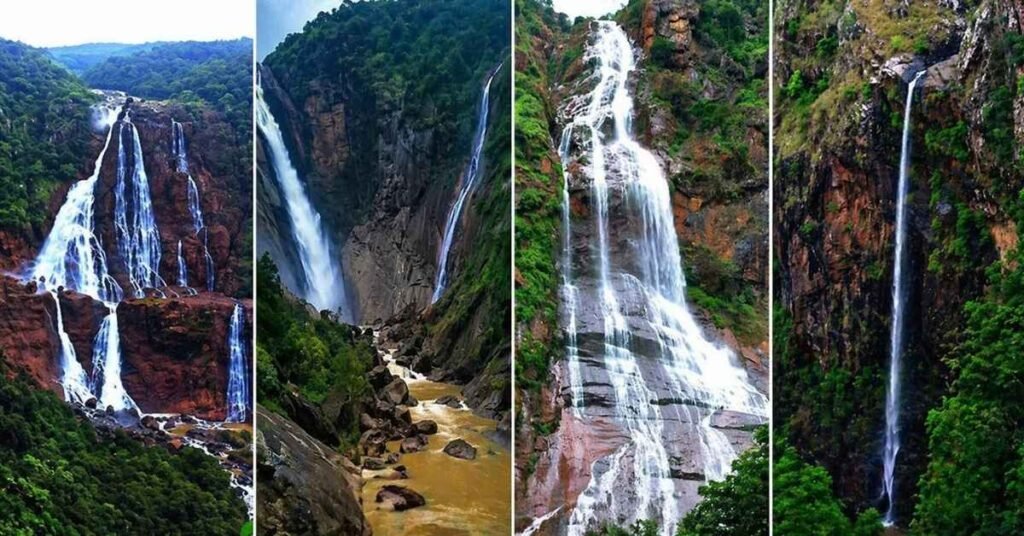
These are not scenic trickles. The waterfalls listed below are measured, documented, and in several cases — record-breaking.
Barehipani Waterfall — 399m, Mayurbhanj
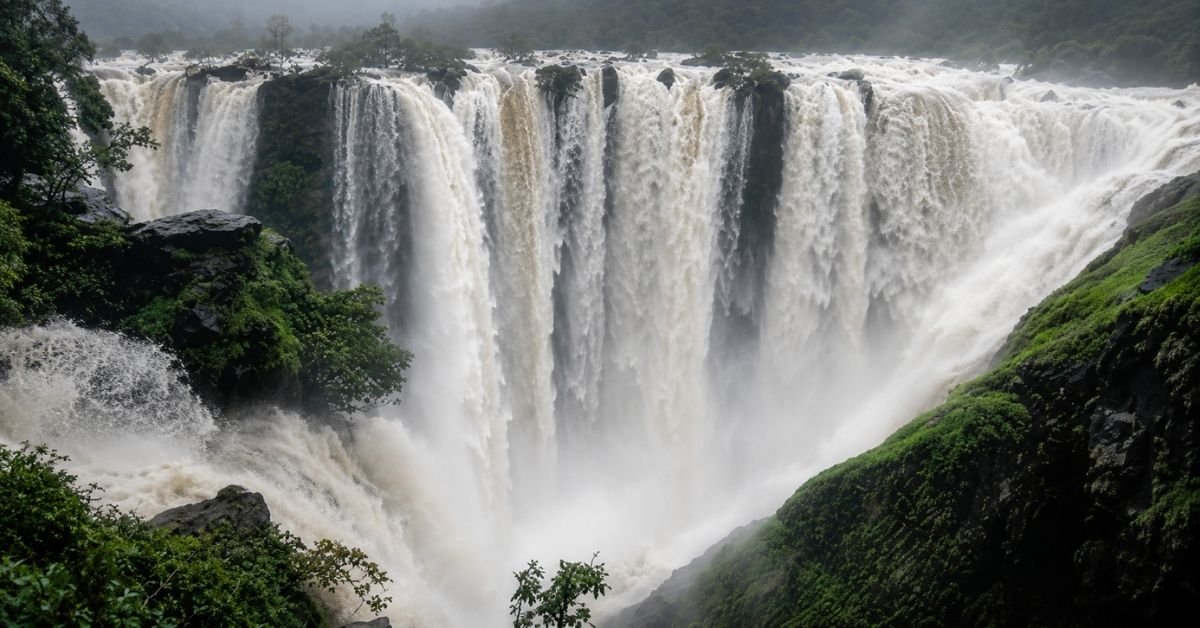
Barehipani is the highest waterfall in Odisha and the 2nd highest in India. It is formed by the Budhabalanga River and drops in a near-vertical plunge deep inside Similipal National Park. The surrounding forest is dense sal and bamboo, and the mist from the falls is visible well before you reach the base.
Getting here requires either a forest permit or an approved guide, which keeps the crowds thin and the experience genuinely wild.
- Height: 399 metres (1,309 ft)
- District: Mayurbhanj
- River: Budhabalanga
- Best Time to Visit: October to February
Duduma Waterfall — 157m, Koraput
Duduma is formed by the Machkund River and straddles the border of Odisha and Andhra Pradesh. The waterfall feeds a hydroelectric project downstream, which makes the pre-monsoon flow noticeably lower — but during and just after the rains, the drop is thunderous.
The surrounding Koraput region is tribal heartland, and the drive itself through the Eastern Ghats is reason enough to make the trip.
- Height: 157 metres (574 ft)
- District: Koraput
- River: Machkund
- Best Time to Visit: July to November
Khandadhar Waterfall — Two Locations, Two Heights
This is where most travel content gets it wrong. There are two separate Khandadhar Waterfalls in Odisha, and they are not the same place.
Khandadhar, Sundargarh is the taller of the two at 244 metres, ranked among the 12th highest waterfalls in India. It drops through thick forest terrain in a single dramatic cascade.
Khandadhar, Keonjhar stands at 152 metres and is significantly more accessible. It draws larger visitor numbers because of easier road connectivity.
- Heights: 244m (Sundargarh) / 152m (Keonjhar)
- Districts: Sundargarh and Keonjhar
- Best Time to Visit: August to December
Joranda Waterfall — 150m, Mayurbhanj
Joranda sits entirely within the core zone of Similipal National Park, making it one of the most protected waterfalls in eastern India. It is a straight single-drop fall of 150 metres with no staged tiers, which gives it a clean, unbroken visual that photographs exceptionally well.
Access is restricted during certain forest closure periods, so checking the Similipal entry schedule before planning is essential.
- Height: 150 metres
- District: Mayurbhanj
- Location: Similipal National Park (Core Zone)
- Best Time to Visit: November to February
Sacred Cascades: Nature and Spirituality
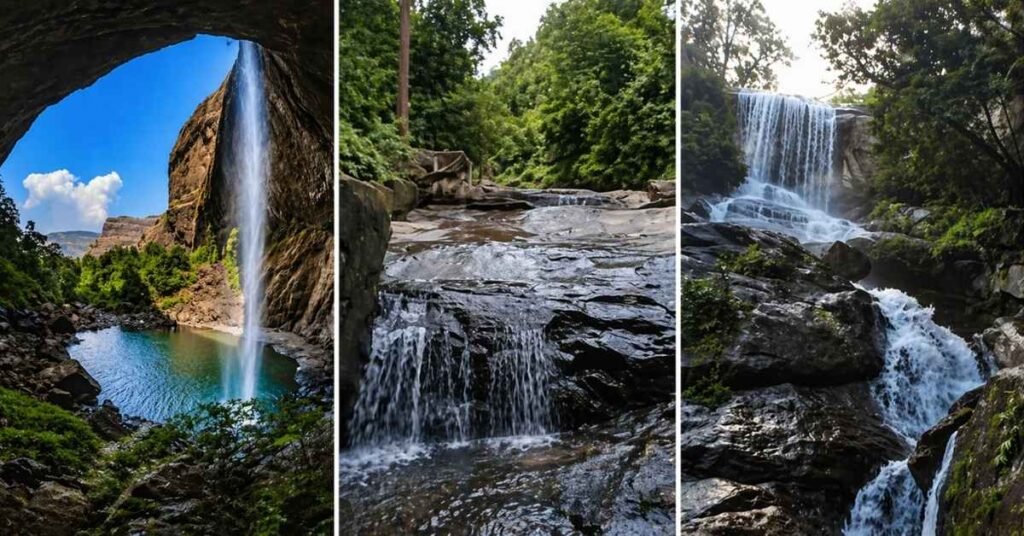
Waterfalls in Odisha are not always just geographical landmarks. Several of them have been woven into active religious practice for centuries. These three are the most significant.
Devkund Waterfall — Mayurbhanj
Devkund is located in the Mayurbhanj district and carries a distinctly sacred identity. An Ambika Temple stands at the top of the falls, and local communities consider the site deeply auspicious. Pilgrims visit alongside trekkers, which gives Devkund a dual character that most waterfalls in the state do not have.
The water source is a natural spring-fed stream, and the setting within forested terrain keeps the atmosphere calm and relatively undisturbed year-round.
- District: Mayurbhanj
- Religious Significance: Ambika Temple at the top
- Best Time to Visit: October to March
Harishankar — Balangir
Harishankar is built into the Gandhamardan hills on the Balangir side. The waterfalls here flow through a temple complex dedicated to Lord Shiva, and the site functions as both a pilgrimage destination and a natural retreat. Stone steps and defined pathways make the terrain navigable even for older visitors.
The Gandhamardan range is also a known medicinal plant zone, which adds an ecological layer to the religious significance of the location.
- District: Balangir
- Religious Significance: Shiva temple complex within the waterfall area
- Best Time to Visit: August to February
Nrusinghanath — Bargarh
Nrusinghanath sits on the opposite side of the same Gandhamardan hills, in Bargarh district. The presiding deity is Lord Nrusingha, and the temple here is one of the more active pilgrimage sites in western Odisha. A waterfall runs adjacent to the complex, and the combined effect of running water and temple architecture makes the site genuinely striking.
Both Harishankar and Nrusinghanath draw large crowds during Hindu festivals, so planning outside peak festival dates makes for a far quieter visit.
- District: Bargarh
- Religious Significance: Nrusingha temple, active pilgrimage site
- Best Time to Visit: September to March
Not Sure Where To Go!
Let our Random Country Generator help you discover your next perfect destination.
Use Our Free ToolSafe and Scenic: Best Waterfalls for Family Picnics
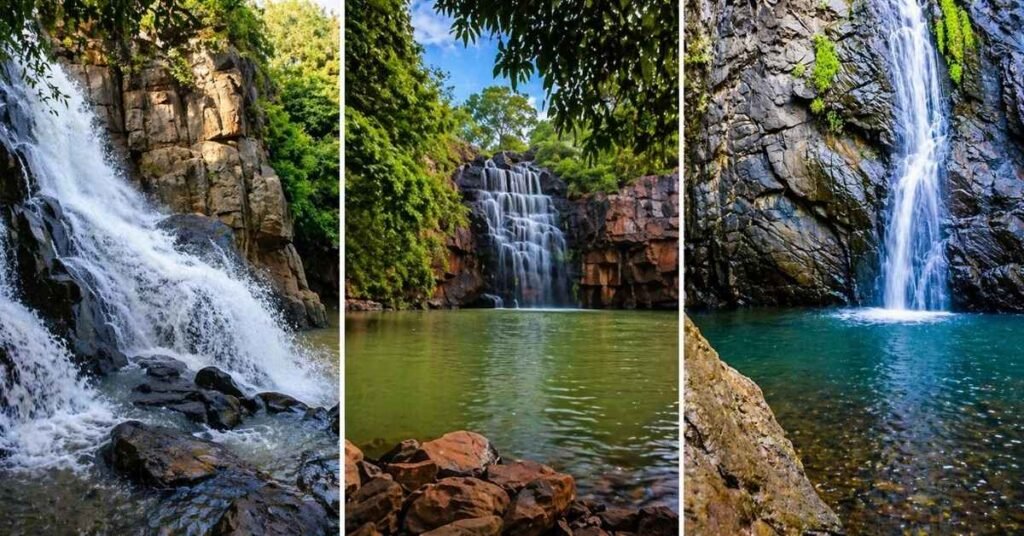
Not every waterfall trip needs to be a trek into a restricted forest zone. These three are well-suited for families, children, and groups who want accessibility without sacrificing scenery.
Sanaghagara — Keonjhar
Sanaghagara is one of the most family-friendly waterfall destinations in Odisha. The water flow is relatively gentle, the banks are open, and the surrounding forest is clean and well-maintained. Children can safely wade in the shallower pools near the edge.
What sets Sanaghagara apart from similar picnic spots is the presence of an Eco-tourism Nature Camp operated by Ecotour Odisha nearby. This means accommodation is available for those who want to extend beyond a day trip, with basic facilities managed under the state’s responsible tourism framework.
- District: Keonjhar
- Safety Level: High — gentle flow, open banks
- Stay Option: Sanaghagara Nature Camp (Ecotour Odisha)
Badaghagara — Keonjhar
Badaghagara is located close to Sanaghagara and is often visited on the same day. The name itself signals the contrast — “Bada” meaning big, while Sanaghagara’s “Sana” means small. The drop here is more pronounced, but the access path is still manageable for most age groups.
It is a popular picnic spot among locals from Keonjhar and nearby towns, which means weekends tend to fill up quickly during peak season.
- District: Keonjhar
- Best For: Combined day trip with Sanaghagara
- Crowd Level: Moderate to high on weekends
Pradhanpat — Deogarh
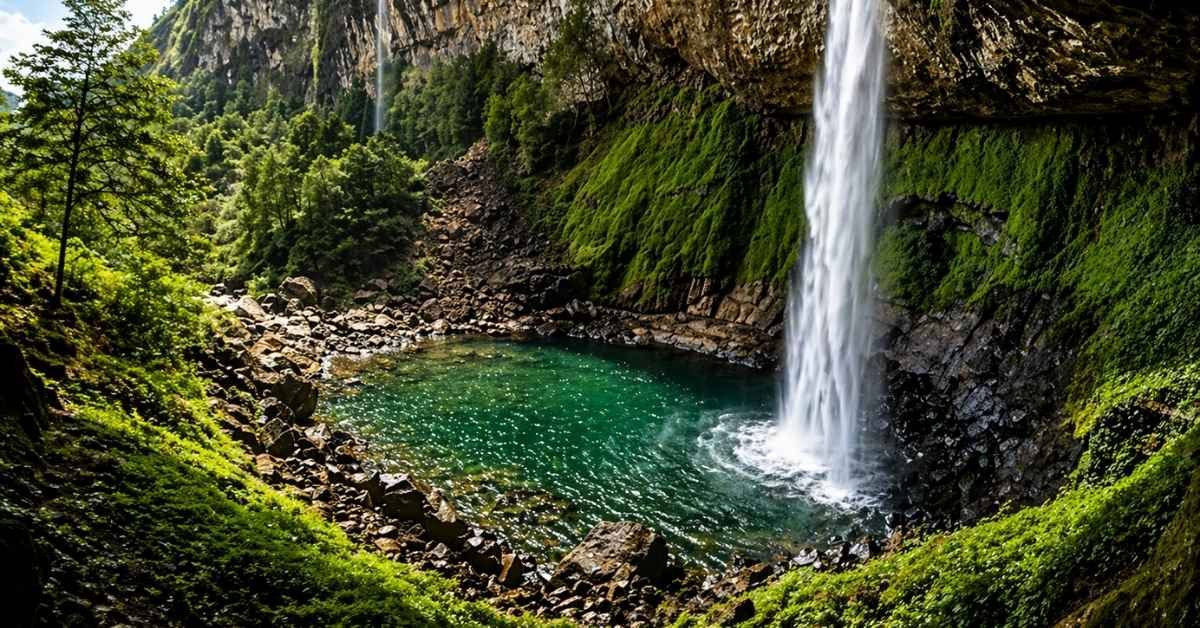
Pradhanpat is a less-talked-about waterfall in Deogarh district that deserves more attention. It falls through layered rock into a clear pool below, and the forested approach path is short enough for most family groups to handle comfortably. The site is not yet heavily commercialized, which keeps the experience clean and uncrowded.
- District: Deogarh
- Crowd Level: Low — relatively undiscovered
- Best Time to Visit: July to November
Practical Info: Food and Facilities Comparison
| Waterfall | Food Availability | Restrooms | Stay Option |
| Sanaghagara | Food stalls available | Basic facilities present | Nature Camp nearby |
| Badaghagara | Carry own food advised | Limited | No formal stay |
| Pradhanpat | Carry own food advised | None on-site | No formal stay |
For Badaghagara and Pradhanpat, packing your own meals is the reliable choice. Local dhabas may appear near the parking areas on busy weekends, but they are not guaranteed to be open outside peak season.
Off the Beaten Path: Hidden Gem Waterfalls
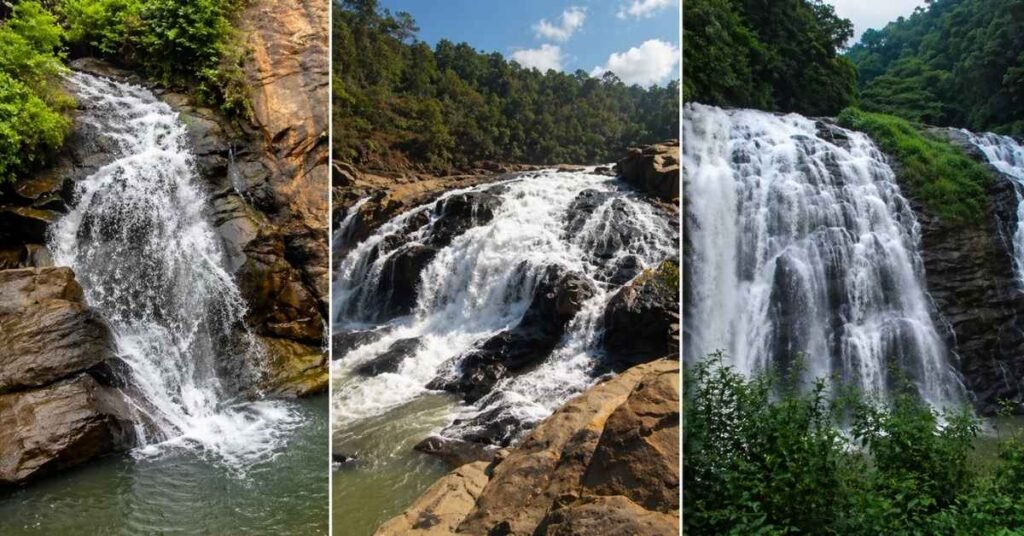
The popular waterfalls in Odisha get the traffic. These five do not — and that is precisely what makes them worth the effort. No big signboards, no food courts, and in some cases, no paved road for the last few kilometres. If that sounds like your kind of trip, this section is for you.
For detailed route planning and entry permissions for offbeat sites, Odisha Tourism’s official website is the most reliable starting point before you head out.
Phurlijharan Waterfall — Kalahandi
Phurlijharan is located near Bhawanipatna in Kalahandi district and remains largely unknown outside the local circuit. The waterfall drops through a rocky gorge surrounded by thick vegetation, and the approach involves a moderate trail that is manageable but not paved.
This is not a site with infrastructure. There are no ticket counters or guides stationed here. Going with someone who knows the local terrain is strongly advised, especially during or just after the monsoon.
- District: Kalahandi
- Trek Required: Yes — moderate trail
- Best Time: October to January
Putudi Waterfall — Kandhamal
Putudi sits deep inside the forest belt of Kandhamal, one of Odisha’s most scenically underrated districts. The waterfall is not large by height standards, but the dense canopy around it and the near-total absence of other visitors makes it feel genuinely remote.
Reaching Putudi requires off-road driving followed by a forest walk. A local guide from the nearest village is not optional here — it is a practical necessity.
- District: Kandhamal
- Route Difficulty: High — off-road + forest trek
- Best Time: September to December
Ammakunda — Malkangiri
Ammakunda is a scenic waterfall destination in Malkangiri, one of Odisha’s southernmost and most forested districts. It is listed as an official tourist spot by the Malkangiri district administration, which means basic access has been improved in recent years.
That said, Malkangiri’s remote location means travel time from major Odisha cities is significant. Budget at least a full day of travel each way.
- District: Malkangiri
- Route Difficulty: Moderate — accessible but remote
- Official Listing: Yes, Malkangiri district tourism
Hatipathar — Rayagada
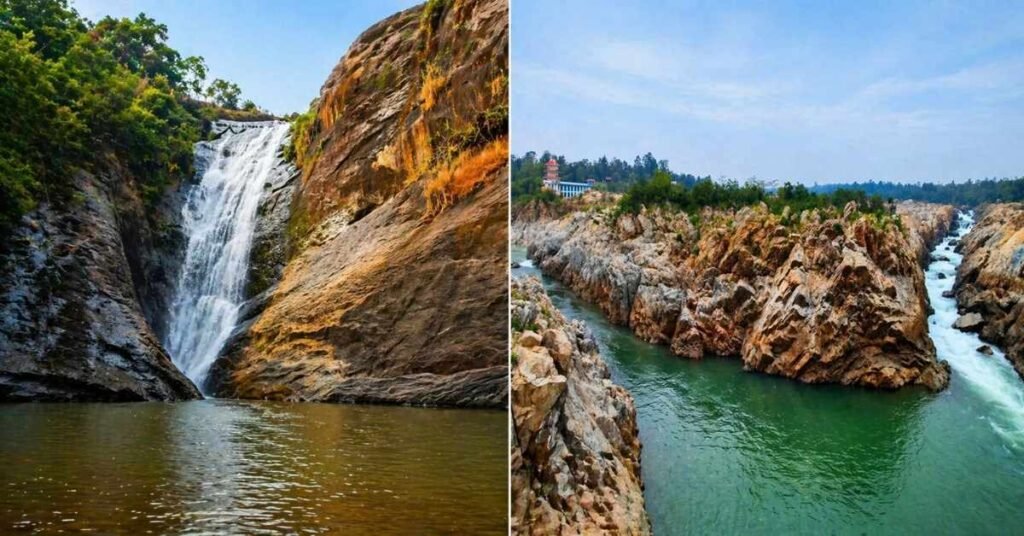
Hatipathar translates loosely to “elephant rock,” and the surrounding landscape lives up to that name. Located in Rayagada district, this waterfall flows over flat rock shelves in a wide sheet pattern rather than a single concentrated drop, which makes it visually distinct from most waterfalls in eastern India.
The road access is partially unpaved, and the final stretch typically requires a vehicle with decent ground clearance.
- District: Rayagada
- Route Difficulty: Moderate — partial off-road
- Unique Feature: Wide sheet-flow over flat rock shelves
Bhimkund — Keonjhar/Mayurbhanj Border
Bhimkund sits on the border zone between Keonjhar and Mayurbhanj, which already tells you something about how far off the standard tourist map it falls. The waterfall feeds into a deep natural pool below, and local folklore connects the site to the Pandavas from the Mahabharata.
The trek to Bhimkund is not technically difficult, but the path is uneven and unsigned. First-time visitors without a local contact regularly miss the turnoff entirely.
- Districts: Keonjhar / Mayurbhanj border
- Trek Required: Yes — uneven, unsigned trail
- Best Time: October to February
Essential Survival Tips for Your Waterfall Trip
Visiting waterfalls in Odisha is rewarding, but a handful of recurring mistakes turn good trips into difficult ones. These are the practical points that most travel guides skip over.
Monsoon Safety
- Rocks near waterfall bases become dangerously slippery between July and September. Rubber-soled shoes with grip are not optional — sandals and flip-flops have caused serious injuries at these sites.
- Leeches are active throughout the monsoon season across forested waterfall trails in Mayurbhanj, Kandhamal, and Koraput. Tuck trousers into socks, apply salt or tobacco around shoe edges, and carry a small salt pouch for quick removal.
- Water levels rise fast and without warning during heavy upstream rain. If the sky darkens suddenly, move away from the base and the banks immediately. Do not wait to see how high the water gets.
Food Availability
- Barehipani, Joranda, Putudi, and Bhimkund have no food stalls within reasonable distance of the waterfall itself. Pack full meals, not just snacks.
- Sanaghagara and Duduma have local vendors near the entry points on weekends, but supply is inconsistent. Treat outside food as a bonus, not a plan.
- Carry at least 2 litres of water per person for any trek longer than 2 kilometres. Stream water at these sites is not safe to drink without treatment.
Transport to Remote Base Points
- Most hidden gem waterfalls in this list require either a private vehicle or a hired local auto/jeep for the final stretch. State buses do not reach waterfall trailheads.
- For Similipal-area waterfalls (Barehipani, Joranda, Devkund), entry requires a forest permit. Obtain this in advance through the Similipal Tiger Reserve office or via approved tour operators.
- Hiring a local guide is worth every rupee for offbeat sites. They know the trails, the water conditions, and the fastest way out if something goes wrong.
Frequently Asked Questions
Which is the highest waterfall in Odisha?
Barehipani Waterfall in Mayurbhanj district is the highest waterfall in Odisha at 399 metres (1,309 ft). It is also the 2nd highest waterfall in India, formed by the Budhabalanga River inside Similipal National Park.
Is it safe to visit Odisha’s waterfalls during the monsoon?
Some waterfalls are best experienced during or just after the monsoon when water volume is at its peak, but safety conditions vary significantly by site. Duduma and Sanaghagara remain reasonably accessible. Barehipani, Joranda, and all forest-interior sites carry higher risk during peak monsoon due to slippery terrain, leeches, and sudden water surges. Visiting between September and November gives you strong flow with reduced risk.
Are there any waterfalls in Odisha with accommodation nearby?
Yes. Sanaghagara in Keonjhar has an Eco-tourism Nature Camp managed under Odisha’s responsible tourism program. You can check availability and make bookings directly through Ecotour Odisha. For Similipal-area waterfalls, forest rest houses and approved lodges in Baripada serve as the most practical base.
Which waterfall in Odisha is best for families with children?
Sanaghagara and Badaghagara in Keonjhar district are the safest options for families with children. Both have gentle water flow, open banks, and manageable terrain. Sanaghagara additionally has an Eco-tourism Nature Camp nearby, making it suitable for an overnight family trip without roughing it entirely.
Are there any sacred or religious waterfalls in Odisha?
Yes, several. Devkund in Mayurbhanj has an Ambika Temple at the top of the falls. Harishankar in Balangir flows through an active Shiva temple complex. Nrusinghanath in Bargarh sits adjacent to a Nrusingha temple that draws pilgrims from across western Odisha. All three are functional pilgrimage sites, not just scenic stops.
Is a permit required to visit waterfalls inside Similipal National Park?
Yes. Barehipani and Joranda both fall within Similipal National Park, which requires a valid forest entry permit. Permits are issued through the Similipal Tiger Reserve office. The park also has seasonal closures, typically during peak monsoon months. Confirming the open dates and permit availability before planning your trip is essential, as walk-in entry is not guaranteed.