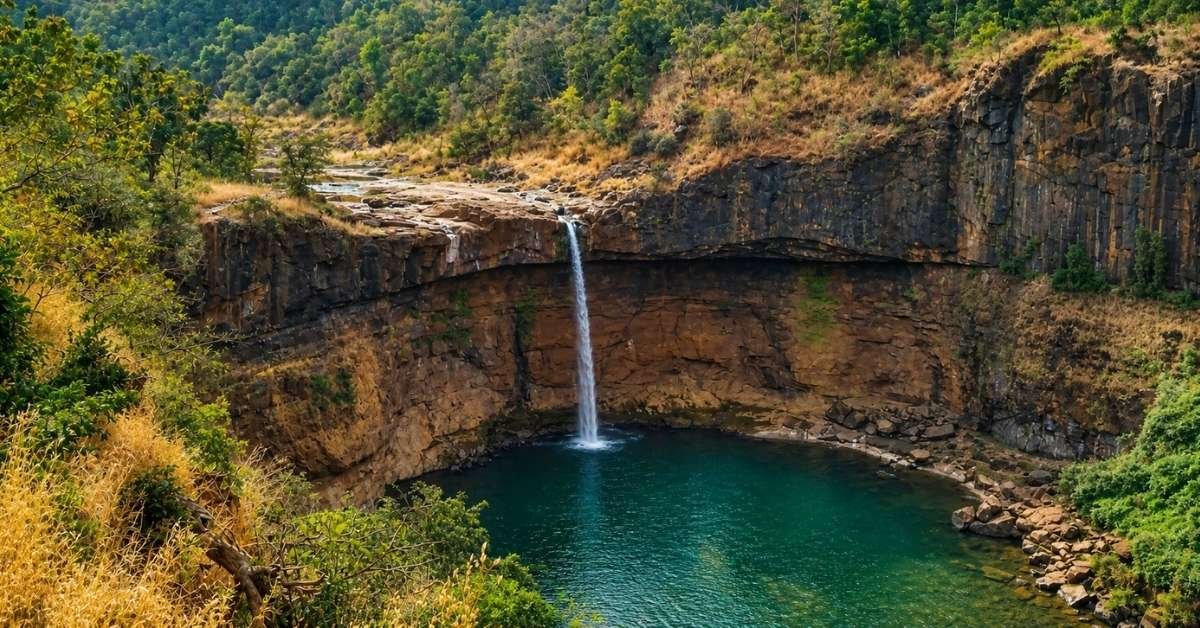
Meghalaya is called “The Abode of Clouds” for a reason. This small northeastern state receives some of the heaviest rainfall in the world, and that rain creates something truly spectacular — hundreds of waterfalls that pour down its hills, gorges, and forests. The waterfalls in Meghalaya range from easy roadside stops to full-day treks deep into the jungle.
Whether you are a first-time visitor or a seasoned traveller, this guide covers everything you need to know before you go.
Meghalaya Waterfalls at a Glance
- Top 3 Waterfalls: Nohkalikai Falls, Krang Suri Falls, and Elephant Falls
- Best Month to Visit: October to February for clear skies and safer trails
- General Budget: ₹20 to ₹100 entry fees per waterfall; trekking spots may need a local guide
Best Time to Visit the Waterfalls in Meghalaya
Timing your trip makes a huge difference. Meghalaya has two very different faces depending on the season you visit.
Monsoon (June to September) is when the waterfalls are at their most powerful. The water roars down with full force and the scenery looks like something from a movie. However, roads can get slippery, some trekking trails become risky, and the water is too muddy for swimming.
Winter (October to February) is the sweet spot for most travellers. The water clears up, turning that famous turquoise and blue colour at spots like Krang Suri Falls. Swimming is safer, skies are clearer, and trekking trails are much easier to navigate.
| Factor | Monsoon (Jun–Sep) | Winter (Oct–Feb) |
| Water Flow | Very High | Moderate |
| Water Colour | Muddy/Green | Crystal Clear Blue |
| Swimming | Not Safe | Safe & Ideal |
| Trekking Trails | Slippery & Risky | Easy & Accessible |
| Crowd Level | Moderate | High |
| Best For | Photography | Swimming & Trekking |
The Giants of Cherrapunji
Cherrapunji, locally known as Sohra, is the heart of waterfall country in Meghalaya. This region gets so much rain that the hills here have carved out some of the most dramatic drops you will find anywhere in India. Three waterfalls here stand above the rest.
Nohkalikai Falls
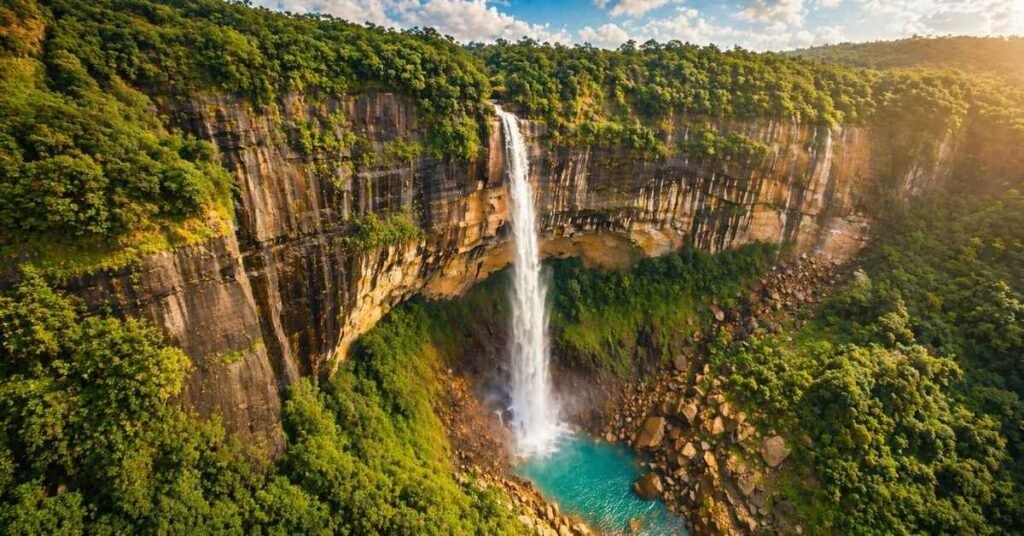
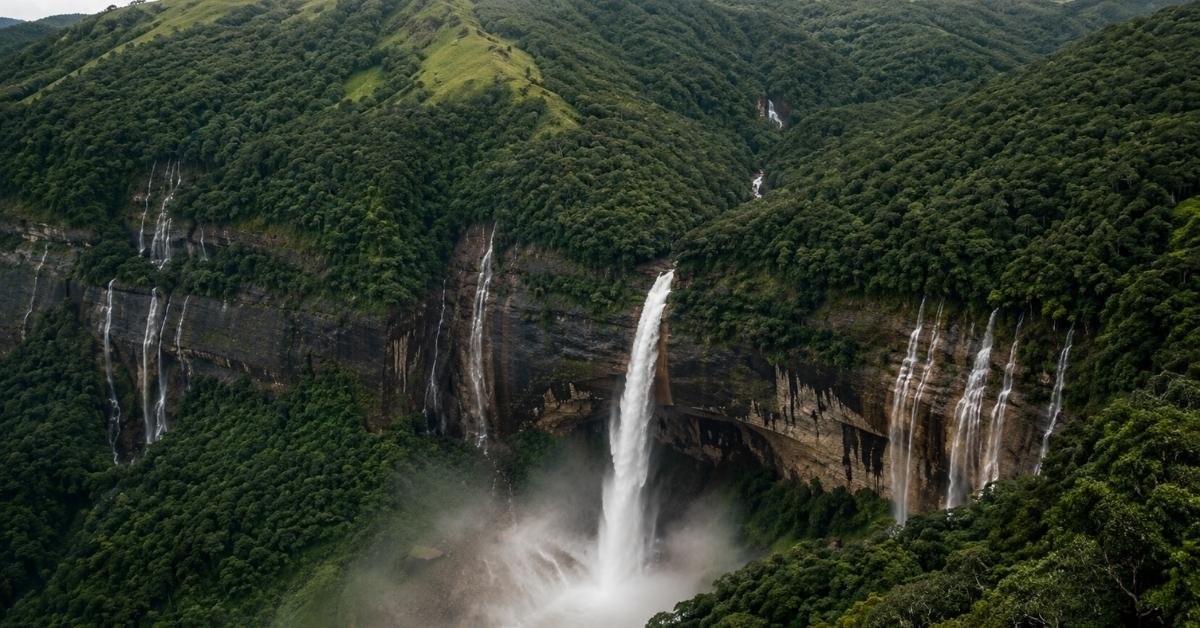
Nohkalikai Falls is India’s tallest plunge waterfall, dropping from a height of approximately 1,115 feet straight into a green pool below. The word “plunge” means the water free-falls without touching the rockface, which makes the view from the top absolutely jaw-dropping.
The falls are at their most dramatic during and just after the monsoon season. In winter, the flow reduces but the pool at the bottom turns a stunning shade of blue-green. Both seasons offer something different, so there is really no bad time to visit.
A tragic local legend is attached to this waterfall. The name “Nohkalikai” loosely translates to “Jump of Ka Likai,” a story of a grieving woman from the village. It adds a layer of emotion to an already powerful natural sight.
Quick Facts:
- Height: ~1,115 feet
- Entry Fee: ₹20 to ₹30 per person
- Difficulty: Very Easy (viewpoint is accessible by road)
- Best Time: July to February
- Tip: Arrive before 10 AM to avoid crowds and get clear photographs
Seven Sisters Falls
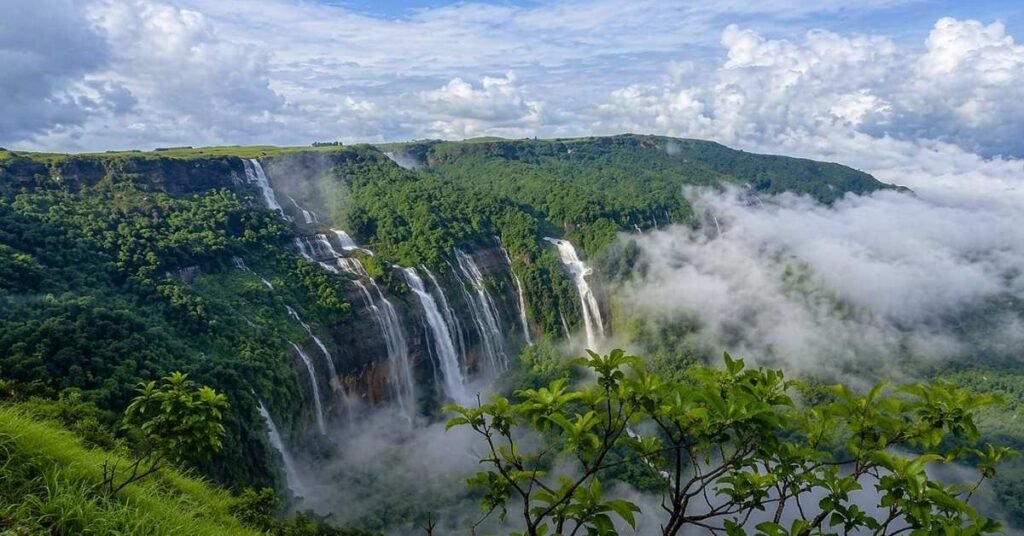
Seven Sisters Falls is one of the most visually unique waterfalls in all of Meghalaya. During peak monsoon, seven separate streams of water fall side by side down the cliff face, which is exactly how it got its name. It is visible directly from the roadside on the Shillong-Cherrapunji highway, making it one of the easiest waterfalls to spot in the entire region.
The seven streams are only visible during heavy monsoon months. By winter, the flow reduces significantly and some streams may dry up completely. So if seeing all seven streams is on your list, plan your visit between July and September.
Quick Facts:
- Entry Fee: No entry fee (roadside viewpoint)
- Difficulty: Very Easy (no trekking required)
- Best Time: July to September (monsoon only)
- Tip: View from the designated roadside viewpoint on NH6 for the best angle
Wei Sawdong Falls
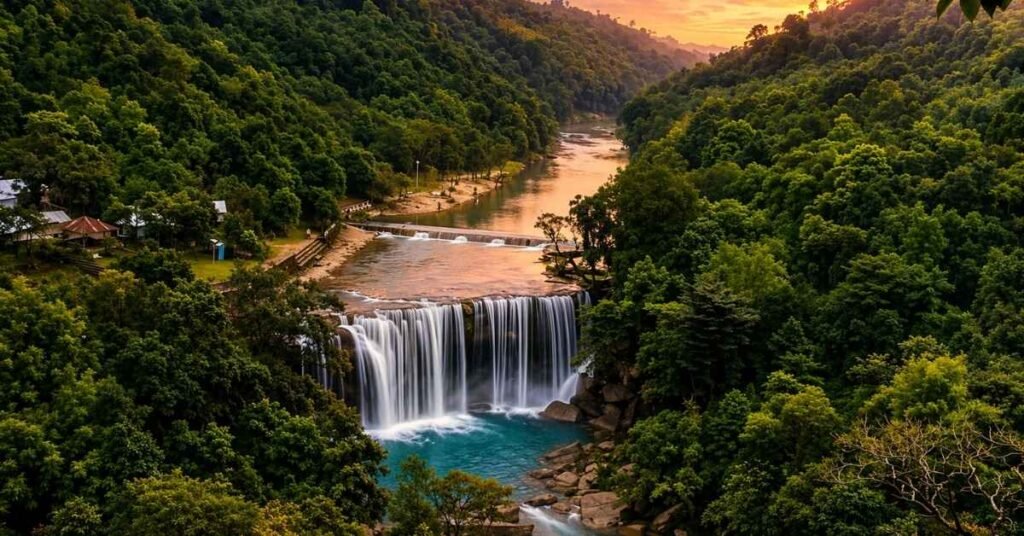
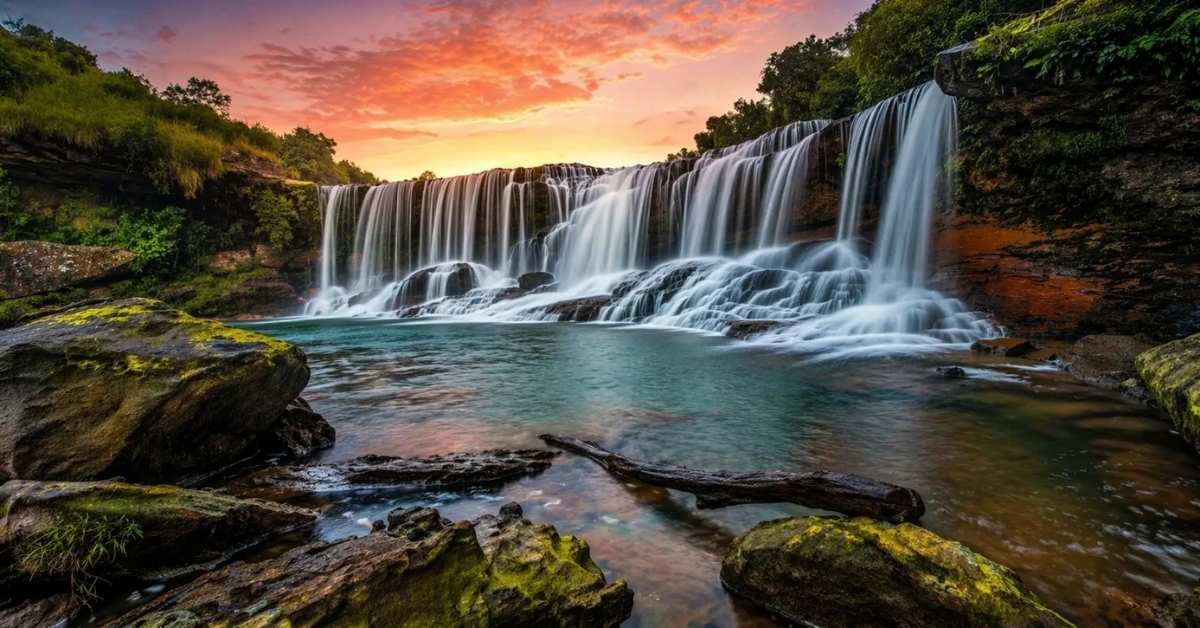
Wei Sawdong Falls is easily one of the most rewarding waterfalls in Meghalaya for those who love adventure. This is a 3-tiered waterfall, meaning the water cascades down three separate levels before reaching the bottom. Each tier has its own pool, and the lowest one is perfect for a swim.
The catch is the trek. Getting down to the falls requires navigating a steep trail that includes bamboo stairs built by locals. The path is narrow, slippery in wet conditions, and demands a decent level of fitness. It is not recommended for elderly visitors or very young children.
That said, the reward at the bottom is absolutely worth the effort. Very few tourists make it down, which means you often get the falls almost entirely to yourself.
You can find more details about trekking routes and travel advisories in Meghalaya on the official Meghalaya Tourism website.
Quick Facts:
- Tiers: 3
- Entry Fee: Nominal local fee (varies by season)
- Difficulty: Hard (steep bamboo stairs, slippery trail)
- Best Time: October to February
- Tip: Hire a local guide from the nearest village. They know the trail well and the fee supports the local community directly.
These three waterfalls alone can fill two full days of your Meghalaya trip. Each one offers a completely different experience, from a simple roadside view to a full trekking adventure.
Not Sure Where To Go!
Let our Random Country Generator help you discover your next perfect destination.
Use Our Free ToolThe Blue Lagoons of Jaintia Hills
Most people only think of Cherrapunji when they plan a Meghalaya trip. But the Jaintia Hills region has two waterfalls that are genuinely hard to forget, mostly because of their water colour. On a sunny day, the pools here glow in a shade of blue and turquoise that looks almost unreal.
Krang Suri Falls
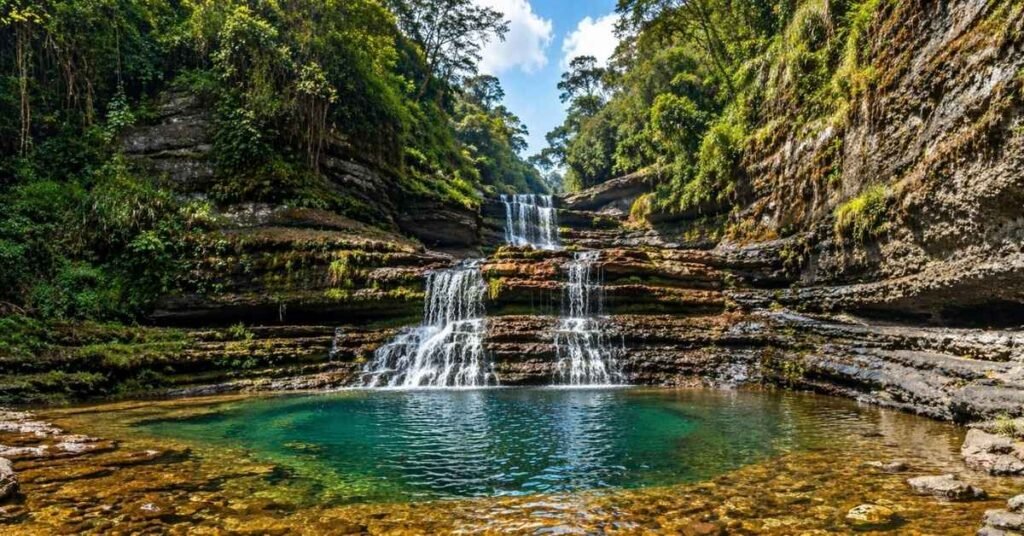
Krang Suri Falls is the most photographed waterfall in Meghalaya for one simple reason: the water is crystal clear and bright turquoise. You can literally see the rocks at the bottom of the pool. The colour comes from the mineral composition of the water and the way sunlight hits the surface.
Swimming here is allowed, and most visitors come specifically for that. However, there is one strict rule: a life jacket is mandatory before you enter the water. No exceptions. Life jackets are available at the site for a rental fee of approximately ₹50 to ₹100. This rule exists because the pool is deeper than it looks, and the current can surprise you.
The entry fee is around ₹50 per person. The site is well-maintained with changing rooms and basic facilities nearby.
Quick Facts:
- Entry Fee: ~₹50 per person
- Life Jacket: Mandatory, ~₹50 to ₹100 rental
- Difficulty: Easy (short walk from parking)
- Best Time: October to February
- Tip: Visit on a weekday to avoid weekend crowds and get better photographs
Phe Phe Falls
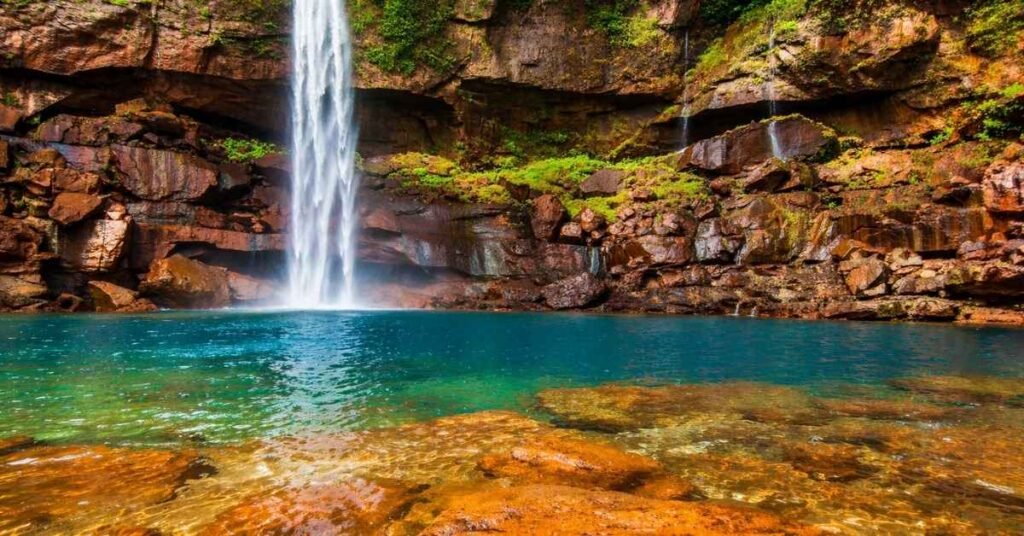
Phe Phe Falls is a 2-tiered waterfall tucked inside the West Jaintia Hills. It is less crowded than Krang Suri, which makes it a favourite among travellers who prefer a quieter experience. The waterfall drops in two clear stages, and the pool at the base has the same gorgeous blue-green colour the Jaintia Hills are known for.
To reach it, you need to do a short trek of about 20 to 30 minutes. The trail is manageable for most people but can get muddy after rain. Avoid visiting during heavy monsoon as the water turns rough and the blue colour disappears completely.
Quick Facts:
- Tiers: 2
- Trek Required: 20 to 30 minutes
- Difficulty: Easy to Moderate
- Best Time: October to January
- Tip: Start your trek before 9 AM for the best light on the water and a quieter experience
Easy Access vs. Ultimate Adventure
Not every traveller wants to trek for hours. And not every waterfall requires it. This section covers two waterfalls that sit on completely opposite ends of the effort scale, so you can pick what suits your group best.
Elephant Falls
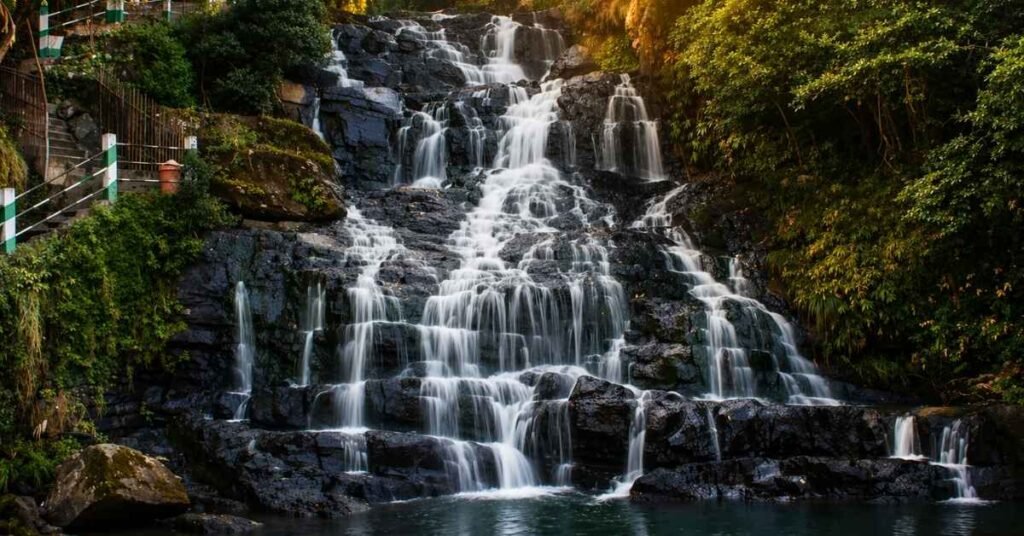
Elephant Falls is the most accessible waterfall near Shillong. It is a 3-tiered waterfall located just 12 kilometres from the city centre, making it an easy half-day trip. Paved pathways, railings, and proper steps connect all three tiers, so there is no real trekking involved at all.
This is the best waterfall in Meghalaya for families with kids or elderly members. The path is safe, the crowds are manageable, and the overall experience is relaxed and enjoyable. You can move at your own pace without worrying about steep or slippery terrain.
The name comes from a large rock near the falls that once resembled an elephant. That rock was damaged in an earthquake, but the name stuck.
Quick Facts:
- Tiers: 3
- Distance from Shillong: ~12 km
- Entry Fee: Small fee at the gate
- Difficulty: Very Easy (suitable for all ages)
- Best For: Families, elderly visitors, first-time Meghalaya travellers
Rainbow Falls
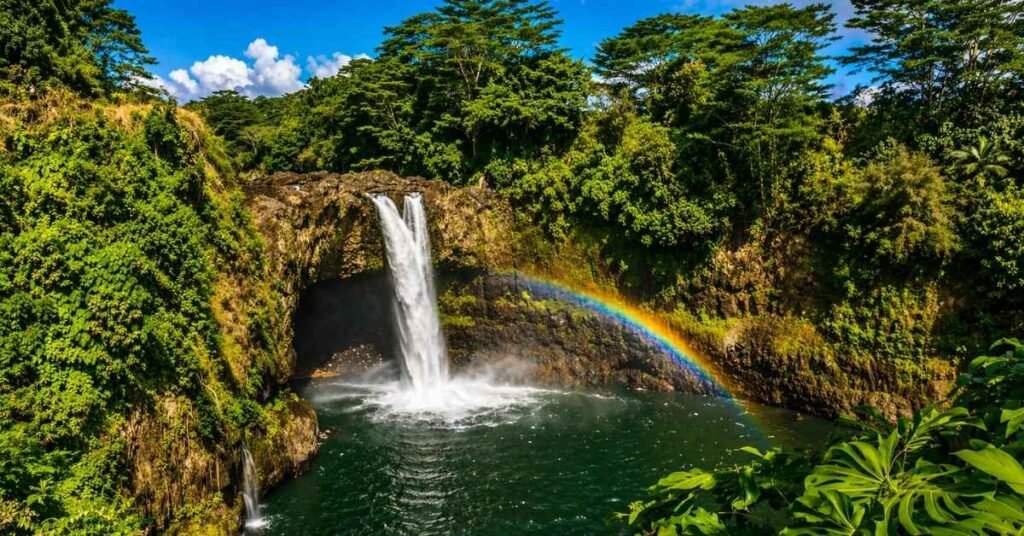
Rainbow Falls is on the complete opposite end of the spectrum. This waterfall is strictly for physically fit trekkers only. It is not suitable for kids, elderly visitors, or anyone with knee or joint issues.
To reach Rainbow Falls, you must first complete the famous trek to the Double Decker Living Root Bridge in Nongriat, which itself involves descending and climbing back up roughly 3,500 steps. From there, Rainbow Falls is an additional trek further into the forest.
The payoff is spectacular. The waterfall drops into a plunge pool where rainbows form regularly due to the mist and sunlight. Very few waterfalls in India offer that kind of visual reward. But you genuinely have to earn it with your legs.
Quick Facts:
- Trek Difficulty: Very Hard
- Total Trek Duration: 5 to 7 hours return
- Best For: Fit trekkers and adventure travellers only
- Best Time: October to February
- Tip: Start the trek by 6 AM and carry at least 2 litres of water per person
Travel Tips, Safety & Final Thoughts
Before you pack your bags, keep these practical points in mind:
Safety Tips:
- Always wear shoes with good grip. Sandals and slippers are dangerous on wet, rocky trails
- Carry enough cash. Most waterfall entry points and local guides do not accept UPI or cards
- Never swim in an unfamiliar pool without checking with locals first. Currents can be deceptive even in calm-looking water
- Do not trek to remote falls like Wei Sawdong or Rainbow Falls alone. Always go with a local guide or a group
Frequently Asked Questions
Are the waterfalls dry in winter?
No. Most waterfalls in Meghalaya flow year-round. Winter reduces the volume but improves water clarity significantly.
Which waterfall is safest for families?
Elephant Falls is the best choice for families, elderly visitors, and young children.
Do I need a guide for every waterfall?
Not for all. Easy spots like Elephant Falls and Nohkalikai require no guide. Remote falls like Wei Sawdong and Rainbow Falls strictly need one.
Is swimming allowed everywhere?
No. Swimming is permitted at Krang Suri with a mandatory life jacket and at some tiers of Wei Sawdong. Always check locally before entering water.
What is the entry fee range across all waterfalls?
Entry fees range from ₹20 to ₹100 depending on the waterfall. Some viewpoints like Seven Sisters are completely free.
What should I carry on a waterfall trek?
Carry water, snacks, a basic first aid kit, a power bank, and wear quick-dry clothing.
Conclusion
Meghalaya’s waterfalls are not just tourist spots. Each one has its own personality, its own level of effort required, and its own reward waiting at the end. From the thundering drop of Nohkalikai to the quiet blue pool of Phe Phe Falls, there is something here for every kind of traveller. Plan smart, respect the trails, and this trip will stay with you long after you are back home.